

Every corporate real estate manager knows the pattern. A fit-out looks flawless at handover. Eighteen months later, the reception floor is scuffed, laminate edges are lifting on the workstations, and the facilities team is patching rather than planning.
Material selection is often treated as a finishing decision. It is a lifecycle decision. The finishes you specify determine how often you repair, how long a floor is out of use during replacement, and what employees breathe and hear all day. It is also one of the most common mistakes to avoid during an office fit-out.
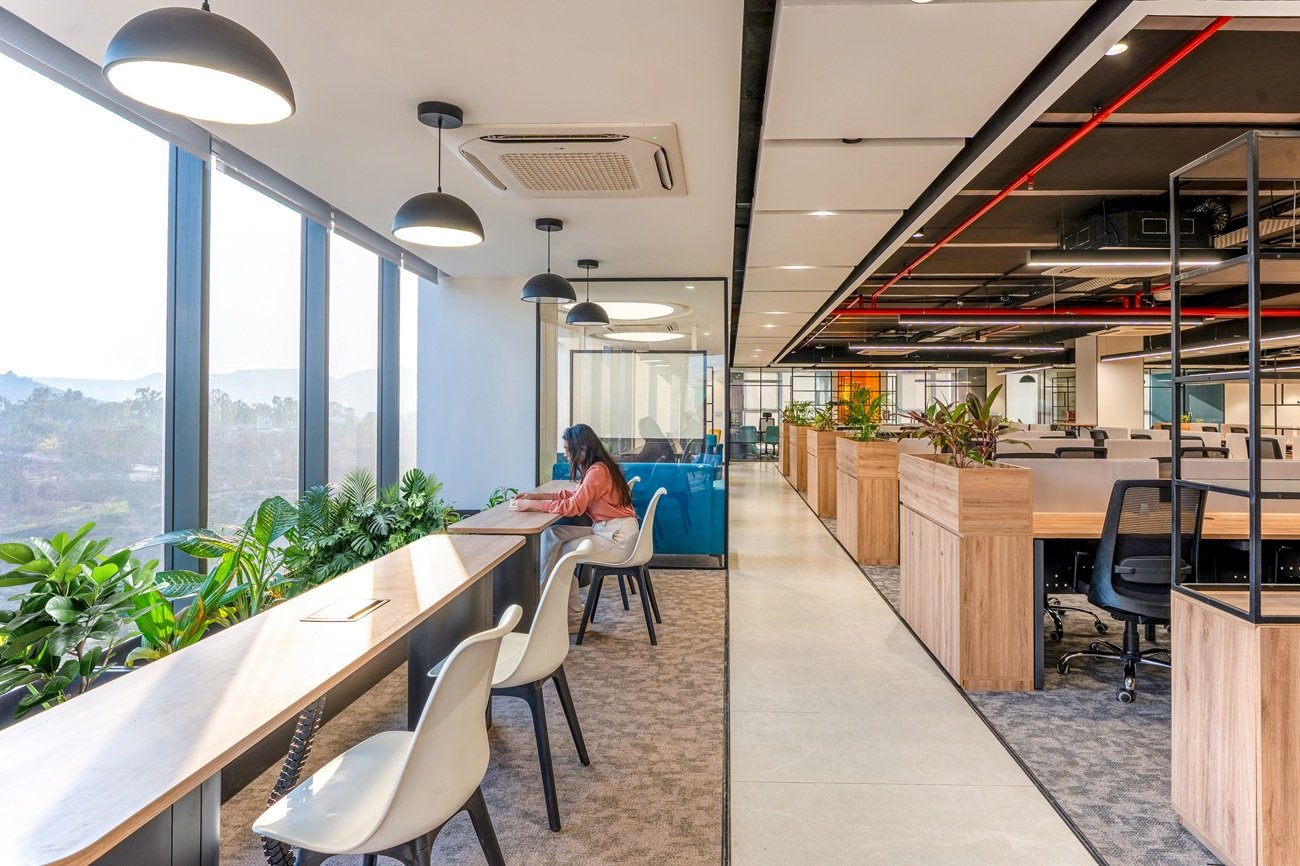
The most reliable fix is to evaluate materials on total cost of ownership instead of installation price. At Studio AsA, our approach to workspace interior design starts by matching each material to how a zone is actually used. The framework below applies to any commercial office interior, from a 5,000 sq.ft. fit-out to a multi-floor campus.
1. Zone the Floor Plan by Wear, Not by Style
A single finish schedule across the whole office is the quickest way to overspend and under-perform. Footfall, spills, furniture movement and sunlight vary widely between zones, so material choices should too. If you haven’t mapped adjacencies yet, our guide to office zoning is a useful starting point.
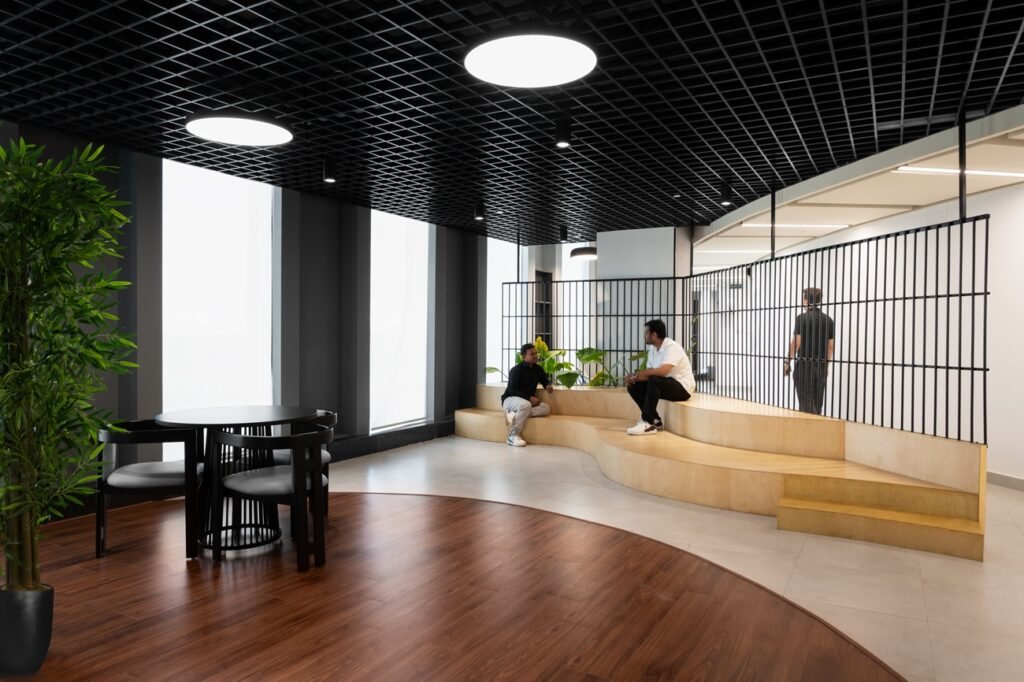
- High-traffic zones (entrances, reception, main corridors): specify dense, abrasion-resistant surfaces such as porcelain tile, engineered stone or high-performance vinyl. These are also the spaces that shape first impressions at the lobby.
- Collaborative zones (pantries, breakout areas, cafeterias): prioritise stain resistance and fast cleaning. Non-porous surfaces and sealed joints cut daily maintenance time.
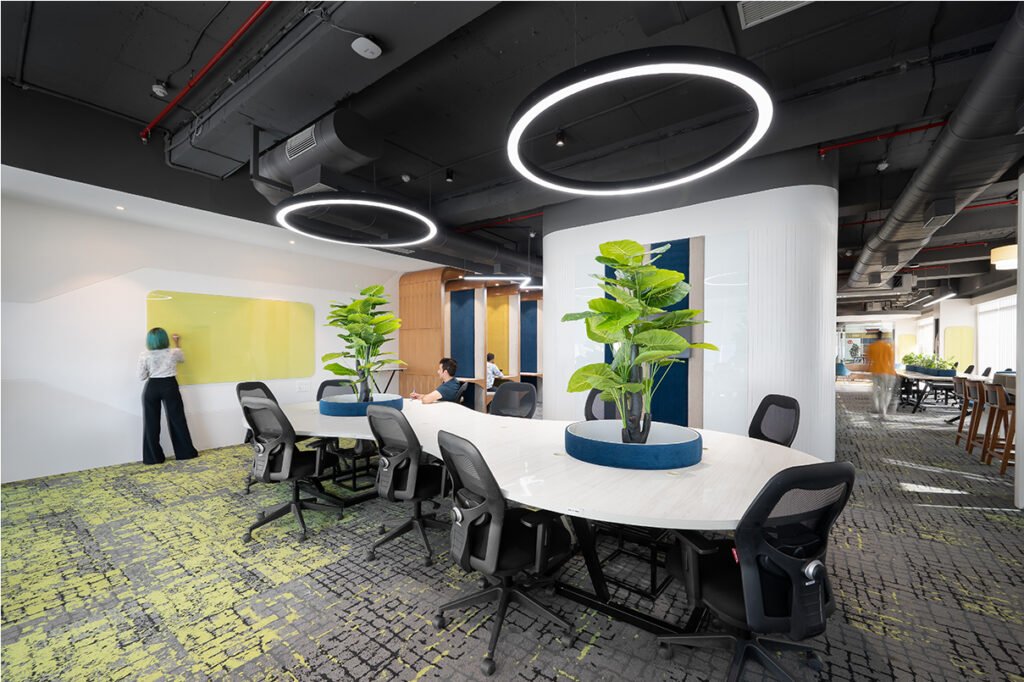
- Focus zones (workstations, cabins): carpet tiles work well here. They absorb sound, and individual tiles can be swapped without closing the floor.
- Low-use zones (executive suites, boardrooms): this is where timber veneer, fabric panelling and feature finishes earn their place, since wear is minimal.
Spending premium money where traffic is lightest, and economy money where it is heaviest, is a common and costly mistake. Reverse it.
2. Weigh Durability Against Maintenance Effort
Durability and low maintenance are related but not identical. A material can last fifteen years and still demand weekly specialist care. Another can be cheap to clean but need replacing in five.
Ask three questions of every material before approving it:
- How is it cleaned? Daily wet-mopping and periodic polishing are very different labour commitments.
- How does it age? Some surfaces develop a patina that suits an office. Others simply look worn.
- How is it repaired? Modular products (carpet tiles, panel systems, tile flooring) allow spot repairs. Seamless or glued-down finishes often mean replacing the entire area.
In Indian climates, add one more filter: dust and humidity. In cities like Pune and Mumbai, monsoon moisture can swell low-grade MDF and warp unsealed timber. Specifying moisture-resistant boards and sealed edges is a small cost that prevents the most common early failures we see in corporate office interior projects. Choosing between design and build and traditional contracting also affects how tightly material specs are controlled on site.
3. Choose Materials That Protect Air Quality and Acoustics
A material’s performance is not only about how it looks after five years. It also affects the people working beside it.
- Low-VOC finishes: paints, adhesives, laminates and engineered boards can release volatile organic compounds after installation. Look for low-emission certifications and ask suppliers for test documentation.
- Acoustic performance: hard surfaces such as glass, stone and concrete reflect sound. Offset them with acoustic ceiling tiles, fabric-wrapped panels and carpeting, particularly in open-plan areas. We cover the symptoms in Still on Mute? Your Office Acoustics Might Be the Problem and the productivity case in The Sound of Productivity.
- Thermal and visual comfort: matte or low-gloss finishes reduce glare on screens, and lighter tones reflect more daylight, which can reduce reliance on artificial lighting.
Well-being and maintenance connect directly. Offices that are comfortable to work in tend to see fewer complaints, fewer reworks and less pressure on facilities teams.
4. Calculate Lifecycle Cost Before You Approve the Budget
The lowest quote rarely turns out to be the lowest cost. A simple lifecycle comparison over seven to ten years gives a clearer picture than the line item at tender stage.
For each shortlisted material, estimate:
- Installation cost, including substrate preparation and finishing
- Annual cleaning and upkeep, including consumables and labour hours
- Expected repair frequency and the downtime each repair causes
- Replacement cycle and the cost of disruption when it comes due
Run this for your highest-use areas first. A slightly costlier floor in the main circulation spine often pays back through lower upkeep and a longer replacement cycle. It is a practical way of doing more with less in workplace design. Present these figures to stakeholders alongside the design intent, and material decisions become easier to defend.
Build Once, Maintain Less
Good material selection comes down to three disciplines: zone the space by actual wear, weigh how each finish is cleaned and repaired, and judge cost over the full lifecycle rather than at handover. Applied together, they produce offices that stay presentable, protect employee comfort and keep facilities budgets predictable.
Material choices are also where design intent either survives or erodes. A well-planned scheme should look the same in year five as it did on day one. If you are still shortlisting partners, our guide on how to choose an office interior designer covers what to ask.
If you are planning a new office, a relocation or a refresh, Studio AsA can help you specify materials against your usage patterns, budget and maintenance capacity. Contact our team to book a design consultation, and we will walk you through a material strategy tailored to your workspace.