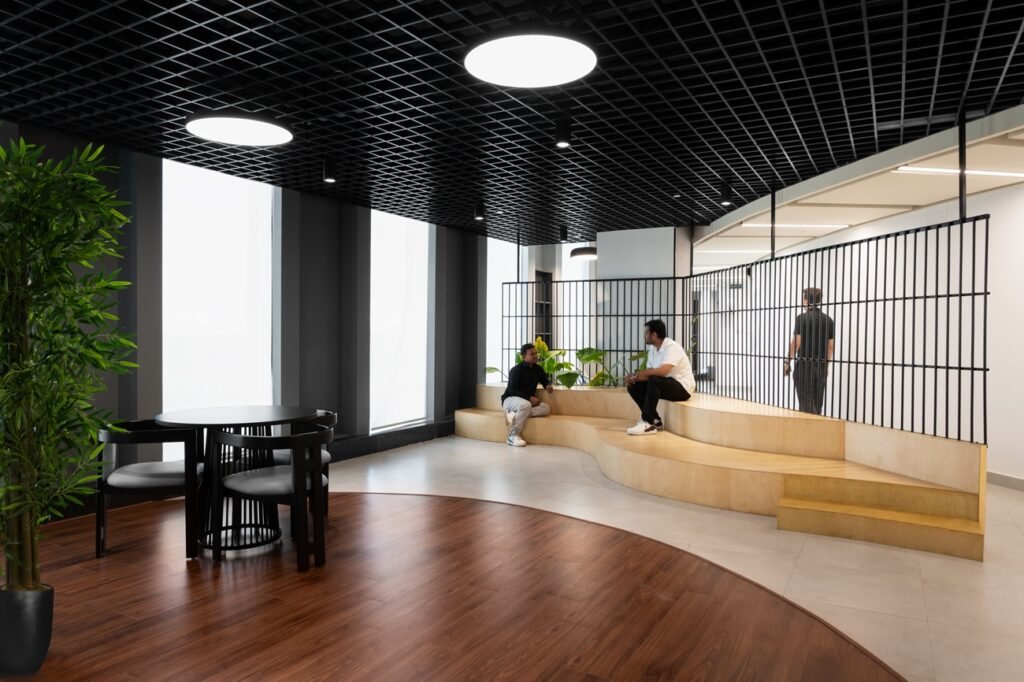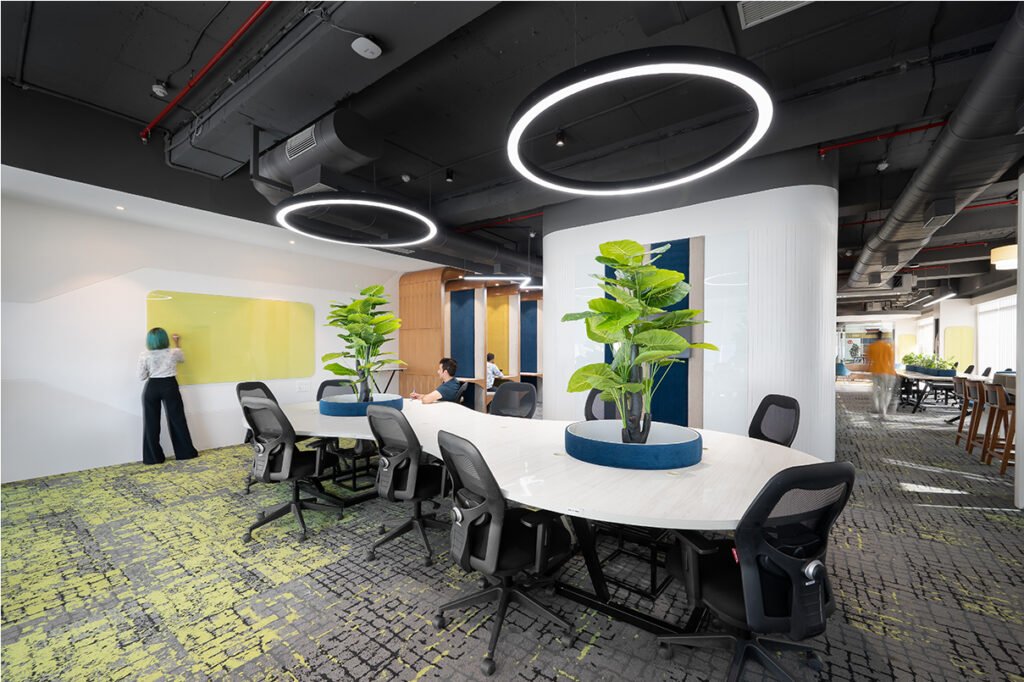


Walk through most offices on a Friday afternoon, and you will feel it before you see it. Chairs pushed back. Monitors dark. A low-grade restlessness that has settled into the carpet like dust. People are present, technically, but the room has emptied in every way that matters. Then there are the other offices, fewer but unmistakable, where Friday feels almost conspiratorial. Conversations run long. Someone has brought food. Laughter moves across the floor with ease. The week is ending, but nobody seems to be trying to escape it.
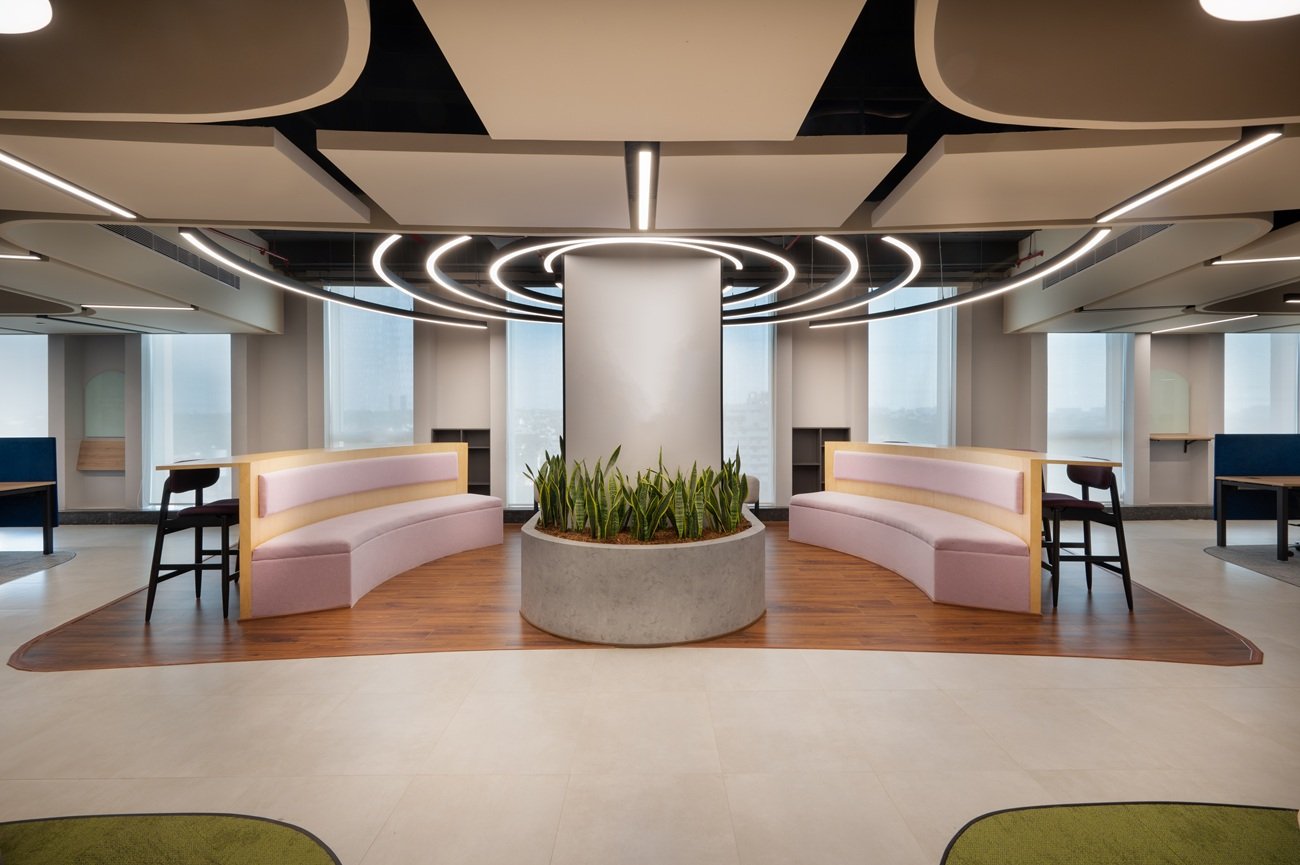
This gap is not accidental. It is, in the most literal sense, designed, or it was never designed at all. At Studio AsA, we have spent years studying why certain workplace interiors sustain energy through the end of the week while others compound fatigue hour by hour. What we have found challenges the way most organisations think about office design entirely.
The myth of the Monday office
Most commercial office design is, unconsciously, optimised for Monday morning. Clean sightlines, uniform workstations, a visual order that communicates seriousness and intention. It photographs well. It reads as professional. And for the first hours of the working week, it performs admirably. But the office that thrives only at peak cognitive energy is a narrow instrument. By Thursday, its rigidity becomes friction. By Friday, it had become an argument against staying.
The research is unambiguous. A landmark Leesman study of over 750,000 employees found that fewer than 60% of workers felt their physical environment enabled them to work productively, and that number fell sharply toward the end of the week and in the hours after lunch, when restorative needs are highest. The space was simply not built for the full arc of human attention.
Rhythm, not uniformity
The offices that thrive on Fridays share a structural quality that is easy to describe and surprisingly rare in practice: they contain multitudes. They are not one room that serves all purposes at all hours. They are more like a neighbourhood with places for concentration and places for collision, zones that feel expansive and corners that feel contained, surfaces for solitary work and configurations that invite two people to think out loud together.
This spatial variety maps directly onto the natural rhythm of cognitive performance. Mornings for most people favour deep, singular focus. By mid-afternoon, the brain actively seeks social input and lighter engagement. Fridays compress this whole arc: the morning might still carry ambition, but by two o’clock, the body and mind are asking for something fundamentally different from the open plan desk they started at. Spaces that anticipate this rhythm are spaces where people choose to stay.
At Studio AsA, this thinking underpins everything from our biophilic design strategies to how we position informal seating relative to primary workstations. A lounge nook angled away from circulation, receiving afternoon light, adjacent to a kitchen or coffee point, is a piece of infrastructure for sustaining human performance across a full working day.
Light as the underrated lever
Of all the variables that separate thriving Friday offices from depleted ones, natural light is the most consequential and the most frequently compromised. The standard approach, such as deep open floors with perimeter glazing reserved for senior offices or enclosed meeting rooms, is, from a neuroscience perspective, a weekly act of slow drain. Workers seated 30 feet from a window receive roughly one percent of the natural light of someone sitting directly beside the glass. Over five days, these compounds into measurable fatigue.
The buildings and fit-outs we find ourselves most proud of are those where we have workstations close to the perimeter. It means glazed partitions rather than solid ones. It means layered artificial lighting with warmer afternoon settings that do not pretend to be something the body doesn’t believe.
The social infrastructure of the late week
There is a specific Friday phenomenon that good offices understand and mediocre ones resist: the gravitational pull of the informal gathering. It might be a conversation that starts at a kitchen counter and continues for thirty minutes. It might be a small group clustered around a whiteboard solving something that feels almost recreational in its looseness. Neuroscience and organisational research consistently show that these unscheduled moments of lateral thinking are where some of the most durable ideas and strongest working relationships are forged.
Offices that provide no generous threshold spaces, no places that feel neither formally public nor formally private, inadvertently signal that Friday afternoon conversation is illegitimate.
Generous breakout zones, considered cafe design, and semi-enclosed collaboration spaces positioned along natural circulation paths are among the highest return investments a workplace can make.
The weekend test for your office
A useful and humbling diagnostic: visit your office on a Friday afternoon at three. Note who is there. Note where they have chosen to sit, if they have any choice at all. Listen to the texture of the room. Is it resignation or is it something more generative? The answer tells you more about your workplace design than any survey or utilisation study.
The offices that fail this test are simply indifferent to the arc of the day, to the biology of the people inside them, to the possibility that a well-designed room might be the reason someone sends one more good idea before the week closes. Indifference, in interior design as in any relationship, is the quietest form of damage.
It frequently leads us to challenge briefs, contest assumptions, and advocate for spatial decisions that are harder to justify on a spreadsheet than on a Friday afternoon. But it is the only question we have found that reliably leads to the kind of workplace worth staying in, not because you have to, but because, for some reason you might not immediately be able to name, it feels like the right place to be.
Get in touch to discuss your space.