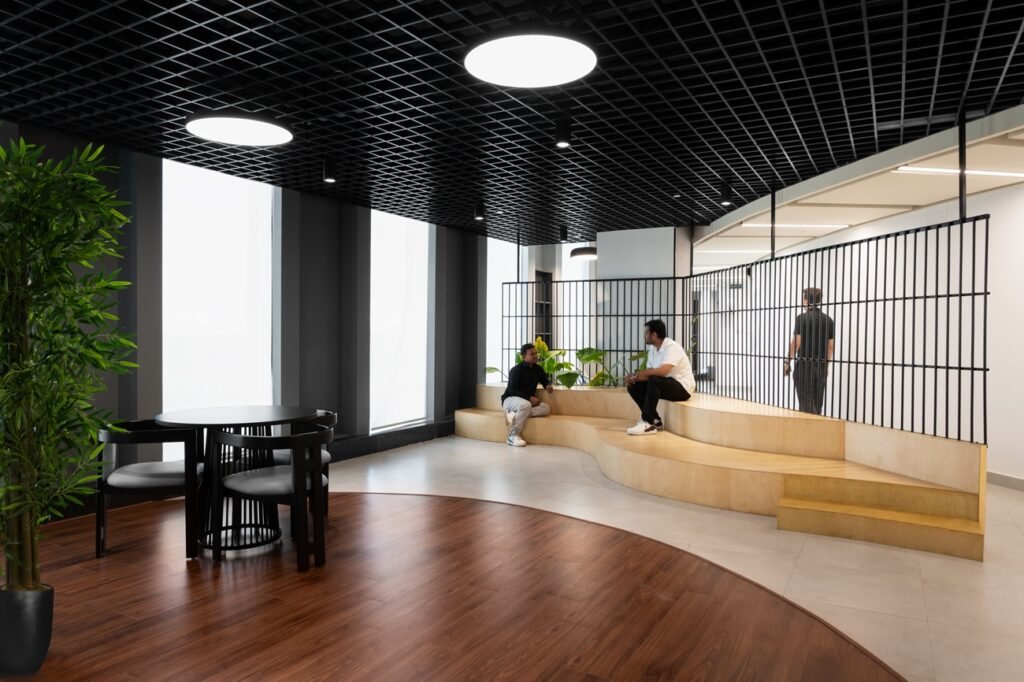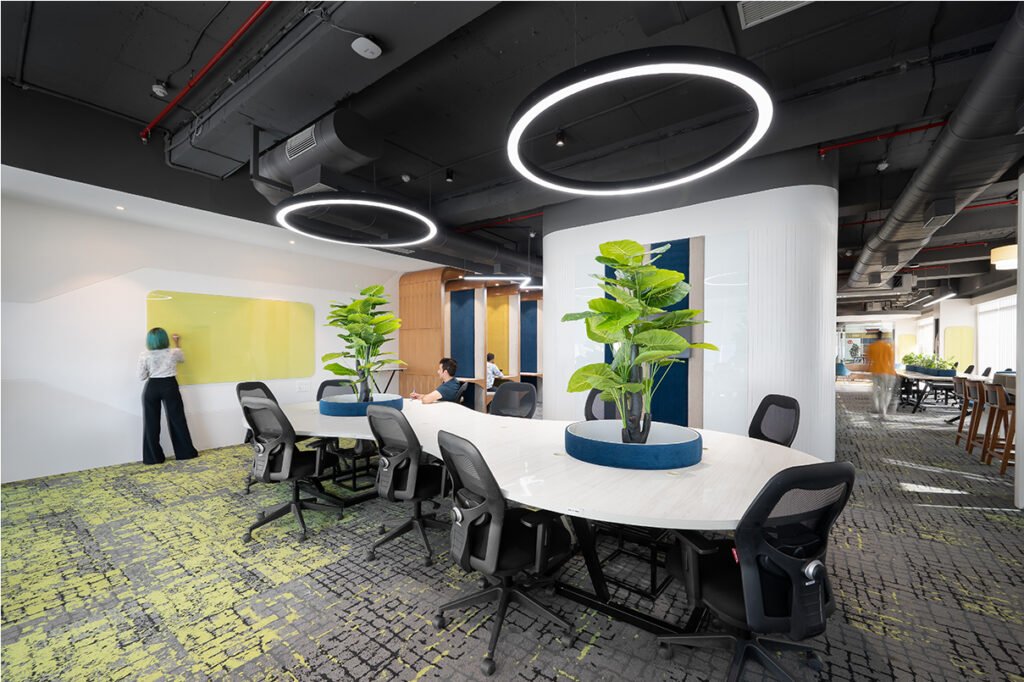


Have you ever paid attention to what people actually do during their breaks?
Some gather in small clusters near a pantry, swapping stories over chai. Others disappear into headphones and a quiet corner with a book or a show. A few, the brave ones, have been known to actually nap. These are not quirky exceptions to how office life works. They are the office, in its most honest form. People are telling you, through their behaviour, exactly what they need from the spaces around them.
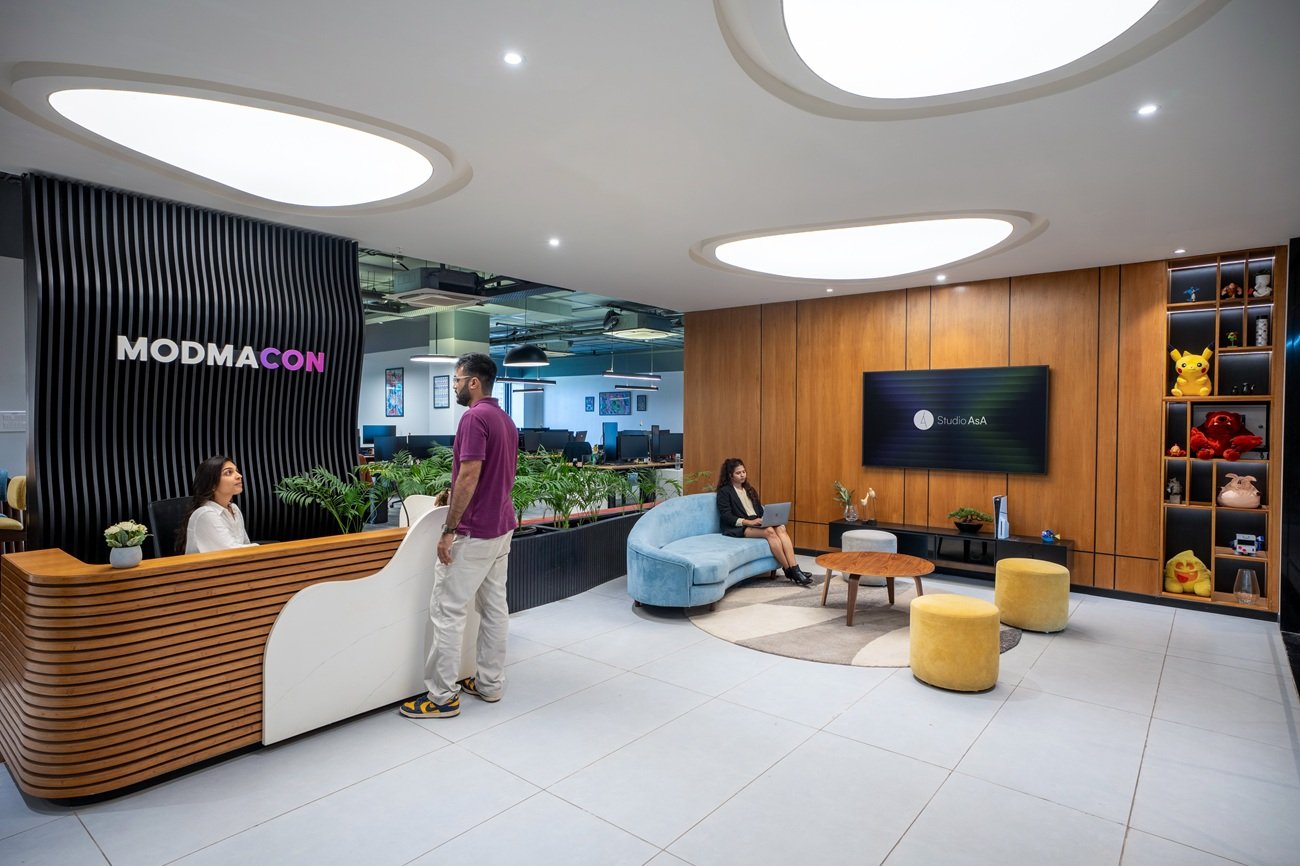
So, do we need breakout spaces? That question almost answers itself. The more interesting one and the one we rarely stop long enough to ask is this: how should we design them?
The Break Is Not Wasted Time
There’s a persistent assumption in workplace culture that productivity lives only at the desk. That’s the moment someone steps away; they’ve stepped out of usefulness. But rest is not the opposite of work. It’s part of the same cycle.
A short mental break, even ten minutes away from a screen, helps the brain consolidate information, reset focus, and return to a task with more clarity. When people don’t have a considered place to take that break, they find an unconsidered one: a stairwell, a car, a bathroom. That’s not a design success.
Read our blog where we discuss how the brain’s need for recovery and how physical space shapes mental states: Office Design & Mental Health
One Space Cannot Do Everything
Think back to those three people from the pantry, the quiet corner, and the nap spot. They have almost nothing in common in what they need from a space. The person who wants to debrief with a colleague needs proximity to others, comfortable seating, and maybe a small table. The person who wants to decompress alone needs low stimulation through softer light, acoustic quiet, and no ambient chatter. The person who wants to close their eyes for twenty minutes needs something closer to a cocoon than a lounge chair in the middle of a corridor.
Designing a single breakout zone and calling it done misses the point entirely. People are not uniform, and neither are their breaks.
Read more about How We Balance Privacy and Collaboration in Office Designs
What Good Breakout Design Actually Considers
The first thing worth understanding is that breakout spaces are not decorative. A few bean bags and a bright mural do not constitute a thought-through space. What makes a breakout area genuinely restorative is the same thing that makes any part of an office work: an understanding of the people using it.
Acoustics matter enormously here. A space designed for quiet recovery has to actually be quiet, not just visually calm. Materials, room positioning, and sound-absorbing elements all play a role that goes far beyond appearance.
Explore more about How Material Choice Impacts Workplace Experience
Natural light, when accessible, makes a meaningful difference to how restorative a space feels. So does a view of something other than a workstation. Even a small indoor planting element shifts the atmosphere in a measurable way.
Beyond the physical, flexibility matters. A breakout space that can hold a spontaneous two-person conversation and offer a quiet corner for someone working through lunch is doing double duty which is often what smaller offices need.
Interested in designing your workplace? Get in touch with us to start the conversation.