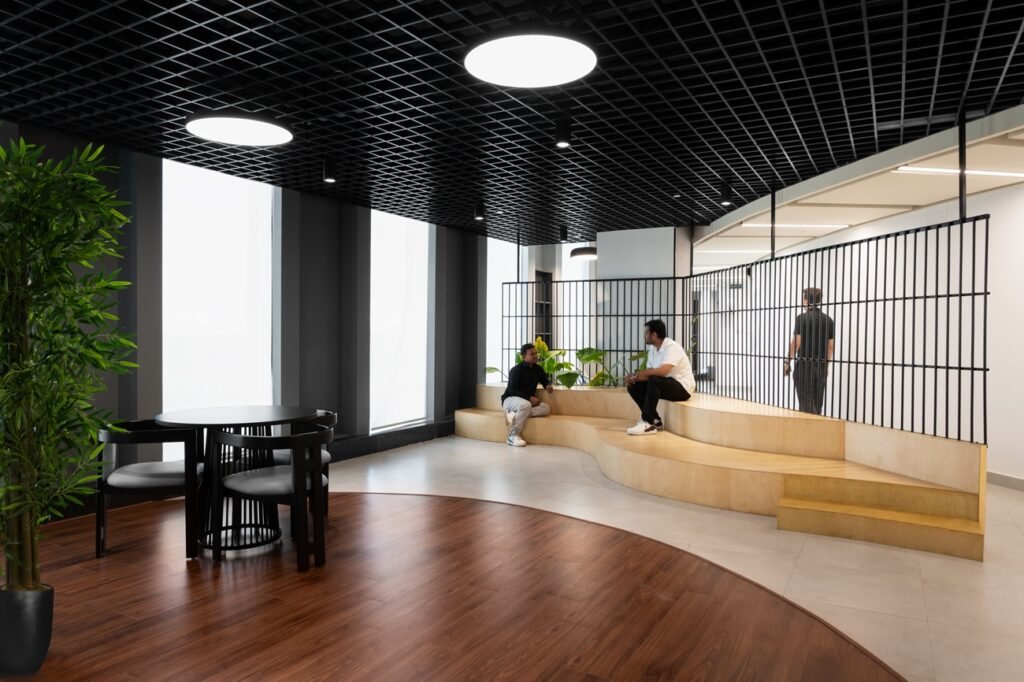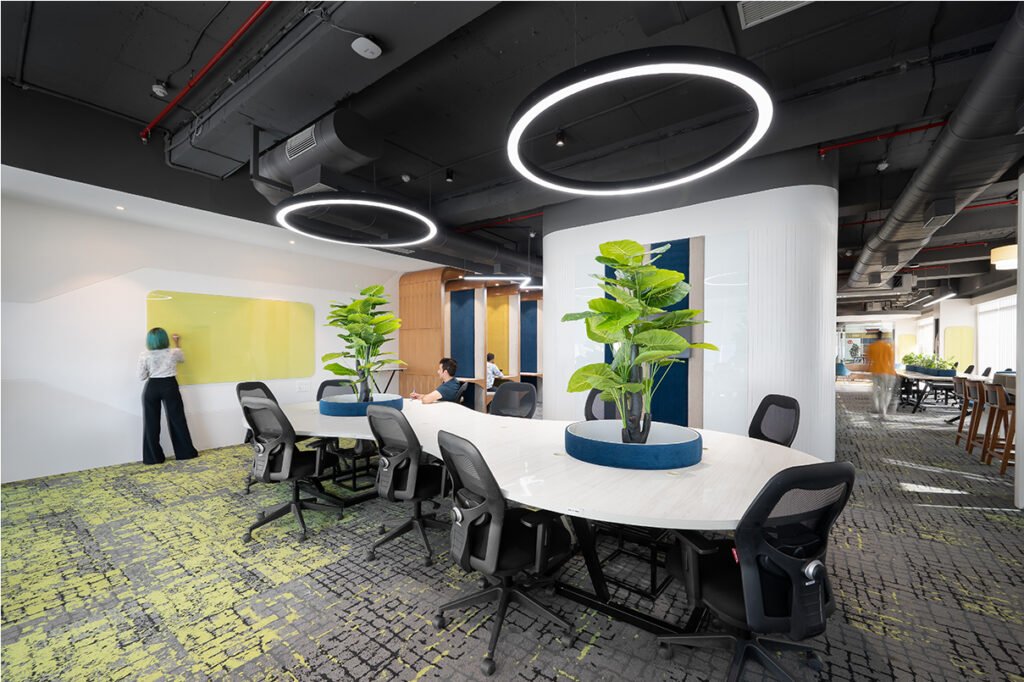


Culture is often described as the values, behaviours, and shared purpose that define an organisation. Yet many businesses invest heavily in leadership programmes and employee engagement while overlooking one of the most influential drivers of workplace culture: the physical environment.
An office interior shapes how people collaborate, communicate, solve problems, and experience work every day. The best office design does not simply accommodate business operations, it actively supports the behaviours that organisations want to encourage.
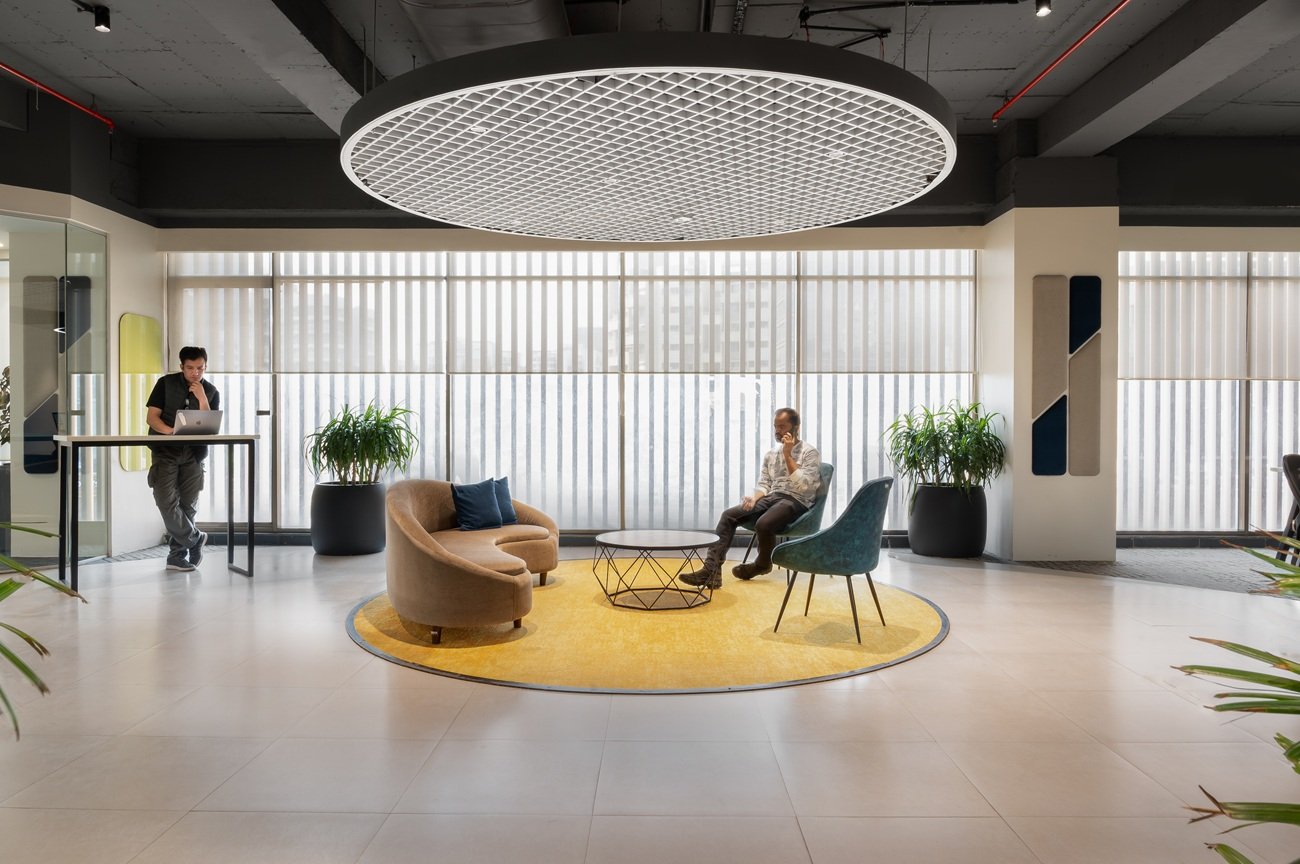
As businesses compete for talent, adapt to hybrid work, and prioritise employee wellbeing, a thoughtfully planned office space strengthens culture, improves productivity, and creates measurable business value.
Design Behaviours
Every workplace encourages certain behaviours, whether intentionally or not. A rigid layout with isolated workstations promotes individual work, while flexible collaborative zones encourage spontaneous conversations and cross-functional problem-solving.
Successful workplace design begins by understanding how people work rather than simply determining where furniture should be placed. This is where workplace strategy becomes essential. Before any drawings are developed, organisations should identify:
- How teams collaborate throughout the day
- Which departments require focused work versus group interaction
- Where informal conversations naturally occur
- What type of work environment reflects the company’s culture
The most effective commercial interiors align spatial planning with organisational goals. When employees can easily access colleagues, resources, and collaborative environments, communication becomes more fluid and decision making becomes faster. Culture becomes embedded within the workplace rather than communicated only through company values displayed on walls.
Employee Experience Is a Business Strategy
A workplace influences how employees feel from the moment they enter the building. Lighting, acoustics, circulation, ergonomics, and access to collaborative areas all contribute to the overall employee experience.
High-performing organisations recognise that workplace satisfaction directly impacts retention, engagement, and workplace productivity. Employees are more likely to perform at their best when they have environments that support different modes of work instead of forcing everyone into a single layout.
Effective office interior designers focus on creating environments that support both concentration and collaboration by incorporating:
- Quiet focus areas for deep work
- Flexible meeting spaces for team discussions
- Informal breakout zones that encourage innovation
- Ergonomic workstations that improve comfort
- Natural lighting and biophilic elements that enhance well-being
These design decisions directly contribute to better decision-making, improved collaboration, and stronger organisational performance.
Space Efficiency Creates Better Business Outcomes
Many organisations assume that larger workplaces produce better results. In reality, smarter planning delivers greater value than additional square footage.
Modern office fit-out projects prioritise space optimization by analysing how workplaces are actually used. Underutilised meeting rooms, oversized cabins, and inefficient circulation reduce both operational efficiency and employee satisfaction.
A strategic office space should maximise every square metre while remaining adaptable for future growth. This includes:
- Flexible layouts that accommodate changing team sizes
- Multifunctional spaces that support different activities
- Efficient storage solutions that reduce clutter
- Technology-integrated collaboration areas
- Adaptable furniture systems for evolving workplace needs
This approach improves utilisation while reducing unnecessary construction and operational costs. More importantly, it ensures the workplace continues supporting business objectives as organisations grow.
For business leaders, space efficiency is not simply about reducing costs. It is about creating an environment where people, processes, and performance work together seamlessly.
Culture Is Built by Design
An organisation’s culture is experienced every day through its workplace. Every interaction, conversation, and collaborative moment is influenced by the environment in which it occurs. When the office design aligns with business objectives, people naturally adopt behaviours that strengthen teamwork, innovation, and organisational performance.
Today’s most successful workplaces are intentionally designed to improve employee experience, maximise space efficiency, and support measurable business outcomes. They combine thoughtful planning, flexible layouts, sustainable workplace principles, and seamless project execution to create environments that evolve alongside the organisations they serve.
At Studio AsA, we believe exceptional workplaces begin with understanding how businesses operate, from workplace strategy and office fit-out to complete turnkey office interiors. Our integrated approach ensures every project is delivered with precision, quality, and lasting value.
If you’re planning a new office, expanding your workplace, or transforming an existing space, connect with Studio AsA to discover how thoughtful office interior design can shape a stronger culture and deliver measurable business results.