

Why Acoustic Design Is Becoming a Business Need.
The modern workplace is increasingly judged by how effectively it enables them to think, collaborate, and perform. While conversations around workplace design often focus on flexibility, sustainability, and employee experience, one critical factor continues to shape productivity from the background: sound.
Across India’s evolving workplaces, excessive noise has become one of the most overlooked barriers to performance. Open-plan offices encourage collaboration but often create environments where conversations, phone calls, impromptu meetings, and office equipment compete constantly for employees’ attention. The result is an invisible layer of cognitive fatigue that affects concentration, wellbeing, and decision making throughout the day.
As organizations rethink the role of the office, acoustic design is emerging as a strategic business investment rather than a finishing detail. Creating healthier soundscapes allows workplaces to support different modes of work while improving the overall employee experience.
Understanding India’s Unique Workplace Challenges
Designing for acoustics in India requires understanding the realities that shape employees long before they arrive at their desks.
For many professionals, the workday begins with lengthy commutes through congested traffic or crowded public transport. By the time employees reach the office, they have already spent considerable mental energy navigating unpredictable journeys. Without opportunities to recover from this cognitive load, the workplace can unintentionally amplify stress instead of relieving it.
Simultaneously, commercial real estate economics have encouraged higher density office layouts. Organizations strive to maximize every square foot, often increasing workstation density while reducing physical separation between teams. Although this improves space efficiency, it also allows sound to travel freely across departments, making interruptions frequent and sustained focus increasingly difficult.
Research consistently shows that excessive workplace noise impacts far more than comfort. It reduces productivity, increases mental fatigue, limits speech privacy, and can discourage meaningful collaboration. The most effective workplaces are therefore the ones that provide the right acoustic conditions for every type of activity.
Designing Sound as Part of the Workplace Experience
At Studio AsA, we believe acoustic performance should be embedded into the earliest stages of workplace planning rather than addressed after construction. Sound is shaped by spatial planning, circulation, materials, furniture, technology, and human behaviour working together.
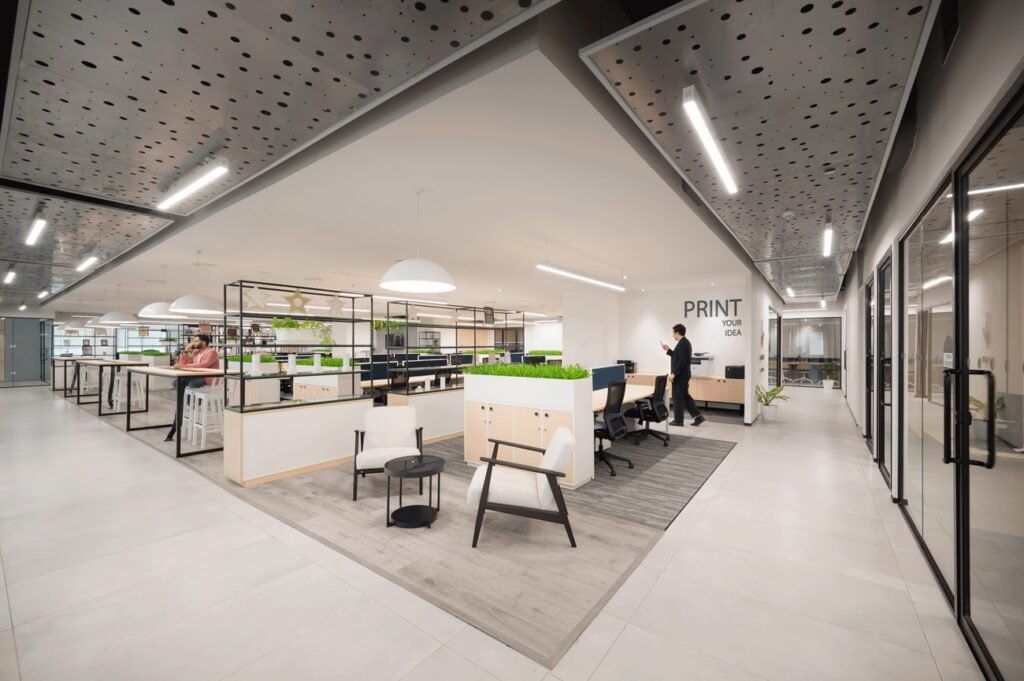
Our workplace design for Digantara, Bengaluru based aerospace company, illustrates this integrated approach. Rather than relying solely on acoustic panels or soundproof partitions, the project considered how employees move through space, where conversations naturally occur, and how different work settings could coexist without disrupting one another which resulted in a workplace where sound becomes an active contributor to productivity instead of a constant distraction.
Creating Spaces That Help Employees Reset
An effective workday begins with the right transition into work.
Recognizing the mental demands created by long urban commutes, the workplace introduces arrival lounges, quiet breakout areas, and restorative spaces that allow employees to decompress before beginning focused tasks. These transition zones acknowledge that productivity is not immediate; it often requires a brief period of mental recalibration.
By designing moments of pause into the workplace, organizations can support employee wellbeing while improving readiness for deep work.
Planning Spaces Around Activity, Not Departments
One of the most effective ways to improve acoustics is through intelligent zoning.
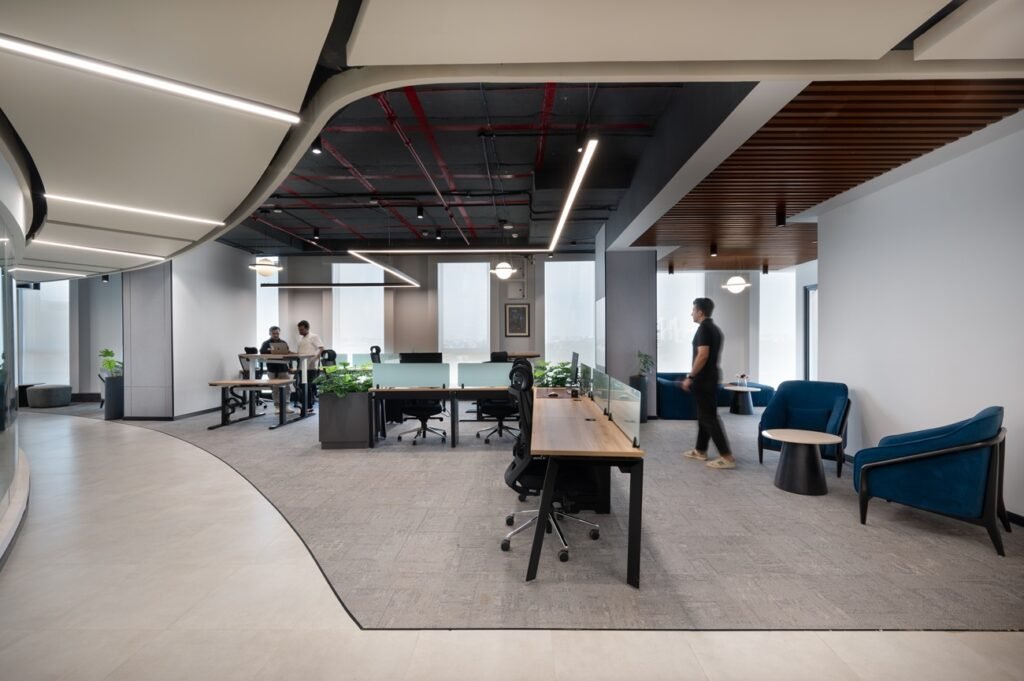
Instead of separating teams purely by organizational structure, Digantara organizes spaces according to their expected noise levels. Inspired by orbital movement, the floor plan is arranged in concentric layers that naturally distribute activity.
Quiet focus zones occupy the central core where minimal interruptions are essential. Around these are collaborative spaces designed for informal discussions, meetings, and knowledge sharing. This spatial hierarchy creates intuitive behavioural expectations while significantly reducing unnecessary sound transfer across the office.
Rather than relying on signage or workplace policies alone, the architecture itself guides how employees use the environment.
Materiality That Performs Beyond Aesthetics
Every material contributes to the way a workplace sounds.
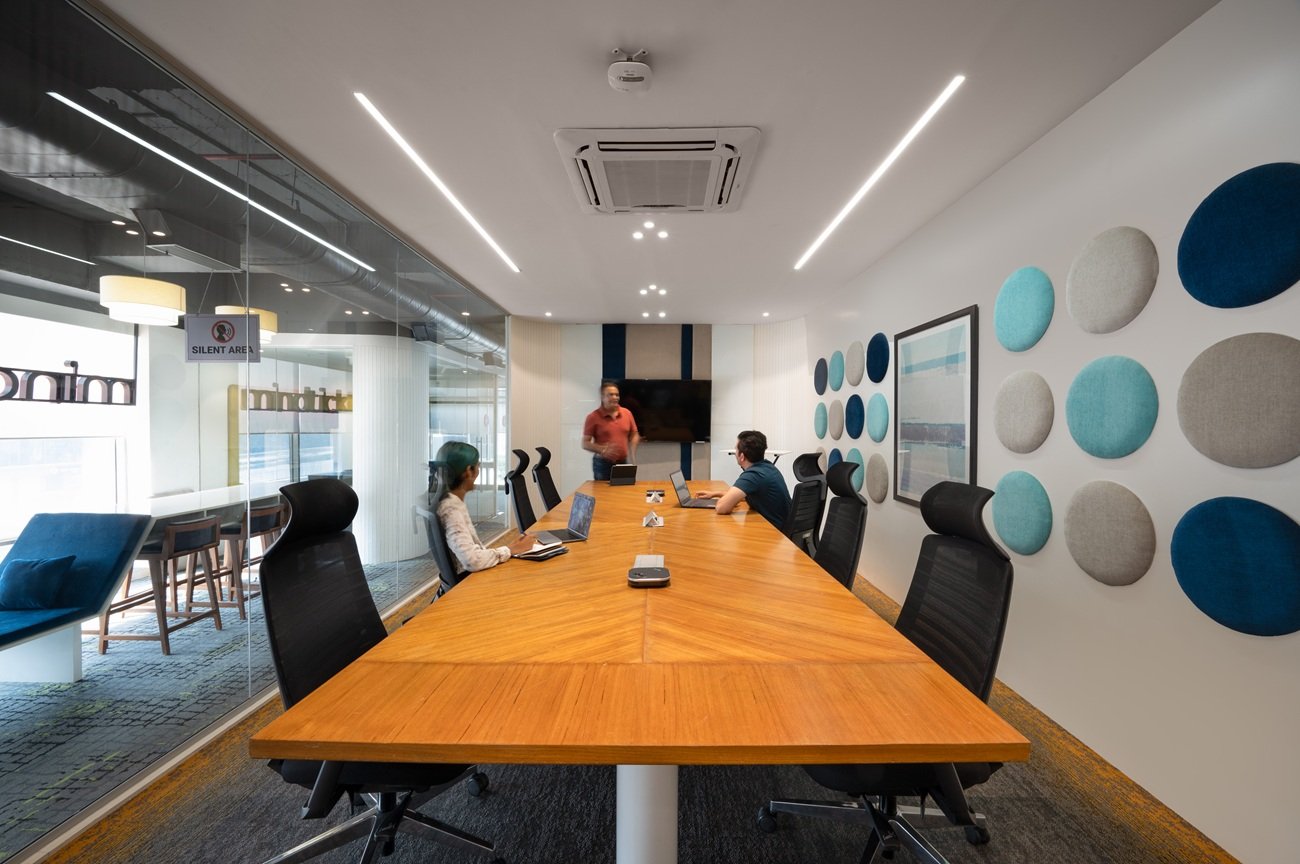
Natural finishes including timber, textured stone, acoustic fabrics, and soft furnishings help absorb, diffuse, and soften sound while creating warm, welcoming interiors. These materials support employee wellbeing through biophilic design while simultaneously improving acoustic comfort.
Access to natural daylight further enhances cognitive performance, creating workplaces that feel calm, balanced, and energizing throughout the day.
When visual comfort and acoustic performance work together, employees experience environments that are both inspiring and highly functional.
Furniture as an Acoustic Strategy
Furniture is often viewed as a flexible workplace asset, but it also plays an important role in shaping sound.
Modular storage units, shelving systems, collaborative islands, and upholstered seating create subtle acoustic buffers between different work settings without compromising openness. Rather than constructing additional walls, thoughtfully positioned furniture introduces layers that interrupt sound paths while preserving visual connectivity.
Private phone booths and enclosed focus pods provide dedicated spaces for confidential conversations, virtual meetings, and concentrated individual work. These interventions reduce noise within shared work areas while giving employees greater control over how and where they work.
Designing Behaviour Through Space
Successful acoustic design extends beyond physical interventions. It influences workplace culture.
At Digantara, soft curves, orbital geometries, and intuitive circulation patterns reinforce expectations around movement and activity. Employees naturally understand where conversations belong and where quieter behaviour is appropriate, reducing the need for constant workplace reminders or restrictive policies.
When spatial design communicates behavioural cues clearly, workplaces become easier to navigate, more comfortable to use, and better aligned with organizational culture.
The Future Workplace Must Sound as Good as It Looks
As organizations continue redefining the purpose of the office, workplace performance will increasingly depend on experiences that cannot always be seen.
Acoustic comfort directly influences employee wellbeing, collaboration, innovation, and productivity. Yet it remains one of the most underutilized opportunities within commercial interior design.
The lessons from Digantara reflect a broader shift taking place across Indian workplaces. Long commutes, higher workplace density, hybrid collaboration, and evolving employee expectations require offices that respond intelligently to both visible and invisible aspects of the environment.
At Studio AsA, we believe exceptional workplaces are designed through every sensory experience they create. By shaping sound with the same intention as space, light, and materiality, organizations can build workplaces that support clearer thinking, stronger collaboration, and healthier workdays.
Connect with us to schedule a workplace design consultation.