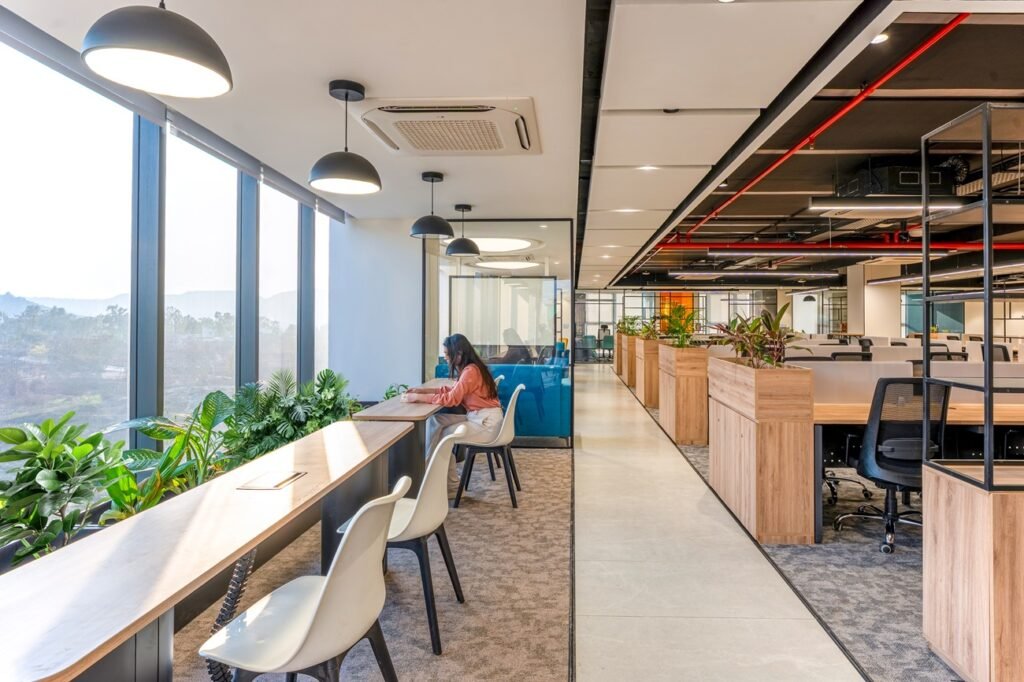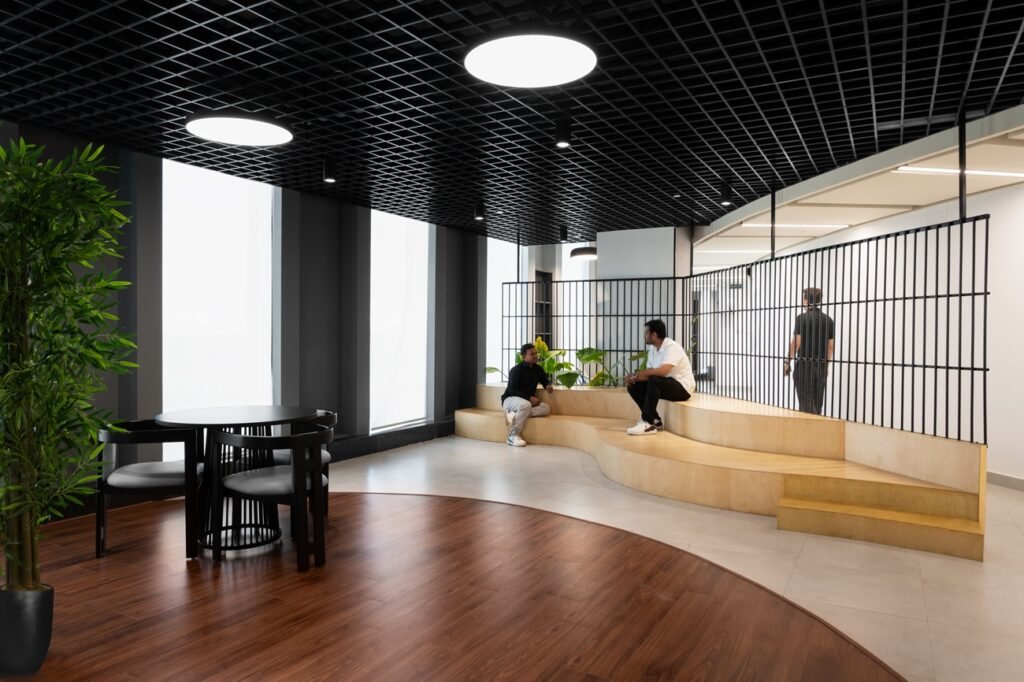


There is a quiet revolution happening inside the world’s most thoughtfully designed workplaces. It does not announce itself through open plan drama or the theatrical geometry of a collaboration hub. It arrives in a corner chair. On a rooftop terrace that no one is required to use. In the deliberate absence of a screen.
The revolution, simply put, is this: the best organisations have begun to design for stopping and in doing so, they have rediscovered the art of moving forward.
At Studio AsA, we have spent years observing how people inhabit the spaces we create. One finding surfaces repeatedly, across industries and geographies: the most productive employees are the ones who step away and return renewed.
The Science Behind Stillness
Cognitive science has long understood what office culture has been slow to accept: the human brain is not designed for sustained, uninterrupted focus. Research in the neuroscience of attention suggests that mental performance begins to decline after extended periods of concentrated effort. What restores it is genuine cognitive rest. A walk. A moment of unfocused observation. A conversation that has nothing to do with a deadline.
The brain’s default mode network becomes more active during periods of rest and reflection, which has been linked to creative insight, empathic reasoning, and long-range thinking. When we crowd out these moments entirely, we risk trading our most distinctly human capabilities for the illusion of constant productivity.
Related Reading: How Biophilic Design Supports Employee Wellbeing
What “Pause Ready” Design Looks Like
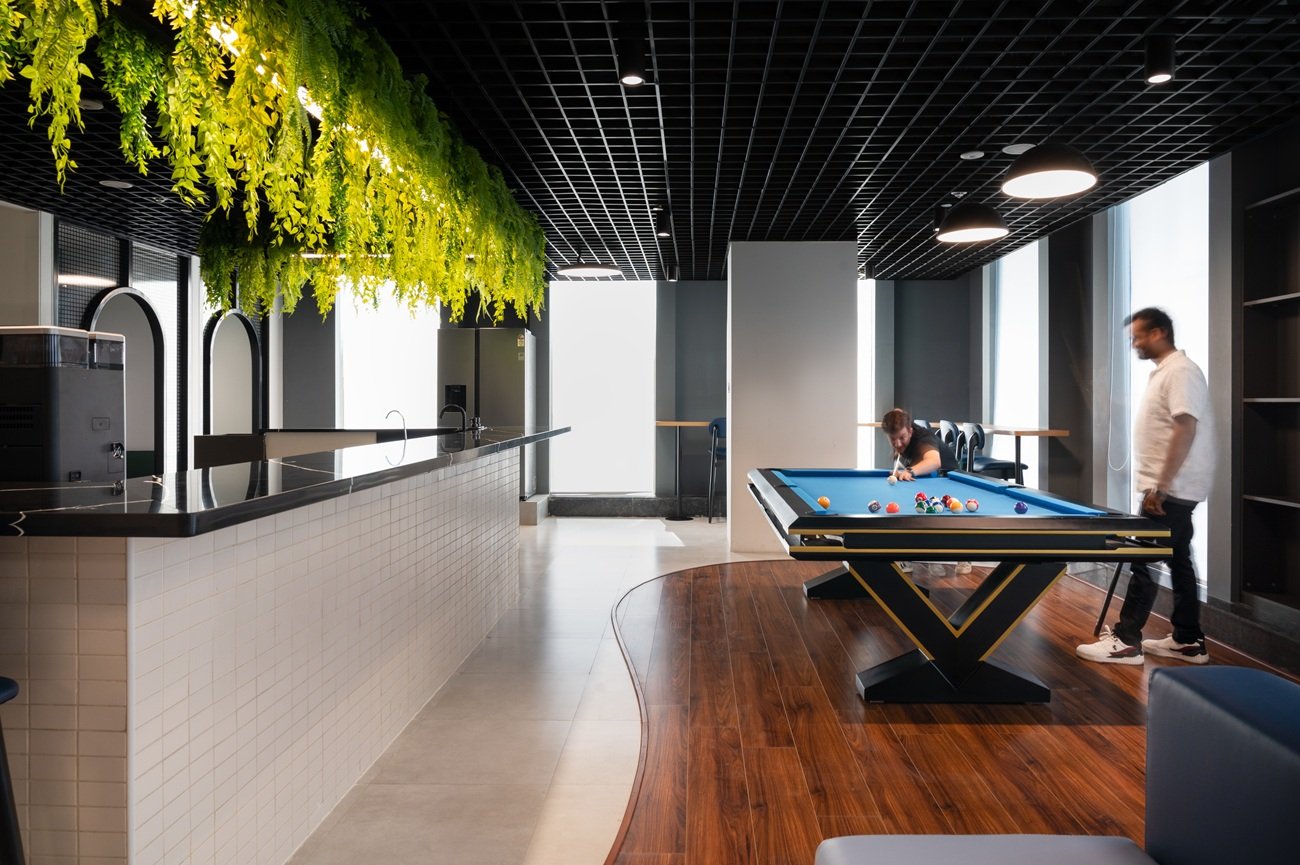
Designing for pause is not the same as designing for leisure. It is not about installing a ping-pong table and calling it wellness. It is about understanding the different forms of restoration people need and creating environments that support them without stigma.
Consider the employee who recharges in solitude. A pause-ready workplace offers a focus area away from the social energy of the pantry, where they can sit for ten minutes without interruption or self-consciousness.
Consider the employee who processes ideas through conversation. Their needs may be met not by a formal meeting room, but by a collaborative space or an informal perch near a window somewhere that encourages dialogue without demanding it.
Consider the employee who needs movement to think clearly. A generous staircase. A landscaped courtyard. A circulation path that invites walking rather than simply connecting destinations.
The most effective pause environments share several characteristics. They are slightly removed from primary work areas. They provide a shift in sensory experience through light, materiality, acoustics, or views. Most importantly, they carry no implied obligation to perform.
They are, in the truest sense of the word, margins, and like the margins of a well-composed page, they give everything around them room to breathe.
Pause as a Cultural Signal
Here is the more difficult truth: even the most beautifully designed pause space will go unused if the organisation’s culture quietly discourages rest.
We have seen it happen. A generous terrace sits empty because no senior leader is ever seen using it. A wellness room becomes an overflow meeting space. A library nook remains vacant because sitting quietly feels, in the prevailing culture, indistinguishable from doing nothing.
This is why designing for pause is ultimately as much a leadership question as a spatial one.
The workplace can send a signal, but that signal must be reinforced by behaviour. When a managing director steps away from their desk for a fifteen-minute walk in the middle of the day, they are doing something more powerful than any design intervention: they are giving others permission to do the same.
Related Reading: Tips to maximize employee productivity
Metrics That Matter
Sceptics often ask for measurable outcomes. Increasingly, the evidence points in the same direction.
Organisations that provide employees with a broader range of work settings, including spaces designed for recovery, reflection, and focused thinking, frequently report improvements in wellbeing, engagement, and perceived productivity. Employees are better equipped to manage cognitive fatigue, sustain concentration, and approach challenges with greater clarity.
The productivity of pause, it turns out, has tangible implications for how people experience work and how effectively they perform it.
The challenge is that its benefits rarely appear in the next hour or the next meeting. They emerge over time, in the quality of ideas, the resilience of teams, and the sustainability of performance.
Designing the Interval
At Studio AsA, we approach pause as a fundamental component of workplace strategy.
We ask our clients:
- Where will people go when they need to think differently?
- What does stepping away look like in this building, on this floor, for this team?
- How do moments of pause connect physically and experientially to moments of focus?
These are among the most rigorous questions we ask.
Because a workplace that has not intentionally designed for recovery has, in effect, made a decision by omission. The result is often an environment that optimises for neither focus nor restoration, but merely simulates the appearance of both.
The world’s most enduring forms of design in music, architecture, and language have always understood that the interval is as important as the note.
The same is true of the workplace.
When organisations design for pause with the same level of intention they bring to performance, collaboration, and efficiency, they create environments that support people more completely.
Design the interval.
The productivity will follow.
Connect with our team for more details.