

Designing Office Interiors That Help People Perform Better.
Modern workplaces are designed to support productivity, but many still overlook one critical factor: recovery. Employees are expected to remain focused through long meetings, constant notifications, and mentally demanding tasks, often without spaces that allow them to reset. The result isn’t simply fatigue; it is reduced creativity, slower decision-making, increased stress, and lower overall performance.
Research in workplace psychology consistently shows that sustained concentration requires regular moments of mental recovery. Focus depends on how effectively people can alternate between periods of intense work and periods of restoration. This is where thoughtful office interior design creates measurable business value.
The most successful office design strategies today create environments that balance collaboration, concentration, movement, and recovery throughout the workday.
At Studio AsA, we believe high-performing workplaces are designed around human behaviour. Recovery is an operational strategy that improves productivity, supports wellbeing, and strengthens organisational performance.
Recovery Is a Workplace Performance Need
Many organisations associate recovery with taking breaks outside working hours. However, neuroscience suggests otherwise. Small opportunities for mental restoration during the workday improve cognitive function, reduce decision fatigue, and help employees sustain attention for longer periods.
Recovery-focused workplaces enable employees to:
- Restore concentration between demanding tasks
- Reduce cognitive overload
- Improve problem-solving abilities
- Lower workplace stress
- Maintain consistent productivity throughout the day
When employees have access to spaces that support different work modes, they perform better without increasing working hours.
Designing Multiple Focus Modes
Traditional offices often force employees into a single way of working. Open-plan layouts encourage collaboration but can also create continuous distractions. Conversely, isolated workstations may reduce spontaneous interaction.
Instead of designing one environment, successful workplaces provide multiple environments that employees can choose based on their task. These include:
Quiet Focus Zones
Dedicated areas with minimal interruptions allow employees to complete deep work requiring sustained concentration. Features include:
- Acoustic treatments
- Controlled lighting
- Ergonomic seating
- Limited visual distractions
Informal Recharge Areas
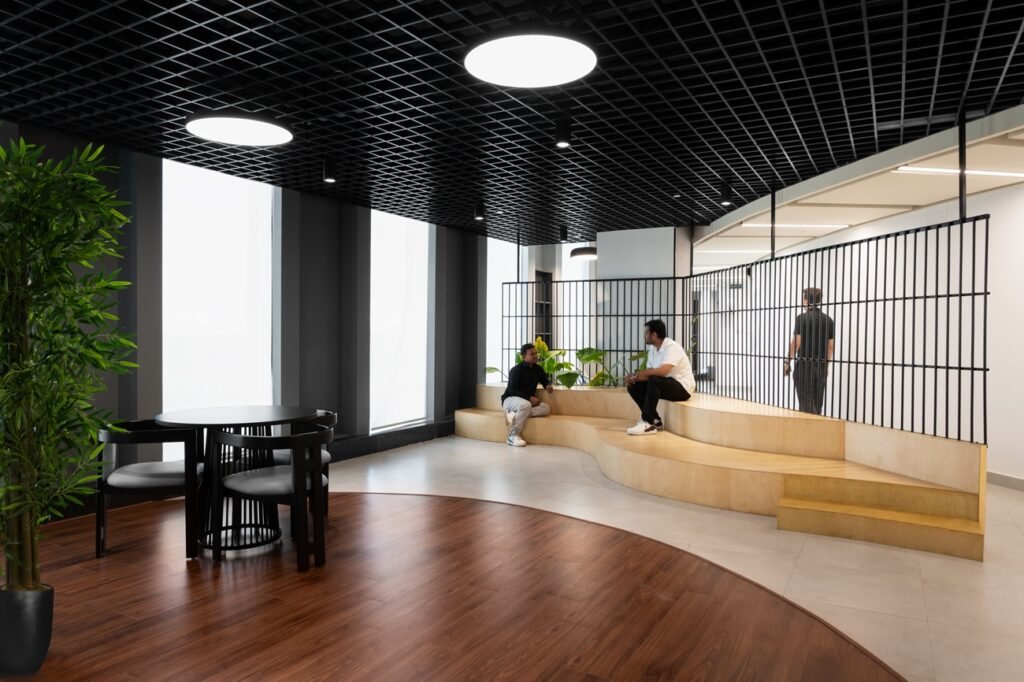
Recovery doesn’t always require leaving the office. Comfortable lounges, cafés, and relaxation corners provide opportunities for brief mental resets. These spaces encourage:
- Informal conversations
- Stress reduction
- Short restorative breaks
- Improved social connection
Collaboration Areas
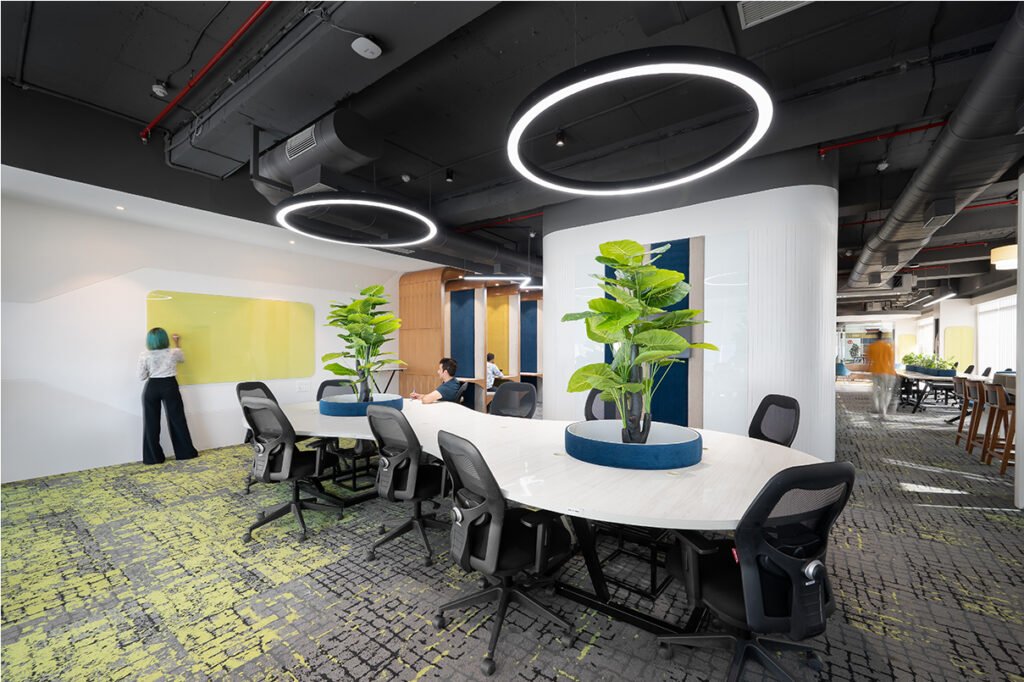
Creative work benefits from interaction. Flexible meeting spaces encourage idea sharing without disrupting colleagues engaged in focused work. These spaces typically include:
- Modular furniture
- Writable walls
- Digital collaboration tools
- Flexible seating arrangements
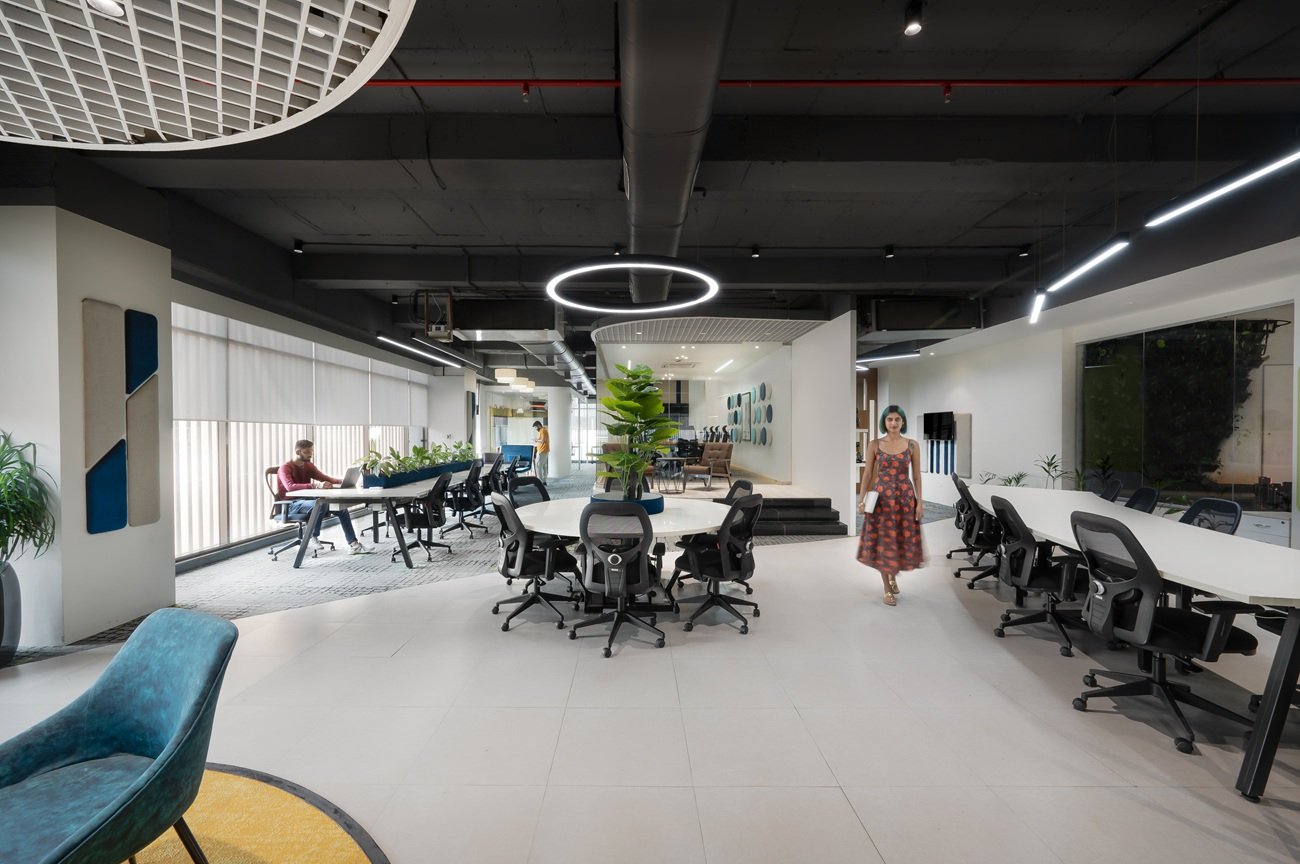
By designing for multiple work styles, the overall office space becomes significantly more effective.
Environmental Design Directly Influences Cognitive Performance
Every aspect of the physical environment influences how employees think, feel, and perform. High-performing office interiors carefully integrate environmental design principles that reduce unnecessary cognitive strain.
Natural Light
Access to daylight supports circadian rhythms, improves mood, and enhances alertness. Design strategies include:
- Maximising perimeter workstations
- Using glass partitions
- Reducing visual barriers
- Positioning collaborative spaces near natural light
Acoustic Comfort
Noise remains one of the largest contributors to workplace distraction. Effective solutions include:
- Acoustic ceilings
- Sound-absorbing wall panels
- Carpet tiles
- Phone booths
- Quiet rooms
Biophilic Design
Natural materials and greenery reduce stress while improving perceived well-being. Incorporating plants, timber finishes, and visual connections to nature creates calmer environments that encourage sustained focus.
Ergonomic Flexibility
Movement supports recovery. Sit-stand workstations, varied seating options, and circulation routes encourage employees to change posture throughout the day, reducing fatigue during long work sessions.
Recovery Should Begin Before Employees Reach Their Desks
Employee experience starts long before work begins. The entrance, reception, circulation pathways, and transition spaces all influence how employees mentally prepare for the day. Key design considerations include:
- Intuitive wayfinding
- Comfortable waiting spaces
- Natural materials
- Balanced lighting
- Reduced visual clutter
These seemingly small design decisions create a calmer transition from the outside world into productive work. The same philosophy extends throughout the workplace. Instead of separating work and recovery, successful office interiors weave moments of restoration into everyday movement.
Recovery and Its Business Value
Recovery-focused design delivers measurable organisational outcomes. Businesses investing in human-centred office spaces often experience:
- Higher employee engagement
- Improved talent attraction and retention
- Better collaboration
- Reduced absenteeism
- Greater workplace satisfaction
- Increased productivity
As hybrid work becomes standard, the physical workplace must offer experiences employees cannot replicate at home. Offices that support concentration, collaboration, and recovery become destinations rather than obligations. This shift transforms the workplace from a cost centre into a strategic business asset.
Forward-thinking organisations increasingly understand that the value of an office interior is measured not by square footage but by how effectively it enables people to perform at their best.
Recovery Is the Foundation of Better Focus
The future of workplace design is about designing environments that help them work better.
Focus is not maintained through discipline alone. It depends on environments that acknowledge human cognitive limits and provide opportunities for restoration throughout the day. Thoughtfully designed office interiors support this balance by integrating quiet zones, collaborative spaces, ergonomic flexibility, natural light, and restorative environments into one cohesive workplace experience.
At Studio AsA, we design workplaces that move beyond aesthetics to solve real business challenges. Every office design decision is guided by how people think, collaborate, recover, and perform. The result is an office space that supports employee wellbeing while improving operational efficiency and long-term organisational success.
If you’re planning a new workplace or reimagining your existing office, now is the time to create an environment that works as hard as your people do.
Contact us to schedule a workplace design consultation and discover how strategic office interior design can improve focus, strengthen culture, and unlock higher performance across your organisation.