

Picture this: It’s 10 a.m. on a Tuesday. Your team is at their desks. Coffee cups are full, calendars are loaded, and yet there’s a collective heaviness in the room, a low-grade fog that no productivity hack seems to lift. People feel tired despite sleeping. Focused, yet somehow hollow. Irritable for no clear reason.
Now look up. What do you see above them?
Fluorescent tubes. Drop ceilings. Maybe a window but two rows back, obscured by a partition. No sky. No warmth. No rhythm.
What your people are experiencing isn’t a motivation problem. It isn’t a culture problem. It is, at its core, a light problem and it’s one of the most underestimated drivers of emotional dysregulation, mental fatigue, and declining wellbeing in the modern workplace.
Why Light Is a Biological Necessity
At Studio AsA, we believe that great design begins with one foundational question: What does the space do to the people inside it?
This is the essence of people-first office design, which is understanding that the built environment is not a neutral backdrop to human life. It is an active participant in it.
Light is perhaps the most powerful proof of that principle.
The human body runs on a circadian rhythm, an internal 24-hour clock governed almost entirely by light exposure. When our eyes receive natural, full-spectrum light, the brain suppresses melatonin and boosts serotonin and cortisol in healthy, time-appropriate patterns. We feel alert in the morning, focused through the afternoon, and naturally wind down by evening. This rhythm regulates not just sleep, but mood, attention, immune response, and emotional resilience.
When that light is absent, that is, when we spend eight to ten hours a day under static artificial lighting with no connection to the sky outside, that rhythm collapses. The consequences are measurable and serious.
The World Green Building Council has linked poor lighting conditions directly to increased absenteeism, reduced cognitive performance, and elevated stress markers. And a 2018 report by the Human Spaces initiative found that 47% of workers reported having no natural light in their workplace with those workers reporting the lowest scores on measures of wellbeing, happiness, and productivity.
Related Insight: Designing Daylight Into Your Office
The Emotional Regulation Connection
What makes lighting particularly relevant to emotional wellbeing is its direct influence on emotional regulation: our capacity to manage stress, respond thoughtfully rather than reactively, and maintain psychological stability under pressure. In plain terms: people are more emotionally volatile, more prone to anxiety, and less equipped to regulate interpersonal stress in poorly lit environments.
For leaders, the impact of creative lighting in modern office interiors can help shape moods, enhance focus and encourage a conducive atmosphere for collaboration and innovation.
What Good Lighting Design Looks Like
Solving for light is not simply a matter of “adding windows.” In many organisations, especially those working within existing commercial leases, open-plan floors, or deep-plan buildings, natural light access is genuinely constrained. The opportunity lies in designing intelligently around those constraints.
At Studio AsA, our approach centres on several strategies:
Human-centric lighting systems use tunable LED technology that shifts in colour temperature and intensity throughout the day, mimicking the arc of natural daylight. Cool, bright light in the morning supports alertness; warmer, softer tones in the afternoon encourage focused, sustained work without the cortisol spike of harsh overhead glare.
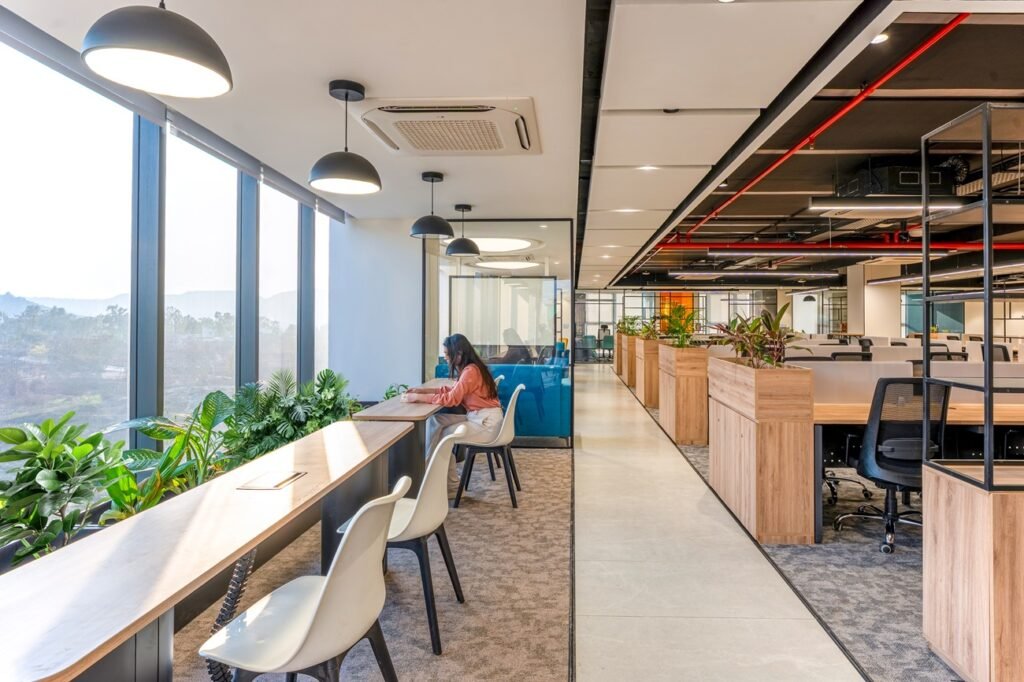
Biophilic light planning integrates light alongside nature because the two are neurologically inseparable in the human experience. Daylit atria, light shelves that bounce natural light deeper into floor plates, clerestory glazing, and the strategic placement of planting near primary light sources all reinforce the brain’s association between luminosity and safety.
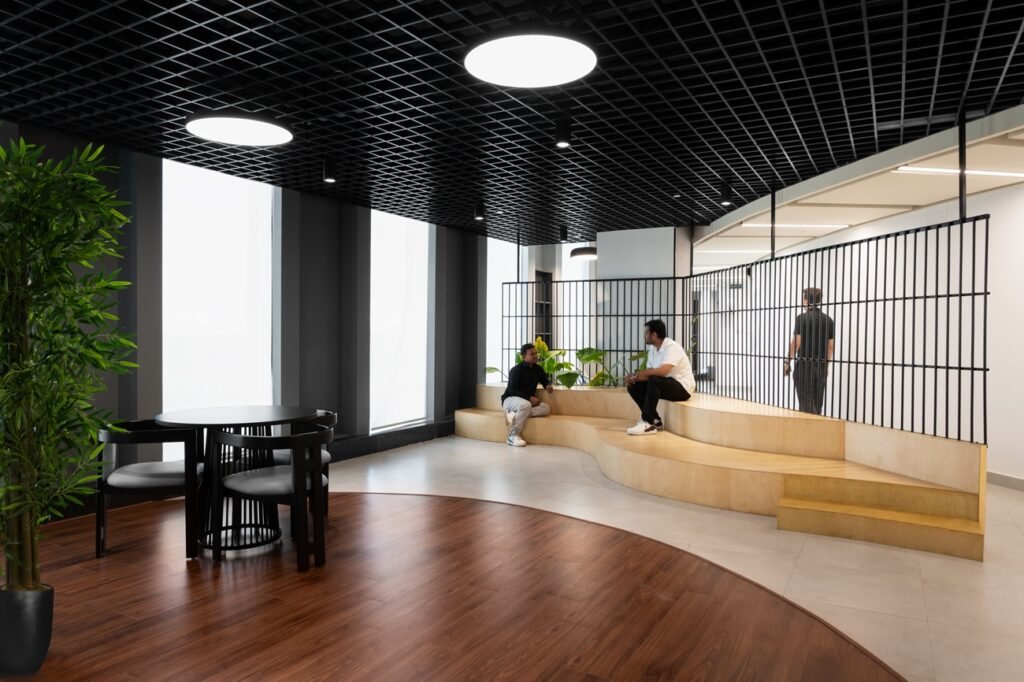
Zoned environments for emotional recovery recognise that regulation isn’t passive, it requires space. Lighting design should support this by creating dedicated zones with lower, warmer, more diffuse light for informal gathering, reflection, and decompression. Not every corner of the office needs to perform at maximum lux. People need spaces to exhale and light is one of the most powerful tools we have to signal that permission.
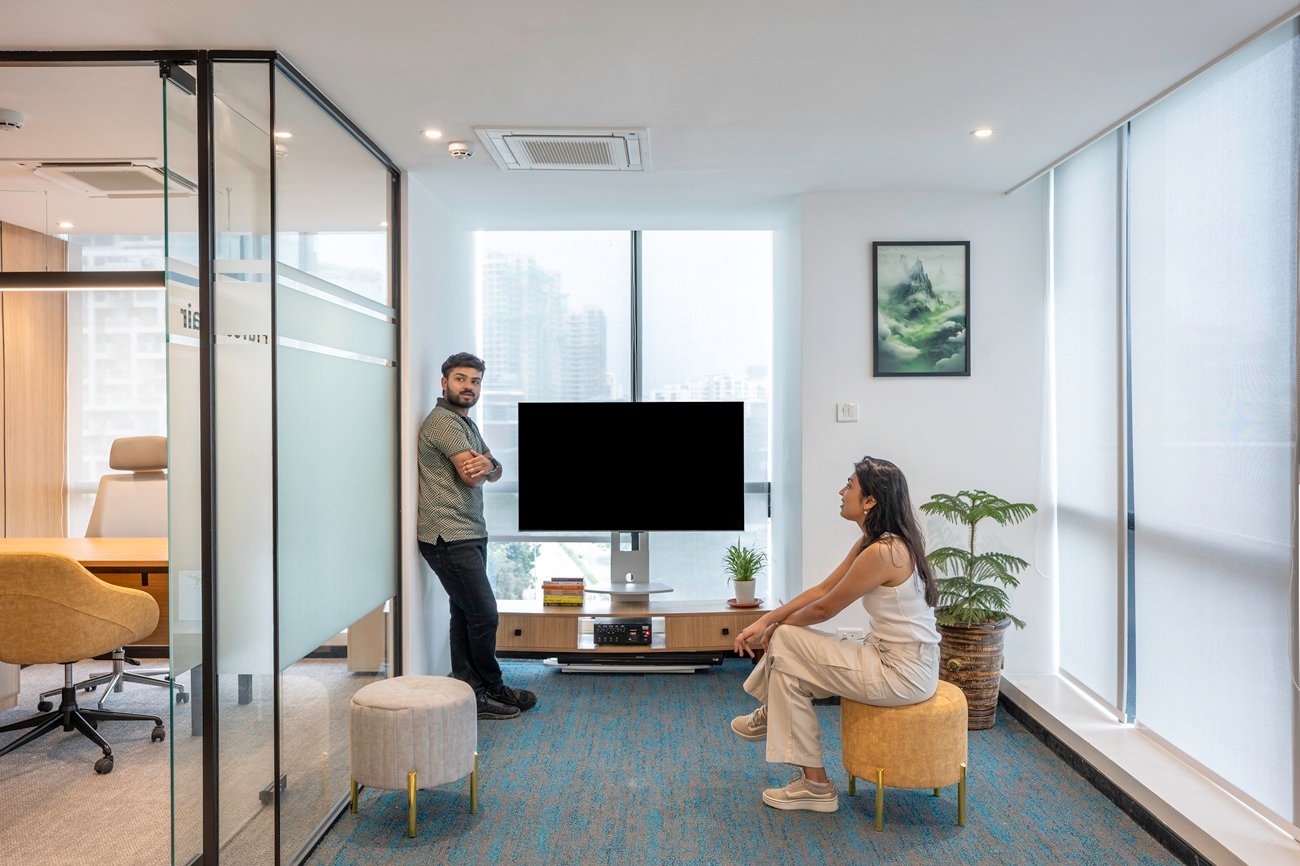
Prioritising window adjacency in space planning sounds obvious, but it is consistently deprioritised in favour of real estate efficiency. People-first design means treating proximity to natural light as a primary planning criterion. High-frequency workstations, collaborative zones, and individual focus seats should be planned toward the perimeter wherever possible.
The Wellbeing Case
We are past the moment when workplace wellbeing can be treated as a soft priority. Gensler’s Workplace Survey has consistently found that the quality of the physical environment, particularly sensory conditions like light and air, is among the strongest predictors of both individual performance and organisational loyalty. People stay in spaces that feel human. They leave spaces that don’t.
Lighting for emotional regulation is a foundational responsibility, one that sits at the intersection of design ethics, talent retention, and long-term organisational health.
At Studio AsA, we believe that every person who walks into a workplace deserves an environment that works for their wellbeing.
Let’s start the conversation, our team at Studio AsA would love to help you design a workplace where your people genuinely thrive.