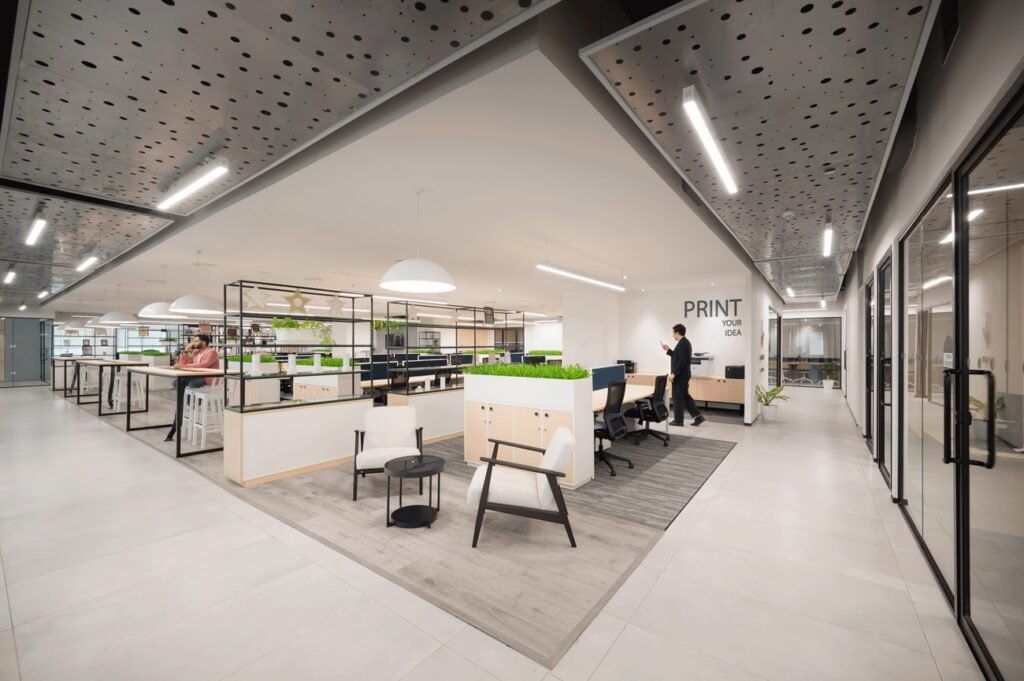


Why Office Interiors Must Inspire More Than Productivity
The workplace has changed more in the past five years than it did in the previous two decades. Hybrid work, evolving employee expectations, and increasing pressure on commercial real estate have fundamentally redefined the purpose of the office. Today, employees no longer visit the workplace simply because it is where work happens. They expect it to offer experiences that cannot be replicated at home, spaces that encourage collaboration, support focused thinking, strengthen company culture, and support meaningful human interaction.
This shift has created a new challenge for organizations. An office can no longer succeed by looking impressive alone. Every square foot must justify its existence by improving how people work and how businesses perform. The most successful office interiors today are designed with intention, balancing operational efficiency with employee wellbeing while remaining flexible enough to accommodate future growth.
At Studio AsA, we believe this evolution represents a new language of workplace design, one we call Wonder Works. It is an approach that transforms an office space into an environment of discovery, adaptability, and measurable business value. Rather than viewing office design as a finishing layer, Wonder Works positions it as a strategic business tool that enables organizations to innovate, attract talent, and build resilient workplaces for the future.
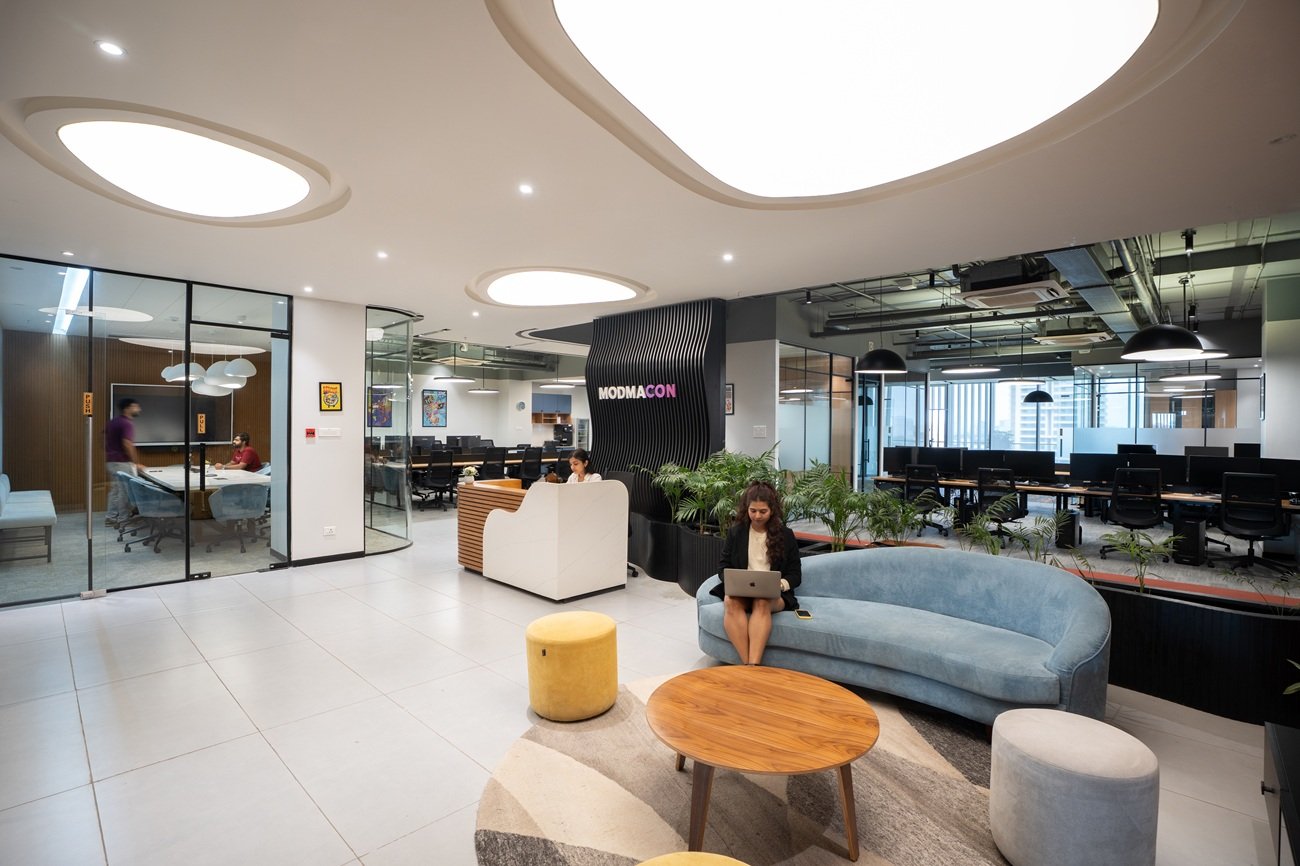
Successful Office Interior Begins with Purpose
Exceptional office design starts long before materials, furniture, or finishes are selected. It begins by understanding how an organization operates and how its people interact. Every business has unique workflows, communication patterns, and cultural aspirations, and these should become the foundation of every design decision.
Instead of asking how many desks are required, organizations should first ask how work actually happens. Some teams require uninterrupted concentration for extended periods, while others depend on constant collaboration and spontaneous conversations. A workplace that treats every employee the same inevitably creates friction because it ignores the diversity of work styles that exist within modern organizations.
Purpose driven office interiors are planned around activities rather than departments. Quiet work zones coexist with collaborative environments, informal meeting areas complement formal conference rooms, and circulation spaces become opportunities for interaction rather than simply pathways between destinations. The result is an office space that supports productivity naturally rather than forcing employees to adapt to an inflexible layout.
This philosophy aligns closely with one of our previously published perspectives, “Culture is Designed Through Office Design,” where we explore how spatial planning directly influences organizational behaviour, collaboration, and employee engagement. Together, these ideas reinforce a simple truth: culture is not created by policies alone—it is built into the environment employees experience every day.
The Modern Office Is Designed as an Experience
People do not remember workplaces by their floor plans. They remember how those spaces made them feel. The journey from reception to workstation, from meeting room to breakout lounge, shapes employees’ daily experiences and influences how clients perceive the organization behind the brand.
This is why successful office interiors are increasingly designed as experiences rather than collections of rooms. Arrival spaces establish trust and communicate identity before a single conversation begins. Natural daylight, intuitive circulation, carefully framed sightlines, and thoughtfully integrated social spaces create environments that feel welcoming without sacrificing functionality.
These experiences are not accidental. They are carefully choreographed to reduce stress, encourage movement, and facilitate interaction between individuals who may never otherwise cross paths. The office becomes an ecosystem where collaboration happens organically because the physical environment removes barriers rather than creating them.
This thinking connects naturally with our article, “Great Offices Start at the Lobby,” which explores how reception areas are no longer waiting spaces but strategic touchpoints that shape first impressions, reinforce brand values, and influence the overall workplace experience.
Flexibility Is the Defining Characteristic of Future-Ready Office Space
Business strategies evolve continuously, and office environments must evolve alongside them. A workplace designed exclusively for today’s requirements often becomes obsolete long before the building reaches the end of its lifecycle. Future-ready office design therefore prioritizes adaptability as much as immediate functionality.
Flexible office spaces anticipate organizational change instead of reacting to it. Modular planning allows departments to expand or contract without requiring significant renovations. Multi-functional collaboration areas support different modes of work throughout the day, while infrastructure is designed to accommodate future technological upgrades with minimal disruption.
This approach creates long-term value because it extends the useful life of the workplace while reducing renovation costs and operational downtime. More importantly, flexibility allows organizations to respond confidently to changes in workforce size, hybrid work policies, and business priorities without compromising employee experience.
This principle reflects the ideas explored in our blog “Doing More with Less: Smarter Office Design for Maximum Efficiency,” where we discuss how intelligent planning enables organizations to maximize the performance of existing office space while maintaining exceptional user experiences. Efficiency is no longer measured solely by occupancy density but by how effectively each space supports multiple business functions over time.
Human-Centred Office Design Delivers Measurable Business Value
The conversation surrounding workplace design has shifted from aesthetics to performance. Numerous studies continue to demonstrate that environmental quality directly influences concentration, creativity, collaboration, and employee satisfaction. As a result, organizations increasingly recognize office interiors as investments in business performance rather than operational expenses.
Natural daylight, acoustic comfort, ergonomic furniture, indoor air quality, and biophilic design each contribute to healthier and more productive workplaces. These elements improve cognitive performance while reducing fatigue, creating environments where employees are better equipped to perform complex tasks throughout the day.
Equally important is providing employees with choice. Different tasks require different environments, and workplaces that accommodate this diversity encourage greater autonomy while supporting both individual productivity and team collaboration. The most effective office spaces recognize that flexibility extends beyond furniture layouts—it also includes giving people greater control over how and where they work.
When organizations invest in employee well-being through thoughtful office design, they also invest in stronger talent retention, improved collaboration, and higher workplace satisfaction. These outcomes are increasingly measurable, making human-centred design one of the most valuable long-term investments a business can make.
Wonder Works Is the Future of Office Design
The future of workplace design will not be defined by trends, but by intention. Successful office interiors are those that align business strategy, employee experience, and spatial efficiency into one cohesive environment that continues delivering value long after construction is complete. Every design decision, from circulation planning to lighting, contributes to how effectively people connect, collaborate, and innovate.
At Studio AsA, we see every office space as an opportunity to create more than a workplace. We design environments that support changing business needs while inspiring people to perform at their highest potential. Our Wonder Works philosophy combines strategic workplace planning with thoughtful design solutions to create offices that remain relevant, adaptable, and impactful for years to come.
If your organization is planning a new office, reimagining an existing workplace, or developing commercial real estate, now is the time to think beyond aesthetics. A well-designed office interior is not simply where work happens—it is where business growth, innovation, and culture take shape.
Connect with Studio AsA to discover how purposeful office design can transform your workplace into an environment that works harder for your people and your business.