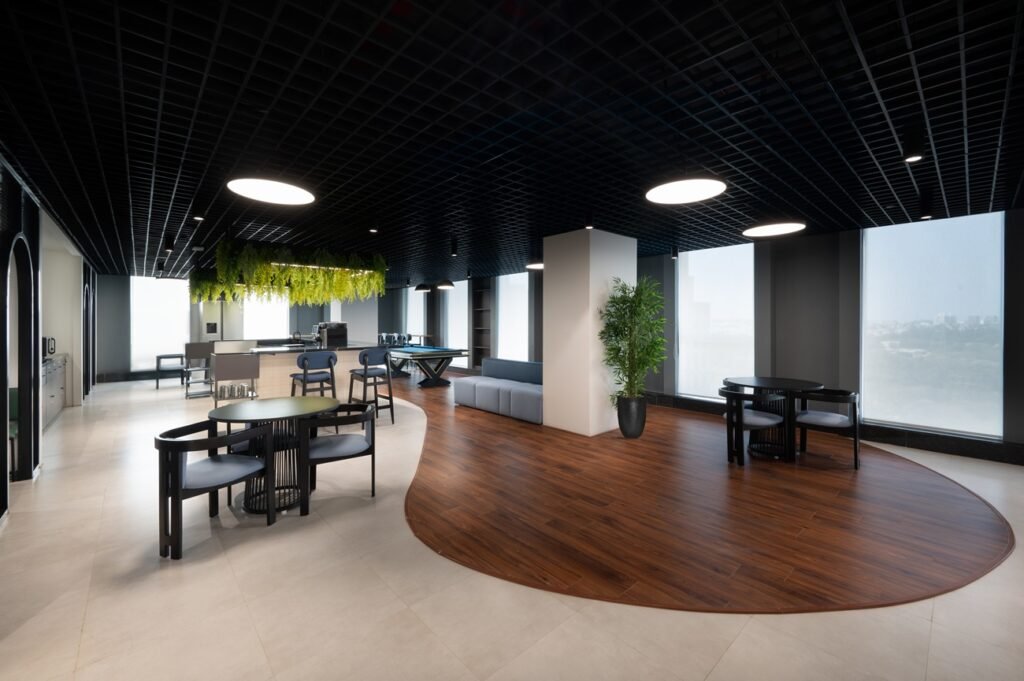


Think back to the best workspace you’ve ever walked into. Maybe it was the way natural light fell across a long communal table. Perhaps it was the smell of fresh coffee mingling with something warm in the walls. Whatever it was, you felt it before you understood it. And you remembered it long after you left.
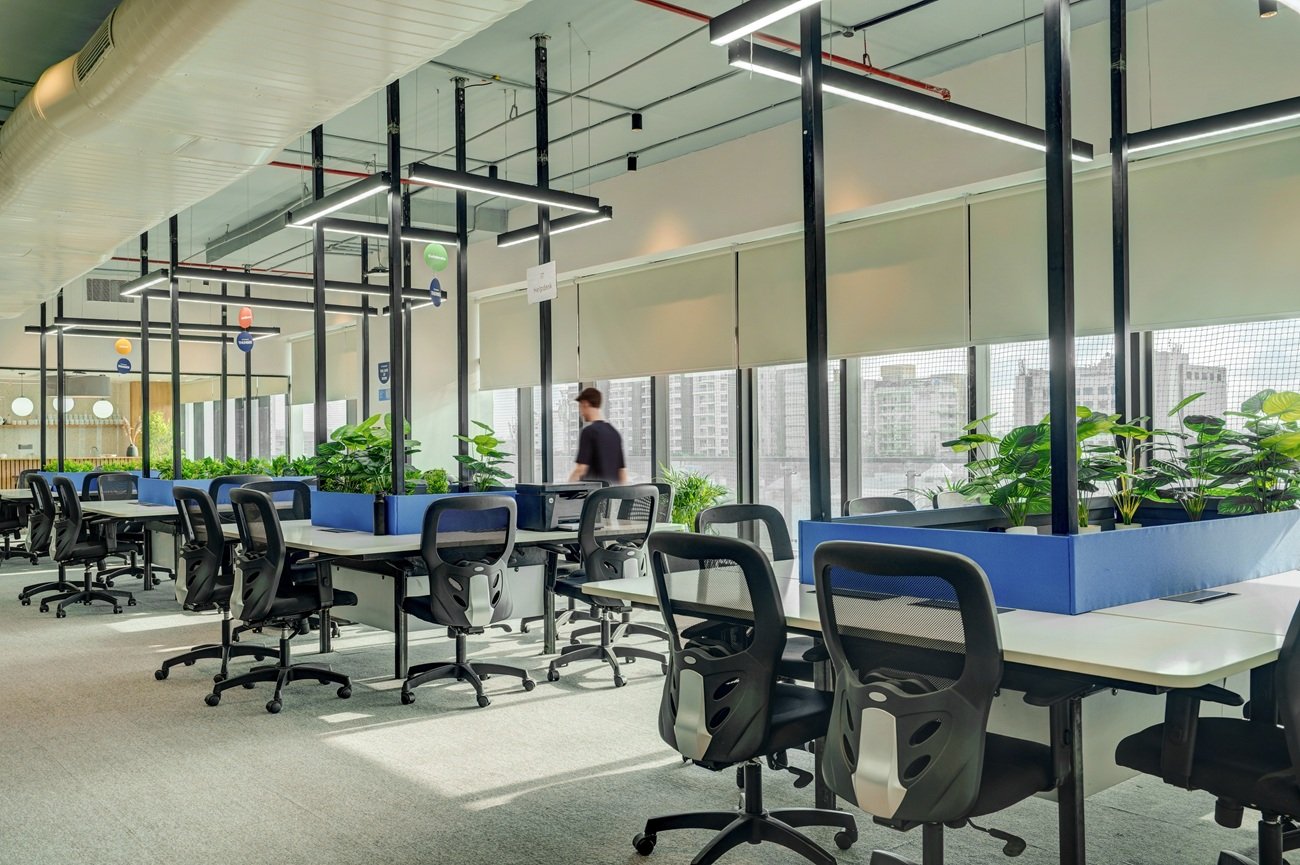
That moment, that wordless impression is what great workplace design is actually chasing: a space that tells a story about who you are, how you work, and why any of it matters.
At Studio AsA, this is the question we start with. “What do you want people to feel the moment they arrive?”
It starts with identity
The most forgettable offices in the world have one thing in common: they could belong to anyone. Row upon row of neutral grey desks. White drop ceilings. A feature wall that tried too hard. There’s nothing wrong with any individual element; the problem is the absence of a point of view.
Memorable workplaces are anchored in a very specific idea of who the organisation is. A fintech company that prizes precision and trust will demand different spatial decisions than a production house fuelled by creative chaos. The proportions, the material palette, the way circulation paths are drawn, all of it is a conversation about identity.
Before a single mood board is made, we spend time understanding our clients at a cultural level. What do your people talk about on Monday mornings? What kind of client do you most want to attract? What does ambition look, sound, and feel like inside your organisation? The answers to those questions become the bones of a space.
Read more: The Impact of workplace culture on office design
Zones that breathe
One of the great myths of the open-plan era was that transparency equals collaboration. Tear down the walls and watch the ideas flow. What actually happened, of course, was that many people put their headphones on and turned inward. Proximity was mistaken for connection.
A well-designed workplace is a landscape of intention. It has spaces for deep, uninterrupted work. It has informal areas where a conversation can spiral into something unexpected. It has transitional zones like corridors, staircases, and kitchen nooks that are designed for the chance encounter, the quick check-in, and the two-minute brief that changes the shape of a project.
Material honesty and sensory memory
Here’s something that rarely makes it into a design brief but shapes everything: people remember how spaces feel.
Materials are never purely aesthetic decisions. Timber absorbs sound and radiates warmth. Polished concrete is honest and durable but unforgiving in the wrong acoustic environment. Soft furnishings are tuning the sonic character of a room. Every choice has a consequence, and the best designers are fluent in those consequences.
Belonging is designed
Post-pandemic, the conversation around workplace design shifted in ways that are still settling. The office must earn its place in people’s lives by offering something that home cannot: spontaneous human connection, access to shared resources, and above all, a sense of belonging to something larger than yourself.
Belonging directly affects retention, creative output, and the willingness to take the kinds of risks that move organisations forward. And it is, in large part, a design problem. Office spaces that are inclusive and build belonging structurally into the fabric of a place.
Biophilic elements are part of this story because access to natural light, greenery, and living material has a measurable effect on cognitive performance and emotional regulation.
The spaces no one photographs
There’s a reliable test for whether a workplace has been designed with depth or surface: pay attention to the spaces that don’t appear in the shoot. The corridors. The quiet rooms. The stairs between floors. The small kitchen on the second level that nobody planned, but everybody uses.
The very best offices are consistent all the way through. This consistency is what separates a designed environment from a decorated one.
It’s also what makes a workplace feel trustworthy. When attention to detail is everywhere, when even the utility door has been considered, it tells the people inside that they are valued at every point in their day. That is a message worth designing.
A final thought
Memorable workplaces are the result of a hundred careful decisions made in alignment with each other. They take time, honesty, and a willingness to ask the uncomfortable questions before the comfortable ones.
If you’re beginning that process, we’d love to be part of the conversation.