

67% of Indian office workers report lower stress in nature-integrated spaces.
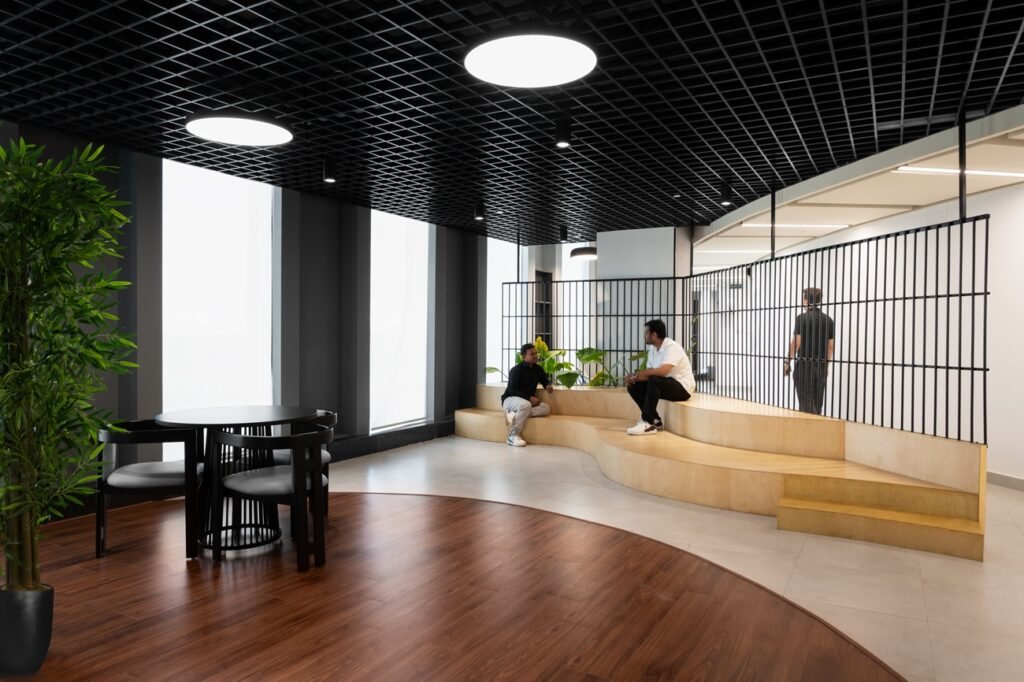
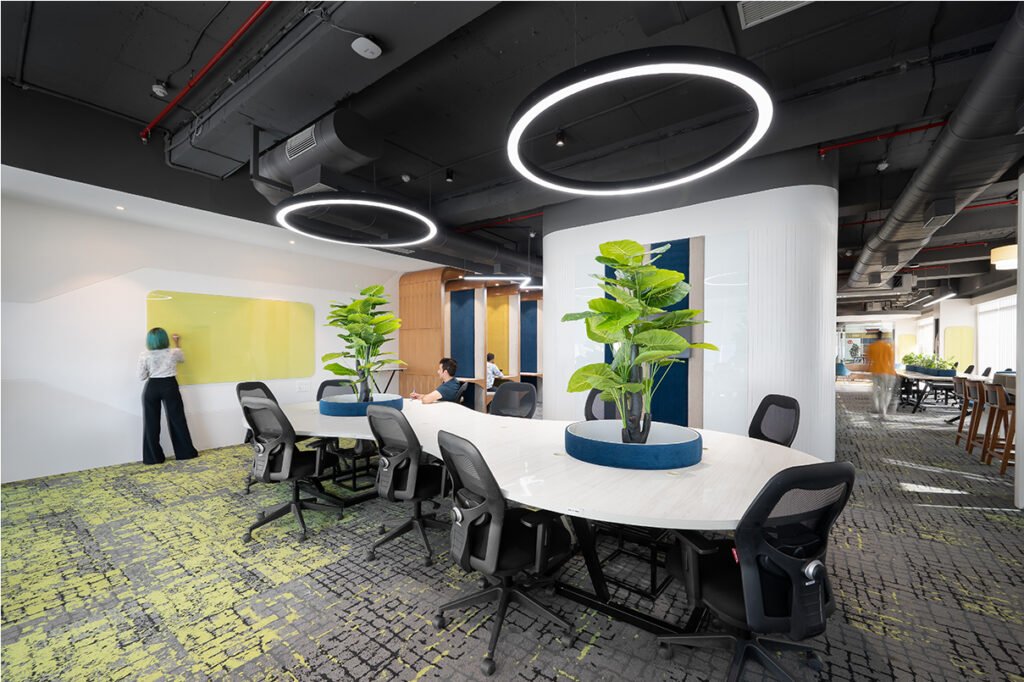
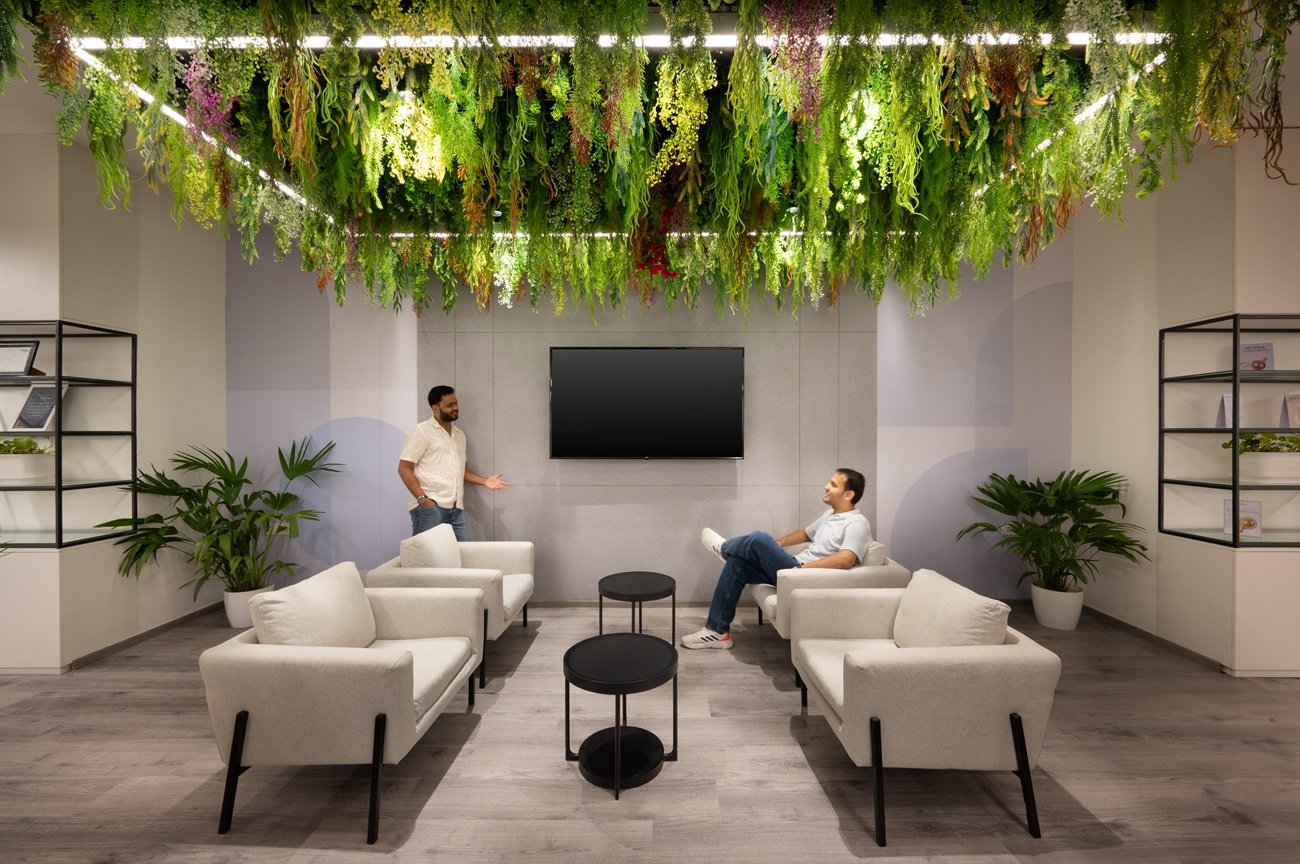
Walk into a new office in Bengaluru or a co-working space in Mumbai, and you’ll likely spot a living moss wall, a cluster of potted ferns, or sunlight streaming through a carefully placed skylight. It looks beautiful. But is it biophilic design or just decoration with leaves?
The distinction matters more than you might think. And if you’re making decisions about a workspace, a school, a hospital, or a home in India, understanding it could be the difference between a space that genuinely performs and one that merely photographs well.
Let’s Start With What It Actually Is
Biophilic design is not a style. It is a strategy rooted in the science of biophilia, the human instinct to connect with living systems and natural processes. The concept, developed by biologist E.O. Wilson, holds that this connection isn’t aesthetic preference; it’s an evolutionary necessity. Our nervous systems are tuned to respond to nature. When design honours that, it delivers measurable outcomes.
Think of it this way: biophilic design is a framework with three operating principles. Nature in the space: direct contact with plants, water, animals, breezes, and natural light. Nature of the space: spatial configurations that mimic natural environments: prospect and refuge, mystery, complexity. And natural analogues such as materials, textures, patterns, and forms that evoke the organic world, even when the real thing isn’t present.
When all three principles work together, the results aren’t subtle. Research shows measurable reductions in cortisol levels, improved cognitive performance, faster recovery in healthcare settings, and higher productivity in workplaces.
Related Insight: Designing for the Planet: How Office Interiors Can Shape a Greener Future
What It Isn’t
Here is where the design conversation needs honest recalibration. A plant in the corner is not a biophilic design. A feature wall with artificial moss is not a biophilic design. A reception area with a single skylight flanked by polished marble does not constitute a biophilic strategy.
These choices can be part of a biophilic approach, but only when they are deliberate, connected to the occupant’s physiological and psychological needs, and integrated into the architecture rather than applied after the fact.
The problem with the decorative interpretation is that it imports an aesthetic from Western and Scandinavian design cultures without examining what the Indian context actually demands. India’s climate, density, cultural relationship with nature, and occupant expectations are distinct.
The India Opportunity
Here’s what’s often overlooked: India already has one of the world’s richest traditions of nature-integrated architecture. The chowk, the jaali, the stepwell, the verandah, these were environmental solutions that also happened to be beautiful. They managed light, heat, air movement, and human connection to the sky and ground simultaneously.
The opportunity in contemporary India is to synthesise that tradition with current neuroscience and climate intelligence. Consider what that looks like in practice: cross-ventilation pathways that double as circulation routes. Courtyard typologies reinterpreted for high-density urban sites. Material palettes that use local stone, unfinished timber, and hand-woven textiles because their tactile variation engages the nervous system in ways that engineered surfaces cannot.
Why It Works: The Numbers Behind the Experience
If you need a business case, the data is robust. Post-occupancy studies from biophilically designed workplaces consistently show a 10–15% improvement in self-reported wellbeing, a measurable drop in absenteeism, and higher talent retention scores. In the Indian market, where competition for skilled professionals is acute, the spatial experience of a workplace is a recruitment and retention strategy.
So, What Should You Do With This?
If you are a developer, ask your design team to show you where biophilic principles are embedded in the brief. Ask for the daylight analysis. Ask how the natural ventilation strategy connects to the occupant experience. Ask what materials are being specified and why.
If you are a designer, the invitation is to go deeper than the surface. The most powerful biophilic interventions are invisible: they are in the section, the orientation, the ceiling height, the acoustic absorption, and the thermal mass. The plants are the last 5%.
India’s buildings can do more. They can do what they were always meant to do: connect the people inside them to the world outside.
Want to introduce biophilic design to your next workplace? Let’s talk!