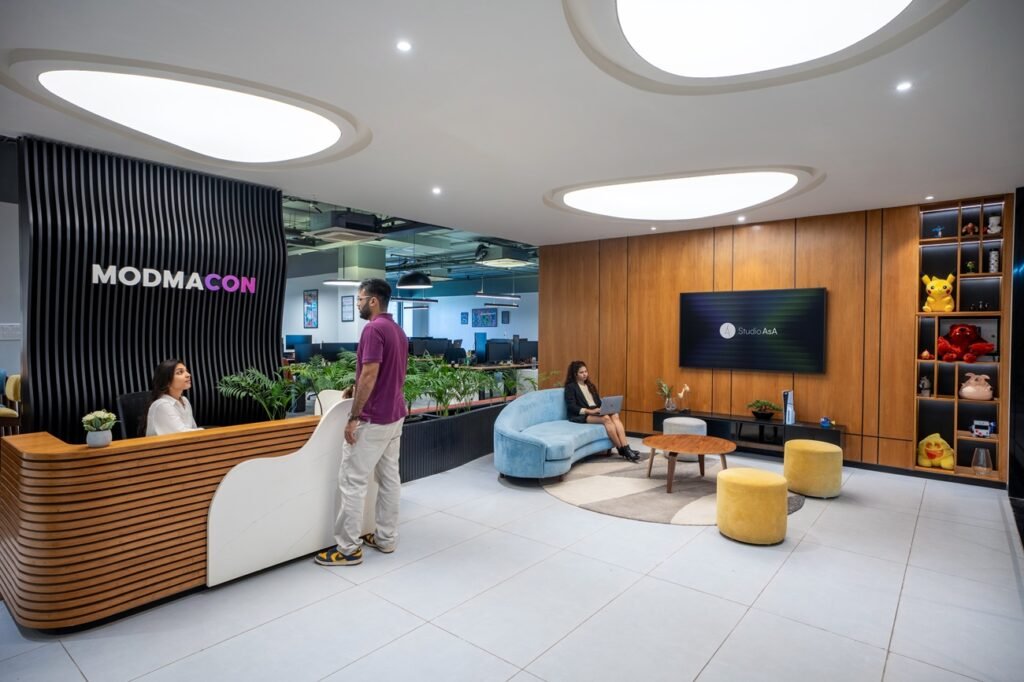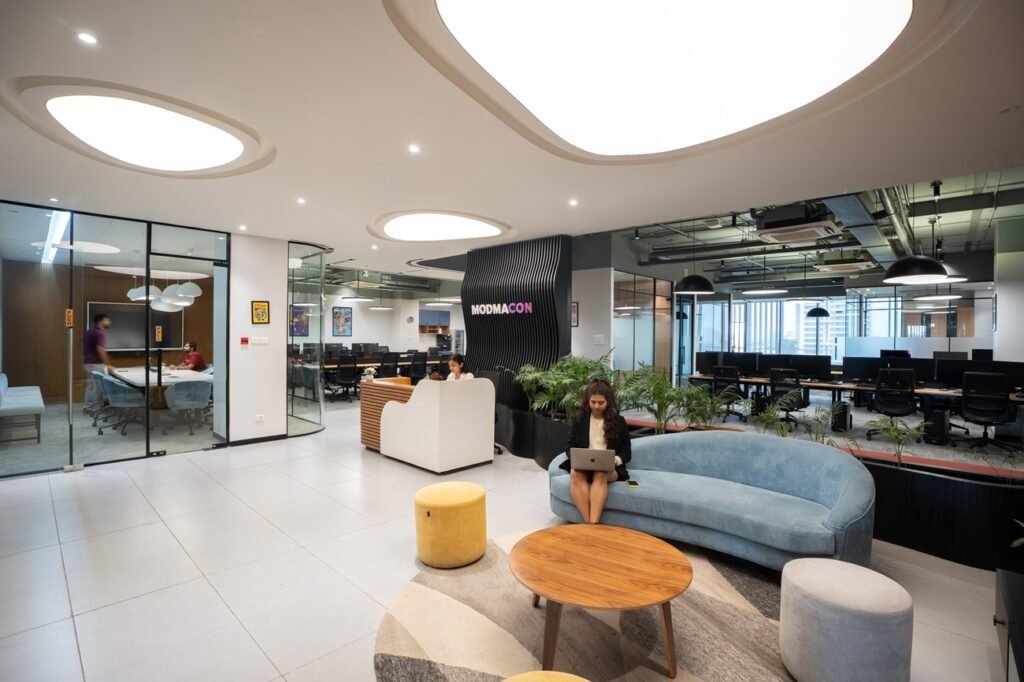


Material selection in workplace design goes far beyond visual appeal. The right materials influence durability, acoustics, maintenance, sustainability, and how a brand is perceived over time. Veneer paneling continues to be a preferred choice in commercial interiors because it balances aesthetics with performance, making it both a design and business decision.
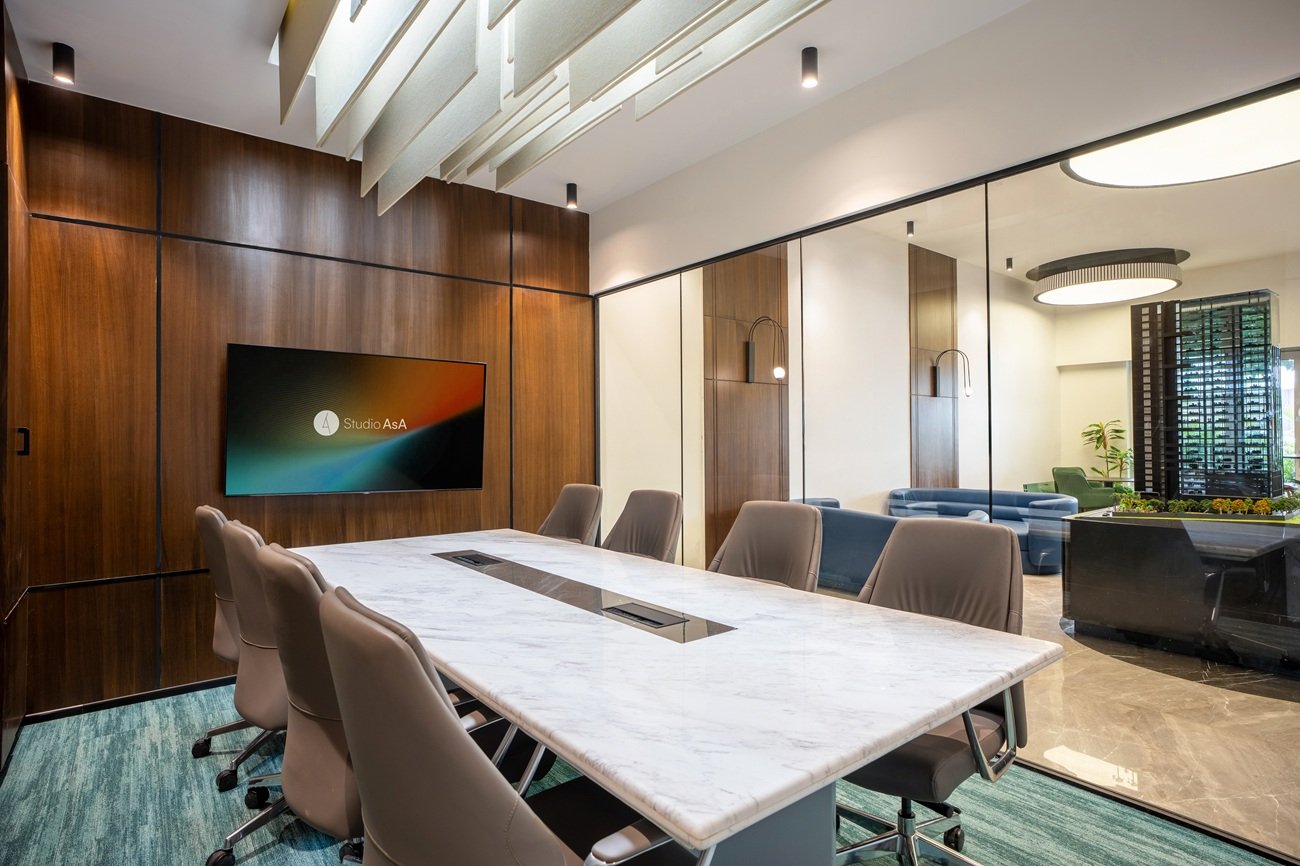
At Studio AsA, veneer paneling is often specified for leadership spaces, meeting rooms, and client-facing areas where longevity, quality, and subtle sophistication are critical.
What Is Veneer Paneling?
Veneer paneling consists of thin slices of natural wood applied over engineered substrates such as plywood, MDF, or blockboard. This construction offers the appearance and texture of solid wood while improving stability and efficiency.
For office environments, this engineered approach ensures consistency across large wall surfaces and reduces the risks commonly associated with solid timber.
Key Benefits of Veneer Paneling in Office Spaces
1. Natural Aesthetics With Controlled Elegance
Veneer retains the authentic grain and warmth of real wood, bringing a sense of refinement to workspaces without overpowering them. This makes it particularly suitable for boardrooms, cabin designs, reception designs and executive meeting rooms.
2. Cost-Effective Use of Natural Wood
Unlike solid wood, veneer allows maximum utilisation of a single log, making it a more resource efficient solution. This not only reduces material cost at scale but also supports responsible sourcing, an important consideration for organisations focused on sustainability and ESG goals.
Superior Dimensional Stability
Office interiors are exposed to constant temperature and humidity variations due to air-conditioning and long operational hours. Veneer panels, when bonded to stable substrates, are significantly less prone to warping, cracking, or expansion compared to solid wood.
Acoustic Performance for Focused Workspaces
When combined with acoustic backing or perforated detailing, veneer paneling helps improve sound absorption. Good acoustic control directly impacts focus, speech clarity, and overall workplace comfort.
5. Low Maintenance and Long-Term Value
Veneer panels are easier to maintain and repair over the lifecycle of an office. Individual panels can be replaced without dismantling entire wall systems, minimising disruption to daily operations and reducing long-term maintenance costs.
6. Flexibility in Design and Brand Alignment
Veneer paneling offers a wide range of finishes from light and contemporary to deep, formal tones. Patterns such as book-matching, fluting, or linear grains allow designers to align interiors with a company’s brand language and leadership identity.
This flexibility makes veneer suitable for both global corporate offices and growing enterprises seeking a refined workplace image.
Where Veneer Paneling Works Best
In commercial office design, veneer paneling is most effective in:
- Boardrooms and executive cabins
- Reception and experience zones
- Feature walls with integrated lighting
- Client-facing corridors
- Spaces requiring acoustic balance
Its value lies in thoughtful placement rather than excessive use.
A Strategic Material Choice
Veneer paneling remains relevant because it supports both design intent and operational efficiency. It delivers warmth, stability, acoustic comfort, and sustainability without compromising durability or maintenance.
At Studio AsA, material decisions are guided by how a workspace needs to perform today and adapt tomorrow.