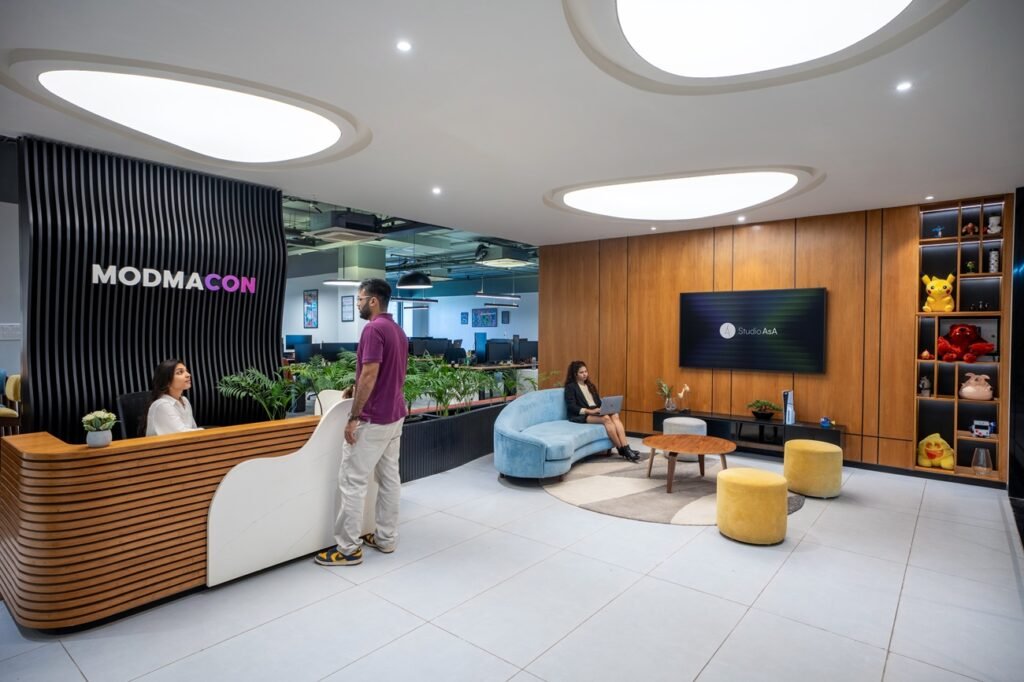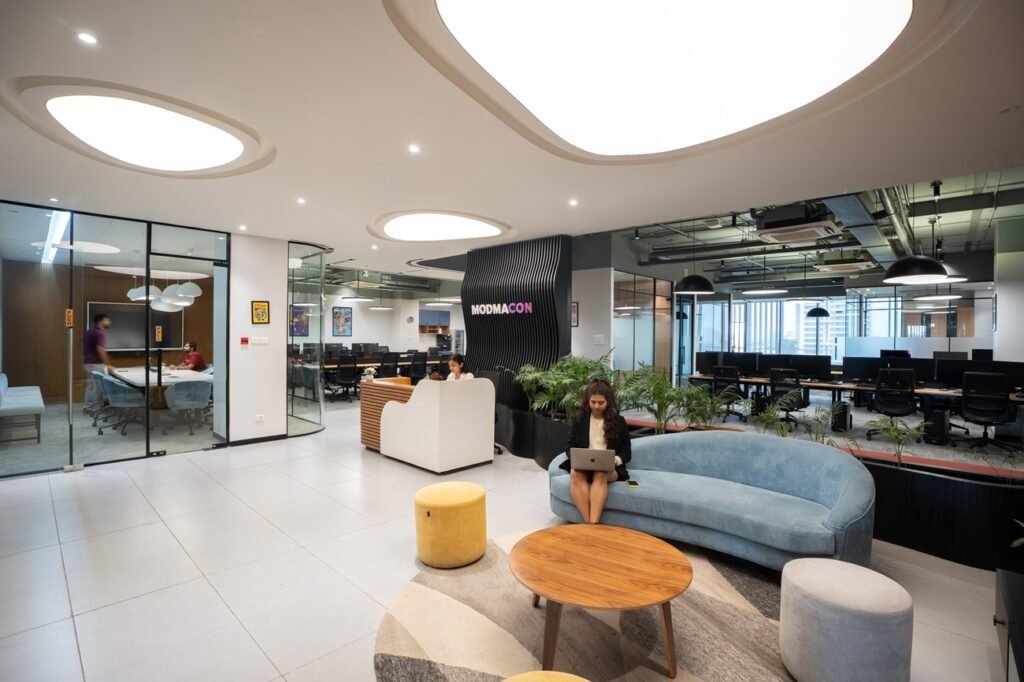


Sustainability in workplace design is often misunderstood as a visual trend or an added cost. In reality, material choices directly impact operational efficiency, employee well-being, and long-term business value. For growing companies in cities like Mumbai, Bangalore, and Pune, where offices are evolving rapidly, sustainable materials are critical.
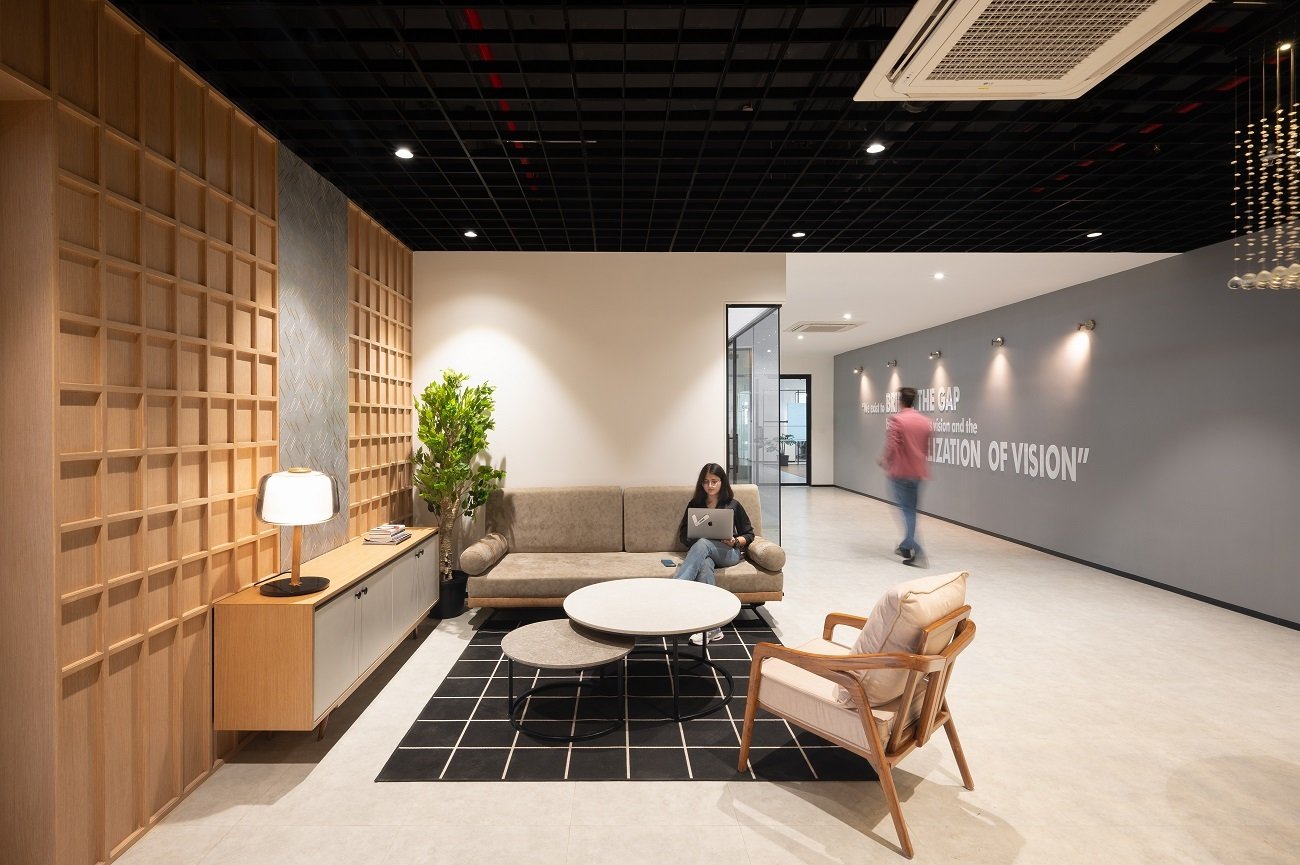
As organisations scale, offices must support performance, adaptability, and longevity. Sustainable materials help achieve exactly that when chosen with intent.
What Do Sustainable Materials Really Mean in Offices?
Sustainable materials are not limited to recycled finishes or eco labels. In workplace design, they refer to materials that are responsibly sourced, durable, low in emissions, and efficient over their lifecycle. This includes low-VOC paints, responsibly manufactured furniture, modular systems that reduce waste, and materials that age well instead of requiring frequent replacement.
In the current office interiors, sustainability is less about dramatic green gestures and more about practical, everyday decisions that reduce waste, energy consumption, and long-term costs.
Why Sustainable Materials Matter for Workplaces
Cities like Mumbai, Bangalore, and Pune face unique challenges, i.e., dense development, high energy consumption, and fast-growing workforces. Offices designed without foresight often require repeated repairs, retrofits, and upgrades, increasing both cost and disruption.
Sustainable materials help address this by offering:
- Longer lifecycle value: Materials that withstand heavy usage reduce replacement cycles.
- Better indoor air quality: Low-emission materials improve employee comfort and health.
- Operational efficiency: Thoughtful material selection supports acoustic control, thermal comfort, and maintenance ease.
For a deeper understanding of this shift, explore our related insight on how material choice impacts workplace experience which breaks down how material performance directly influences workplace efficiency, wellbeing, and productivity.
Employee Wellbeing Starts With Material Choices
Workplace performance is deeply linked to the physical environment. Poor air quality, glare, noise, and thermal discomfort are often traced back to material decisions made early in the design process.
Sustainable materials support employee wellbeing by reducing toxins, improving acoustics, and creating calmer visual environments. For companies competing for talent in Bangalore’s tech sector or Mumbai’s corporate hubs, this directly influences retention and productivity.
Sustainability and ROI Are Closely Linked
A common misconception is that sustainable materials increase project costs. While some materials may have a higher initial price, they often deliver better value over time. Reduced maintenance, lower energy bills, and fewer replacements significantly improve return on investment.
For growing organisations in Pune or expanding headquarters in Mumbai, these long-term savings matter. Sustainability in office design should be made during planning to prevent costly retrofits later.
Compliance, Certifications, and Future Readiness
Green building standards such as IGBC are gaining importance across Indian cities. Offices that integrate sustainable materials early are better positioned to meet compliance requirements and future regulations.
Beyond certifications, these choices signal responsibility to clients, investors, and employees. As businesses grow, their workplaces increasingly reflect their values.
Designing Sustainable Offices That Actually Work
Sustainability should never be layered onto a finished design. It must be integrated into planning, material selection, and execution from day one. This ensures the office remains adaptable as teams grow and work patterns evolve.
At Studio AsA, sustainable workplace design is approached strategically, aligning material choices with business goals, employee needs, and long-term performance. Especially in competitive markets like Mumbai, Bangalore, and Pune, offices must work harder, last longer, and evolve seamlessly.
Final Thought
For organisations planning their next office or upgrading an existing one, material choices made today will define performance for years to come.