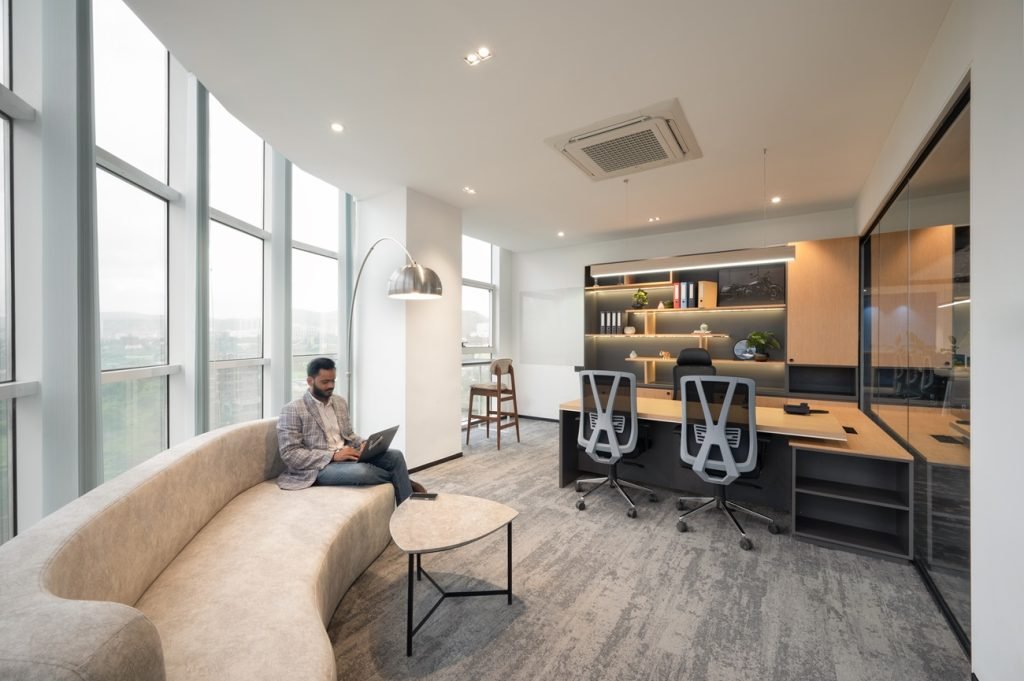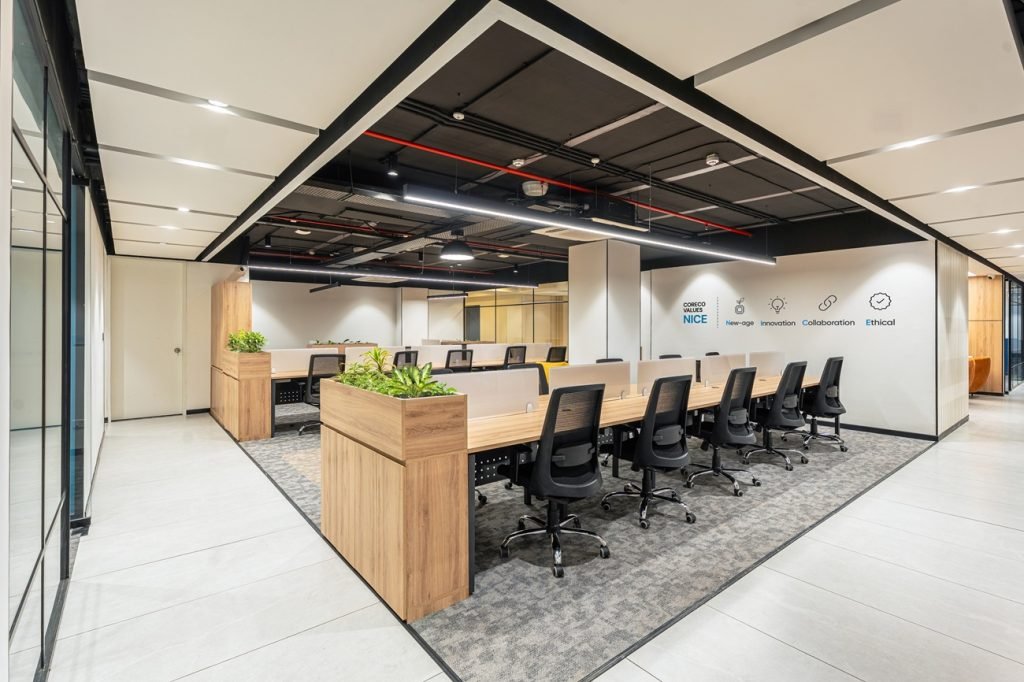


What does your office layout say about your organization?
Long before someone reads your mission statement, they read your floor plan. Corner cabins, enclosed executive suites, rows of workstations, hidden meeting rooms, each spatial decision communicates how power flows, how accessible leadership is, and how collaboration truly happens.
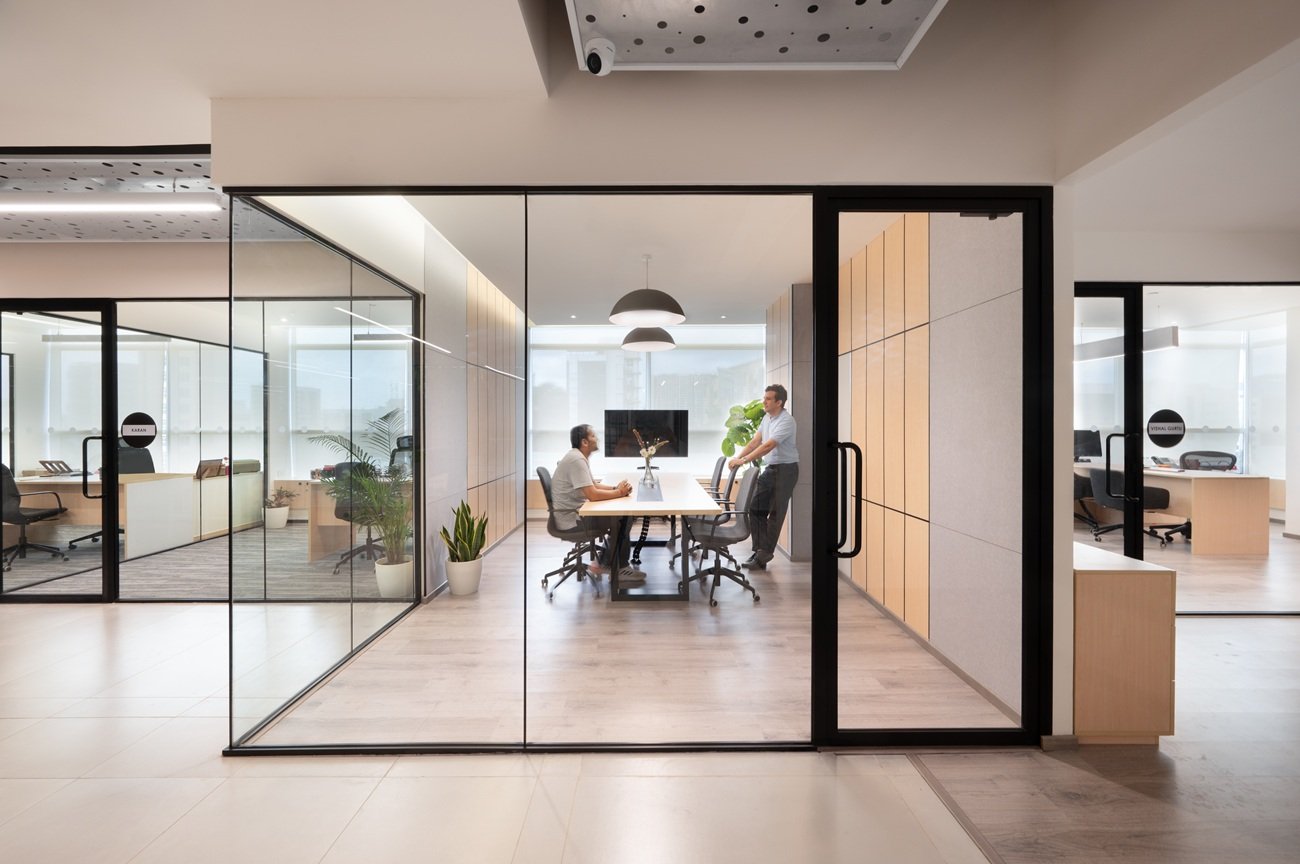
Today’s organizations are flatter, faster, and more interconnected than ever. Yet many offices still reflect hierarchical models designed decades ago. If your business has evolved but your layout hasn’t, there’s a misalignment that employees can feel, even if they can’t articulate it.
The question is not whether hierarchy exists. It always will. The real question is: Is your physical environment reinforcing the right kind of hierarchy or resisting the culture you’re trying to build?
When Space Reinforces Silos
Traditional office layouts were built around the visibility of authority. Larger cabins signaled status. Distance signaled rank. Access signaled power.
But in a knowledge-driven economy, distance often creates friction. When decision-makers sit behind layers of physical separation, communication slows. Innovation becomes cautious. Informal learning disappears.
You may be investing in collaboration tools, agile workflows, and leadership training. Yet if your space still prioritizes isolation over interaction, those investments are working against the environment.
Research consistently shows that spatial proximity influences trust, knowledge exchange, and speed of decision-making. A layout that reinforces silos doesn’t just affect culture; it affects performance.
So how do you realign space with contemporary organizational values?
Designing for Visibility, Not Surveillance
Transparency does not mean removing every wall. It means designing intentional visibility.
Glass-fronted leadership spaces, shared project zones, and accessible touchdown areas can create symbolic and functional openness. When leaders are visually and physically present within the ecosystem, it signals approachability and shared accountability.
At the same time, transparency must be balanced with psychological safety. Acoustic control, focus rooms, and retreat areas remain critical. The goal is not radical openness, rather it’s equitable access to space.
If your organization is shifting toward collaborative leadership, your layout should demonstrate that shift. Explore how this connects to our thinking on effective space utilization in office designs.
From Fixed Hierarchies to Fluid Zones
In modern workplaces, hierarchy is increasingly contextual. Authority shifts depending on expertise, project ownership, and team composition.
Your office layout can support this fluidity.
Instead of static departmental clusters, consider activity-based neighborhoods. Create zones that flex based on team needs, like collaboration hubs, quiet libraries, innovation labs, and social commons.
This approach moves hierarchy from “who has the biggest room” to “who has the right environment to perform their role effectively.”
When employees choose spaces based on task, not title, you empower performance while preserving structure.
Ask yourself:
- Do your teams have access to a diversity of spatial settings?
- Are collaboration areas located where interaction naturally happens?
- Is leadership embedded within the workflow or removed from it?
If the answer reveals an imbalance, layout redesign becomes a strategic intervention, not an aesthetic upgrade.
Leadership Presence in the Hybrid Era
Hybrid work has added a new layer of complexity to hierarchy. Physical presence no longer equals authority. Influence is distributed across digital and physical environments.
Offices must now support moments that matter, such as mentorship, alignment, innovation, and cultural reinforcement. This means rethinking executive zones not as private territories but as shared anchors. Leadership spaces can double as town hall venues, collaborative review rooms, or strategy studios.
When leaders occupy flexible, multi-use environments, it signals adaptability. It tells employees that hierarchy is functional.
Discover more about aligning space with evolving work patterns in our strategic guide of office design.
Equity as a Design Principle
One of the most powerful shifts happening in workplace design is the move from status-based allocation to experience-based equity.
Does everyone have access to daylight?
Are ergonomic standards consistent across levels?
Is your office welcoming for all?
Spatial inequity quietly reinforces organizational divides. In contrast, equitable design fosters belonging and trust. This does not eliminate hierarchy. It reframes it. Authority becomes defined by responsibility and expertise, not by square footage.
When organizations adopt equitable spatial standards, they often see improvements in engagement, retention, and cross-functional collaboration.
The Business Case for Rethinking Layout
Realigning office layouts with organizational hierarchy is strategic.
A thoughtfully redesigned environment can:
- Reduce decision-making time
- Increase spontaneous collaboration
- Strengthen mentorship and knowledge transfer
- Support succession planning
- Enhance employer brand perception
In competitive markets, culture is a differentiator.
A Framework for Moving Forward
If you’re considering rethinking your layout, start with these steps:
- Audit your current hierarchy model. Is it centralized, distributed, project-based?
- Map spatial allocation against influence. Does space reflect how decisions are actually made?
- Engage employees across levels. How do they experience accessibility and authority?
- Prototype before permanent change. Test new adjacencies and shared zones.
- Align design with long-term strategy. Layout must support where you’re going—not where you’ve been.
At Studio AsA, we see workplace design as a lever for organizational transformation. If your ambition is to build a more agile, transparent, and resilient organization, your floor plan must participate in that ambition.
Because ultimately, hierarchy will always exist.
The opportunity is to ensure your space expresses the right one.
Ready to evaluate your workplace alignment?
Connect with our team for more information.