
Omicron

Omicron demonstrates how strong design thinking can transform structural constraints into purposeful, high-performing environments. Designed for a client-facing real estate workspace, the design balances technical precision, spatial clarity, and a premium yet restrained material language. Every decision from layout, lighting, to detailing, was driven by functionality, brand perception, and everyday usability.
  • Area

    7,000 Sq.ft

  • Completion Year

    2025

  • Location

    Pune

  • Status

    Completed

Quick Overview

  • Structural limitations were treated as opportunities, not restrictions
  • Central shafts became the organising element for circulation and zoning
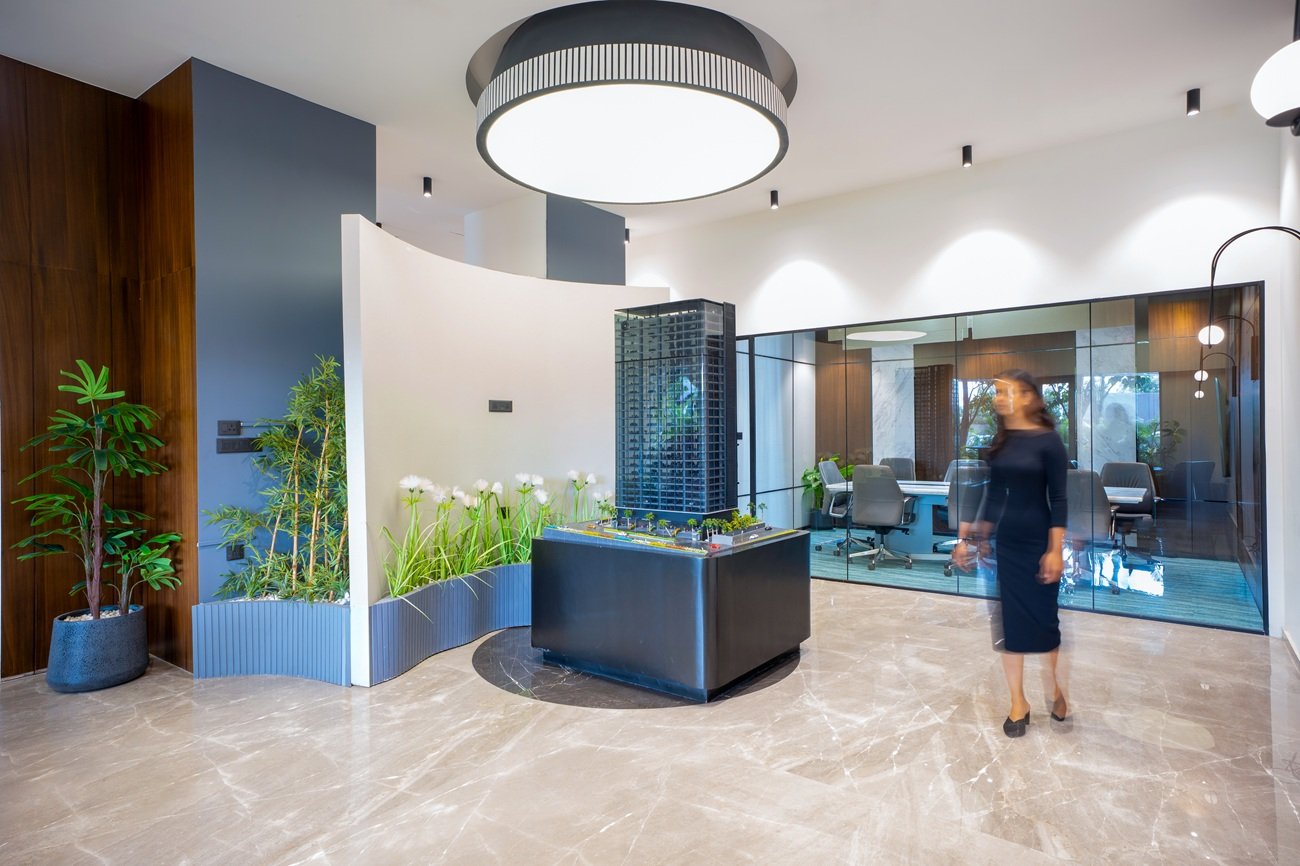
  • Display areas were integrated to support client interaction and brand storytelling in office design

Designing Around the Core

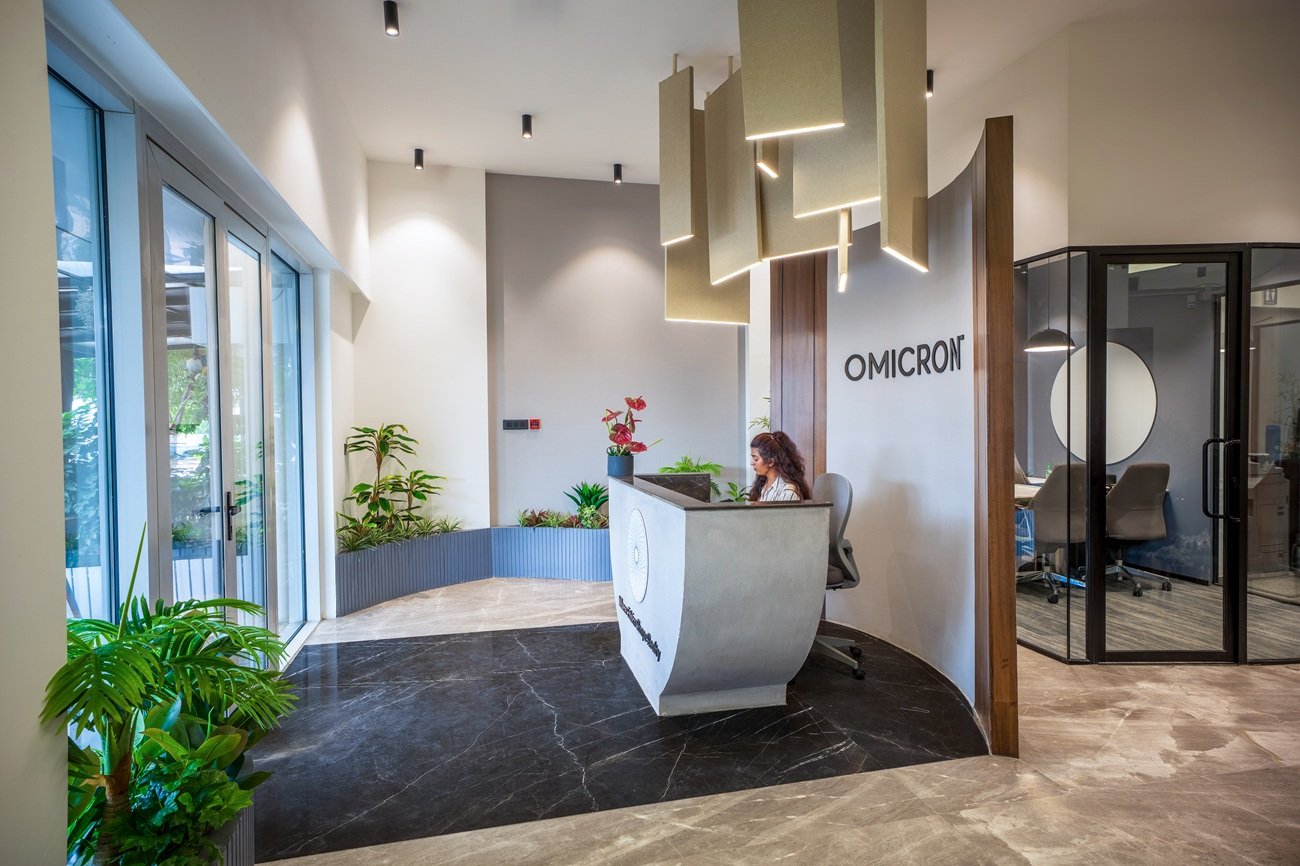
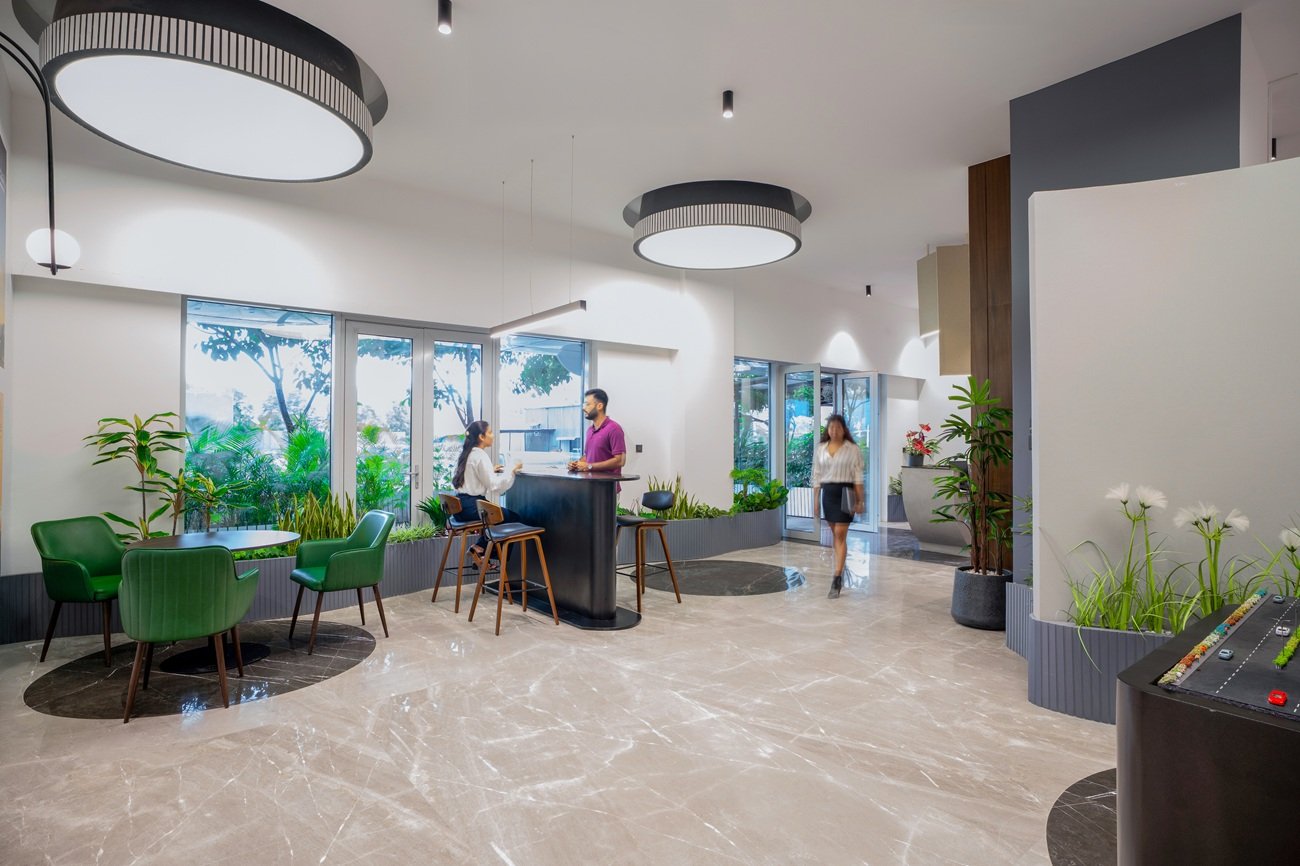
The two central shafts became the starting point of the layout strategy. Instead of hiding them, we used them to organise movement, zoning, and visual flow. Curved glass elements were introduced to soften the rigidity of the structure and allow light to travel freely across the workspace. These curves are not merely aesthetic but they guide circulation intuitively, reduce visual clutter, and create a sense of openness despite the controlled ceiling heights.

Lighting as a Design Statement

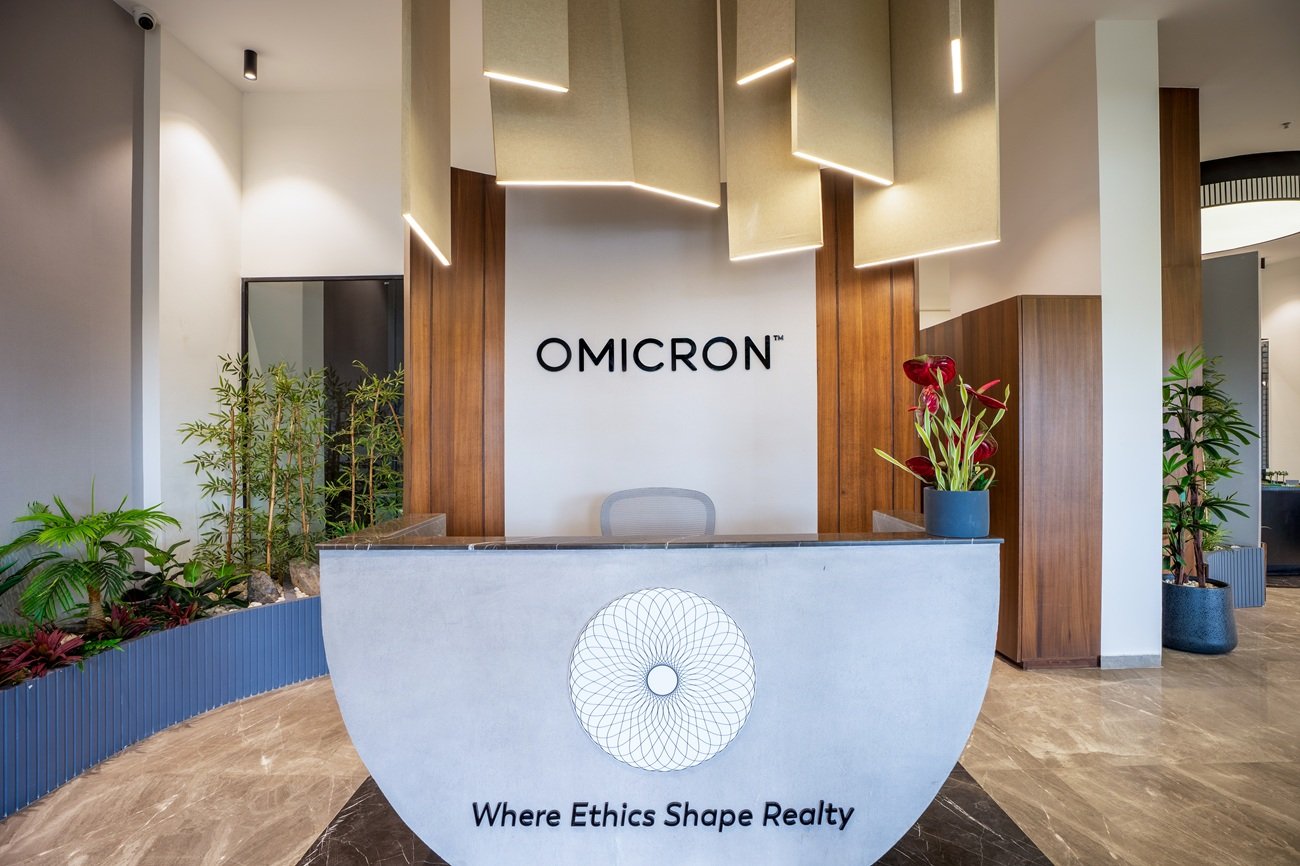
One of the defining elements of this project is its lighting strategy. To achieve a contemporary, refined atmosphere, we used stretch ceiling lights, adding a seamless, modern layer overhead without overwhelming the space.

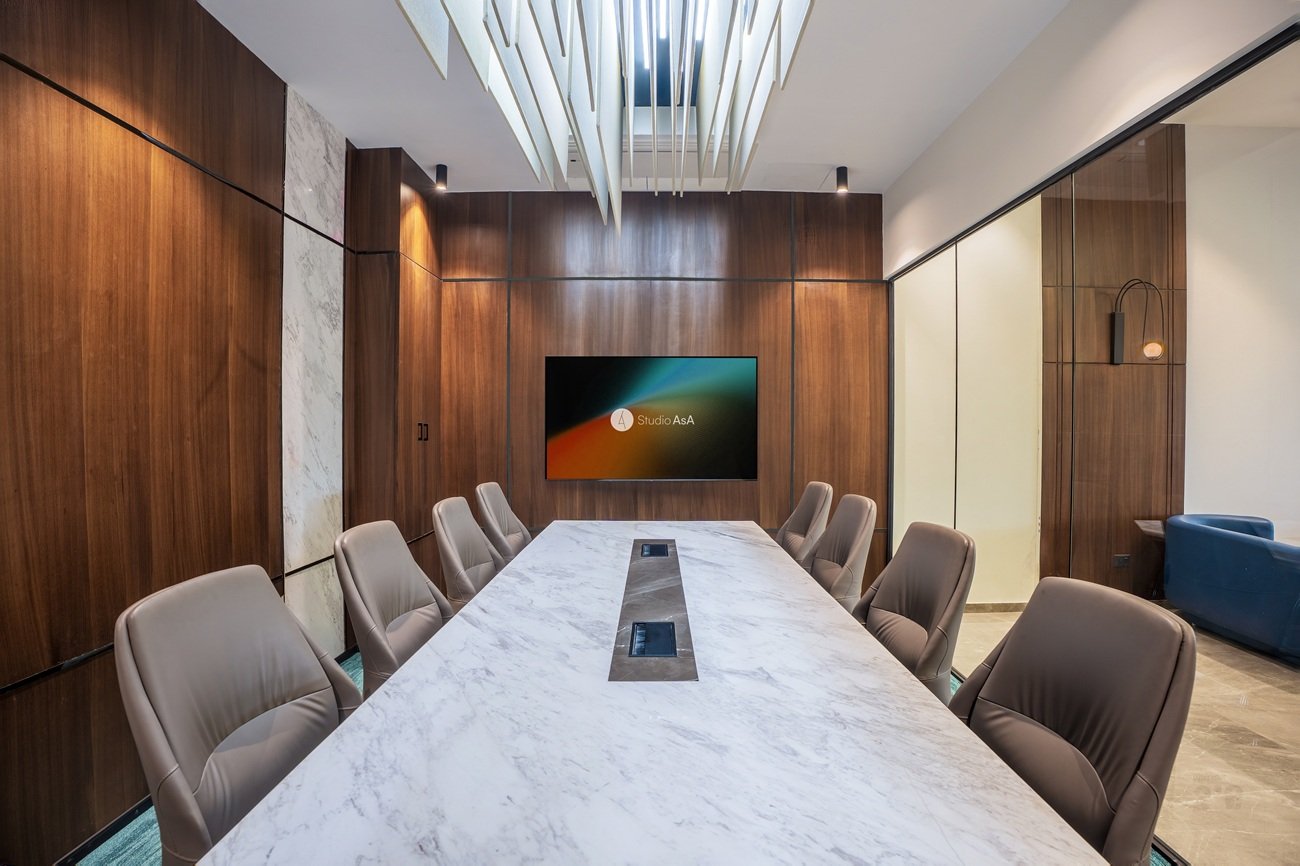
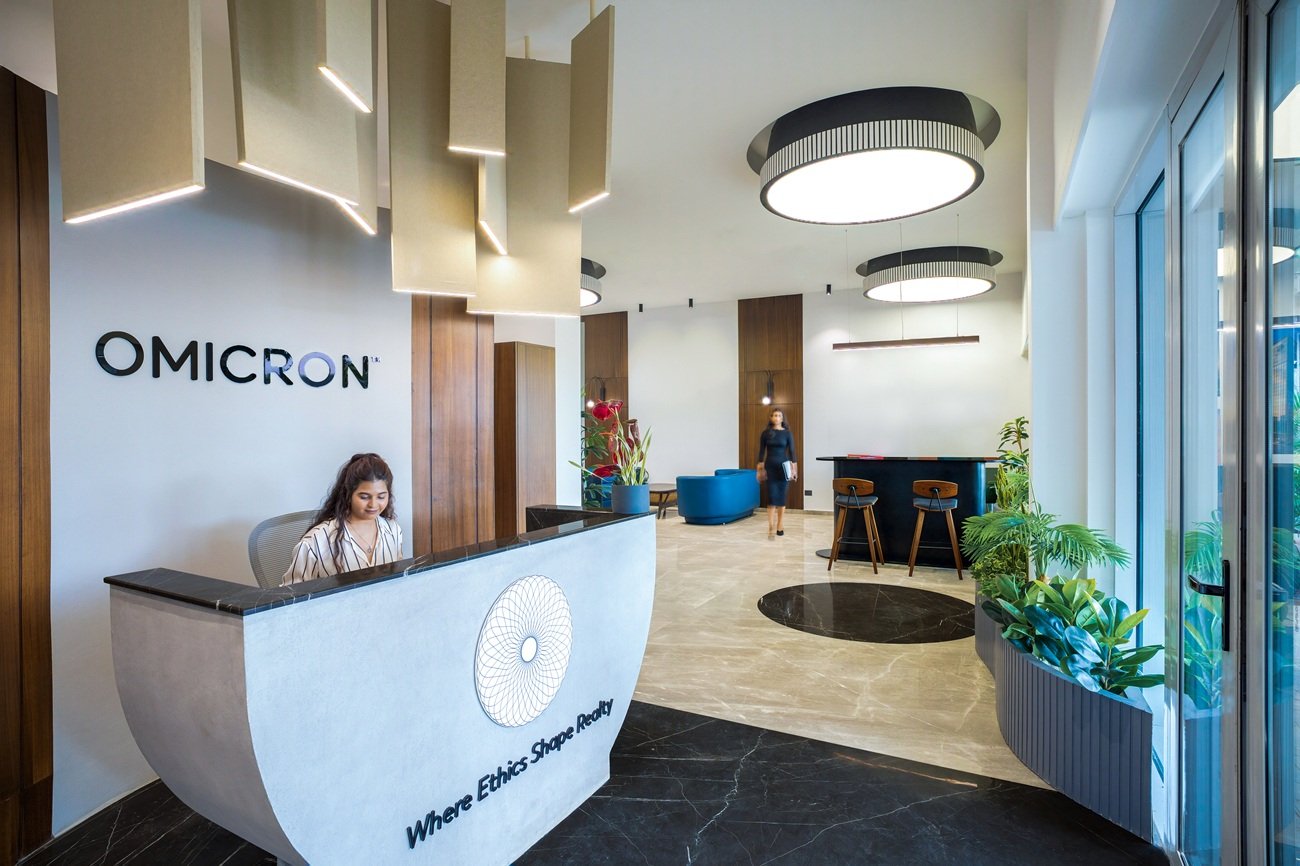
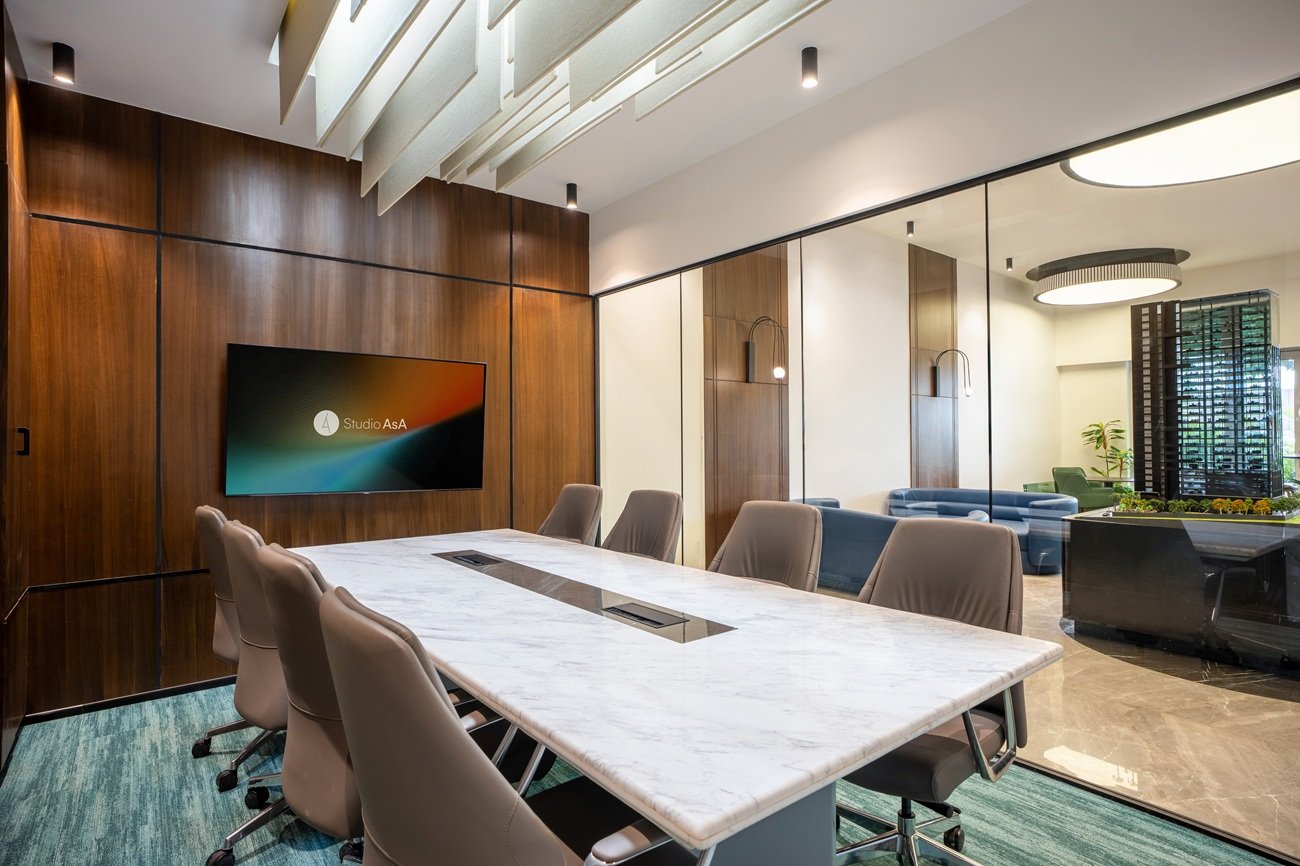
Beyond general lighting, we invested deeply in custom-designed fixtures, particularly in the reception and boardroom. These lights were developed through internal R&D, ensuring they aligned with the spatial geometry, ceiling constraints, and brand identity for the office interior. The result is lighting that reinforces identity and enhances spatial experience.

Material Language: Quietly Premium

Material selection was driven by longevity, tactility, and understated luxury. Tabletops and flooring feature a Statuario marble finish, lending the space a premium, timeless character without feeling excessive. Veneer panelling was used extensively to introduce warmth and balance against the glass and lighting elements.

The overall material palette was intentionally restrained allowing textures, proportions, and detailing to do the heavy lifting. This is where architectural discipline meets refined design.

Takeaways

  • Good design begins with constraints: Technical challenges can lead to stronger spatial outcomes

  • Function drives form: Layouts must support workflows, privacy, and client engagement

  • Lighting is a strategic tool: Custom and stretch lighting elevate both experience and perception