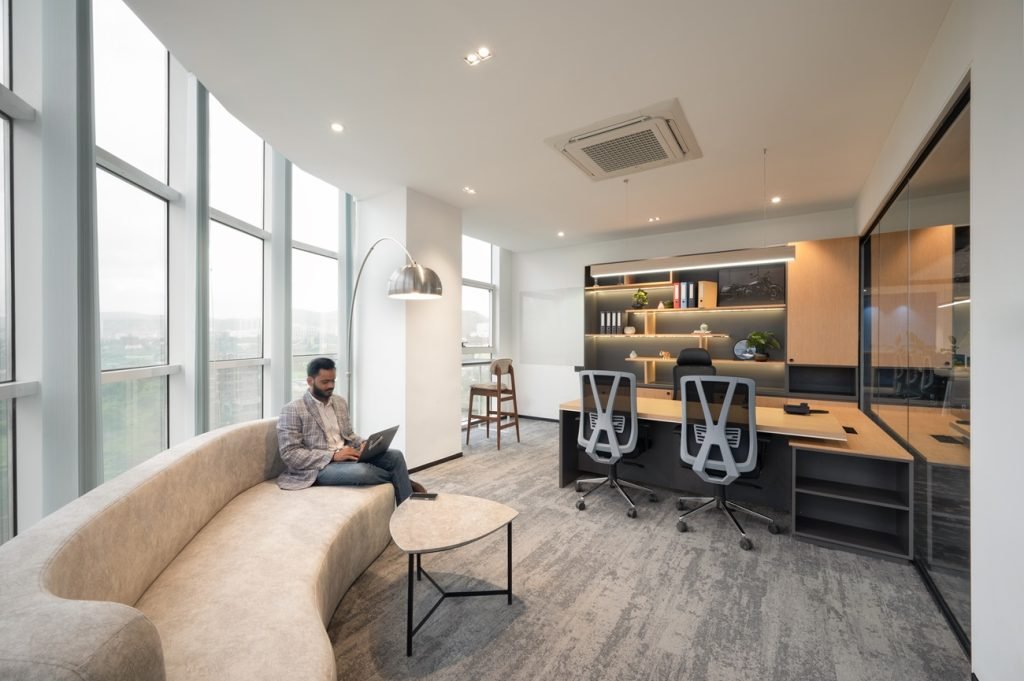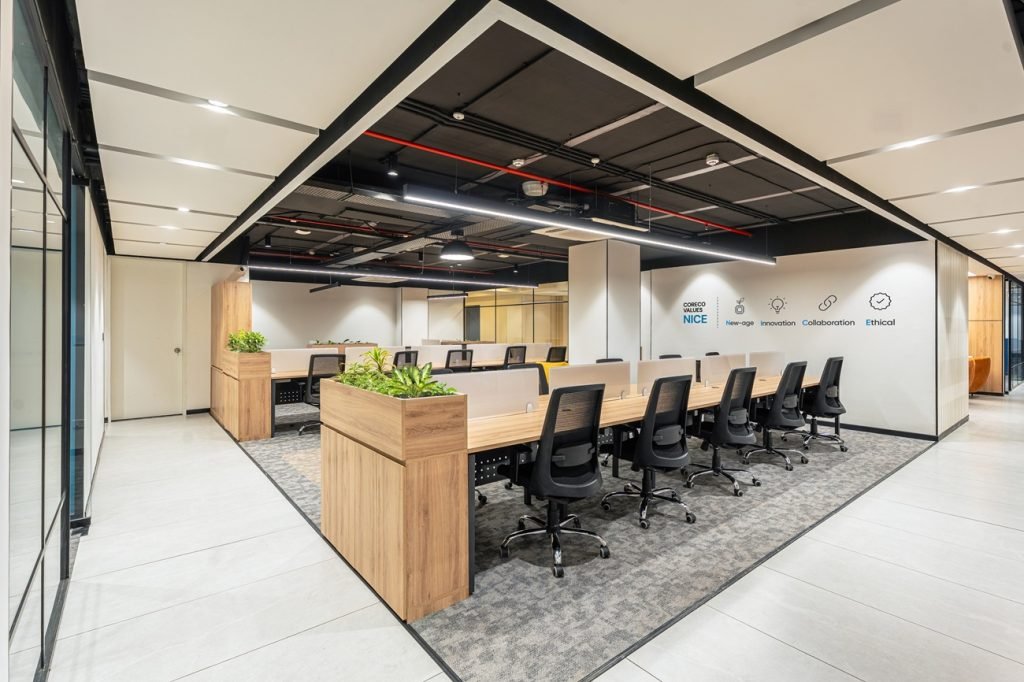


There is a moment when most business leaders recognise standing in their own office, watching their team move through a space that technically works, and feeling deeply that something is wrong. People are present but not fully there. The floor plan makes sense on paper, but the energy doesn’t land. The office exists, but it doesn’t perform.
That feeling is data.
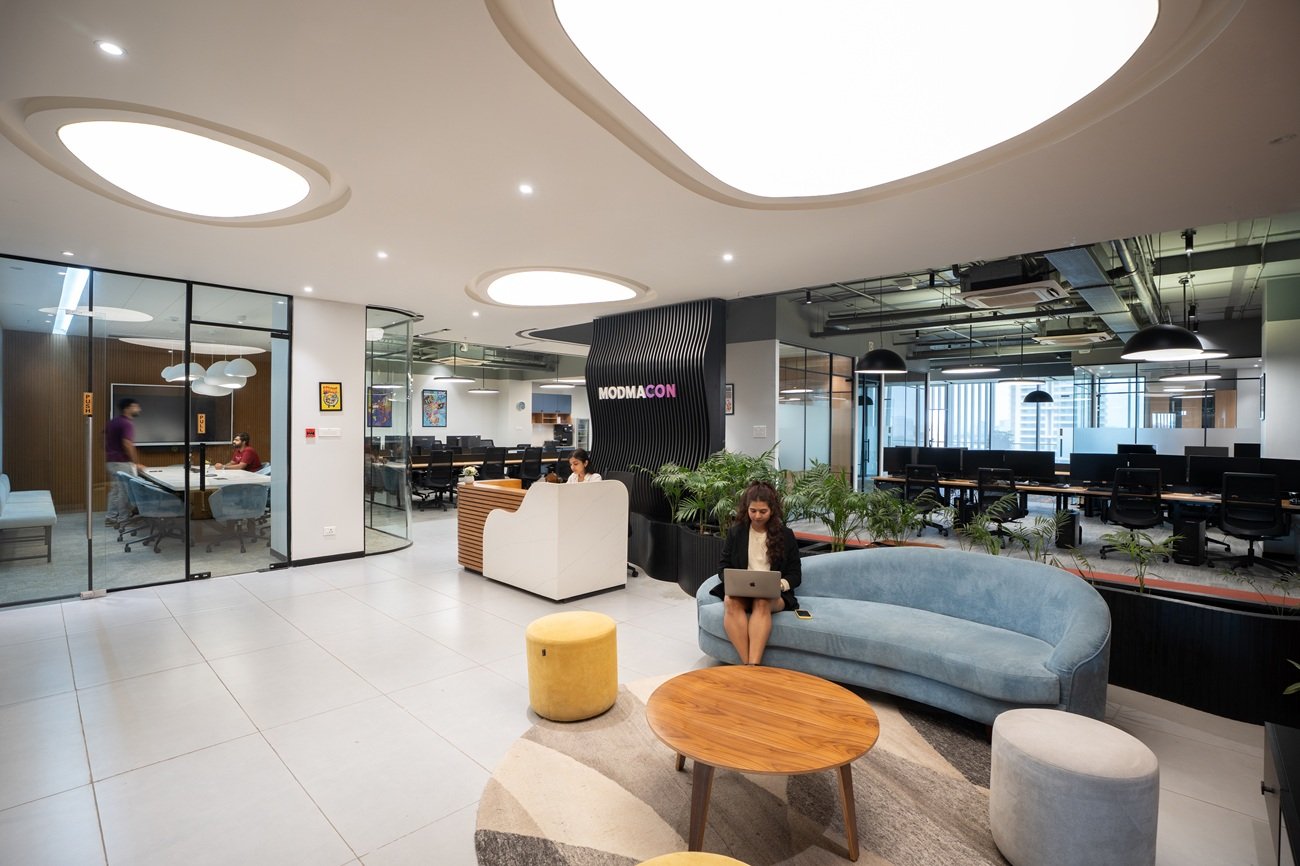
For decades, Indian workplaces have been designed around a simple, seductive logic: fill the space efficiently, keep costs lean, and let the business worry about people, which results in a generation of offices that optimise for furniture budgets and square footage and subtly undermine the very people they are meant to support. When Gensler’s Global Workplace Survey revealed that employees who can choose how and where they work within an office are 1.3 times more likely to be high-performers, the industry was forced to confront an uncomfortable truth: space is not neutral. Every design decision either invests in people or works against them.
At Studio AsA, we call this the People-First imperative, and it is the foundation on which every project we undertake is built.
The Pain Points Leaders Are Living With
Before we talk solutions, let’s be honest about what we see across offices in Pune, Mumbai, Bangalore, and Hyderabad. The problems are remarkably consistent.
- Noise is the number one productivity killer. Open-plan offices, once sold as collaboration engines, have become distraction engines. Research from Oxford Economics found that 99% of knowledge workers experience negative effects when unable to concentrate, yet most Indian offices have almost no designed acoustic strategy. Teams are managing their focus with headphones and late evenings, not because they aren’t motivated, but because the space leaves them no choice.
- People don’t have enough variety of space. The modern knowledge worker needs to move between deep focus work, collaborative ideation, short social connections, and restorative breaks — sometimes all within a single morning. Yet the majority of offices offer one setting: a row of desks. The result is fatigue that’s often misread as disengagement. It isn’t. It’s a spatial problem.
- The office has lost its competitive case. With hybrid work now a baseline expectation, employees are making daily decisions about whether to commute. The office needs to earn its place. If your workspace offers nothing that a home desk cannot – no energy, no connection, no sense of identity or culture – people will quietly vote with their feet. Occupancy data across our projects consistently shows that the offices people choose to come to are the ones designed for human experience, not just human storage.
What People-First Design Actually Means
People-First office design is a commitment to create spaces that serve the people who will use it.
In practice, it means beginning every project with a workplace strategy conversation. Before we draw a single line, we want to understand how your teams actually work: who collaborates with whom, when focus is critical, what your culture feels like at its best, and where that culture currently breaks down. A space that doesn’t reflect these realities is a beautiful problem.
From that foundation, People-First design delivers four non-negotiables:
- Acoustic intelligence. Zoning spaces by activity so that concentration is protected, collaboration is energised, and neither bleeds into the other. The solution is not simply adding acoustic panels; it is designing zones where noise behaviour is anticipated from the start.
- Flexibility as infrastructure. Not open plans, not fixed private offices, but a layered ecosystem of settings such as focus pods, team neighbourhoods, collaborative commons, and genuine social spaces, that gives individuals the agency to match their environment to their task.
- Sensory consideration. Light quality, material warmth, greenery, and spatial proportion are the physical variables that regulate human stress and alertness. When biophilic elements and considered lighting are woven into a space, the impact on people’s energy and mood is measurable, and your attrition numbers will eventually reflect it.
- Identity and belonging. The most powerful thing an office can do is make people feel they are part of something worth showing up for. Design that reflects a workplace culture, celebrates its people, and holds its culture gives employees a reason to choose the office over their kitchen table. Every day.
The Brief Has Changed
The era of building offices for the company is over. The era of building them for the people inside is here, and the organisations that understand this earliest will have a quiet, compounding advantage: workplaces that attract talent, hold culture, and make the human experience of work genuinely better.
At Studio AsA, that is the only brief we know how to answer.
Let’s start the conversation. Our team at Studio AsA would love to help you design inspiring workplaces.