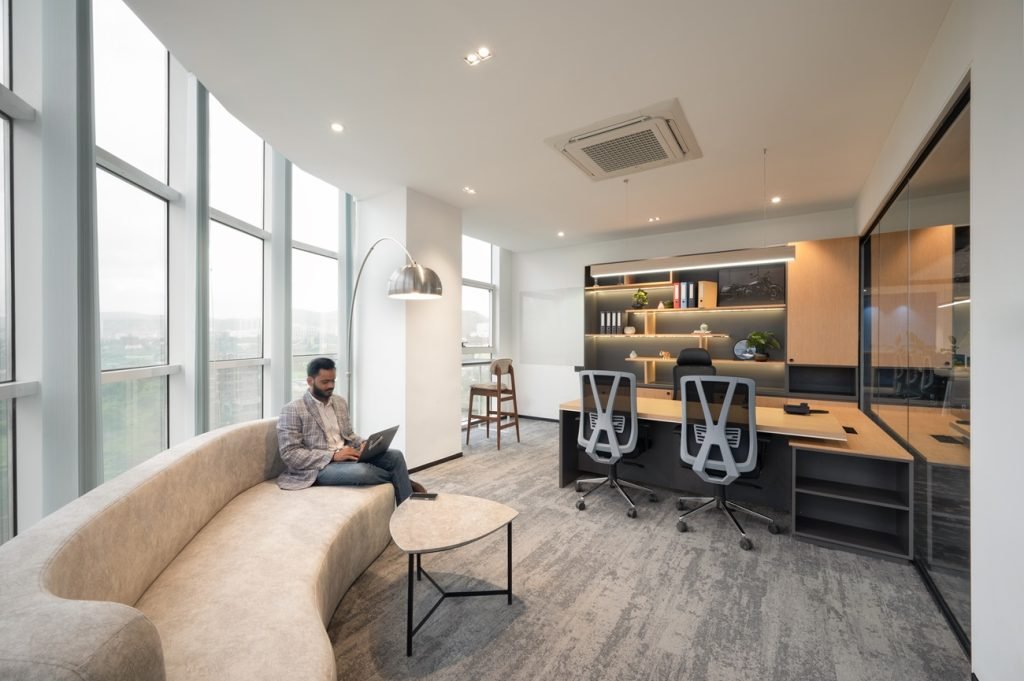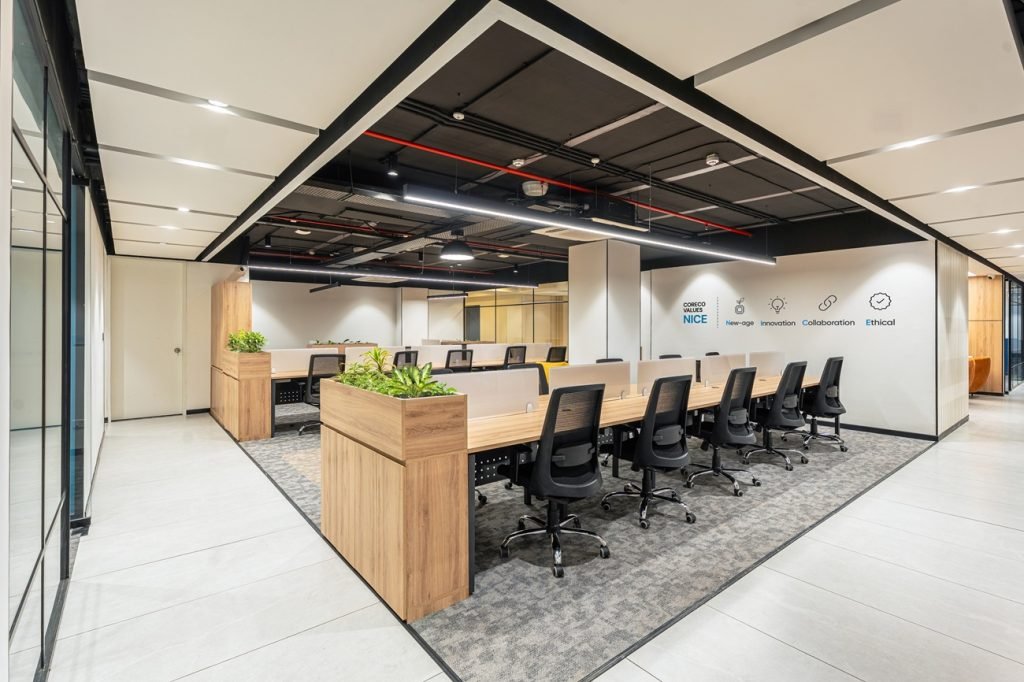


What if your workplace wasn’t just a backdrop to work but an active driver of performance?
Today’s organizations are asking harder questions about space. Not “How many desks do we need?” but “How does our environment enable focus, connection, innovation, and growth?” The shift is significant. Real estate is no longer a cost center to be optimized. It is a strategic asset to be leveraged.
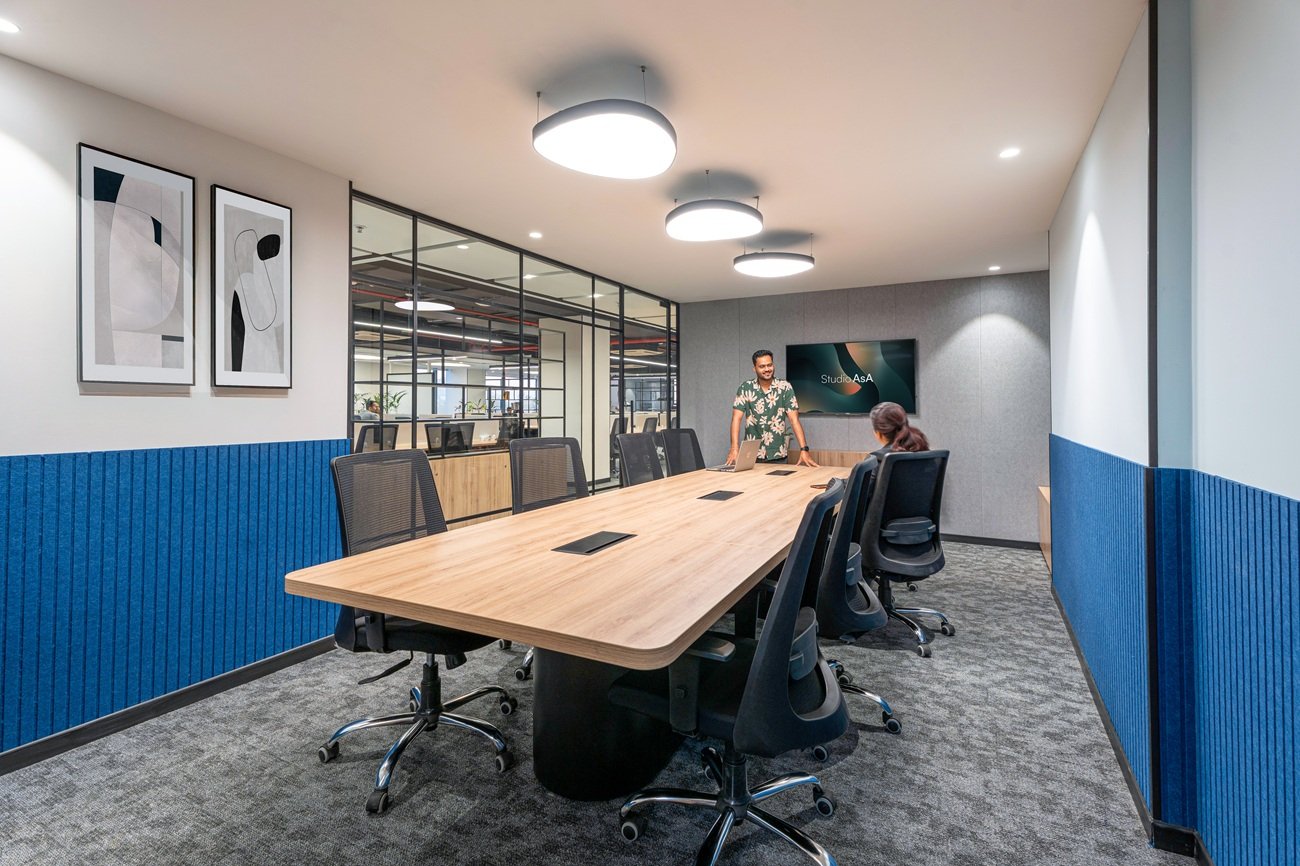 At Studio AsA, we believe workplace design must begin with intention. And intention begins with strategy.
Start with Outcomes
Beautiful spaces are inspiring. But inspiration without alignment rarely delivers measurable value.
Before design begins, we ask you:
- What behaviors are critical to your success?
- Where does performance currently lag: collaboration, concentration, decision-making speed?
- How do your teams actually work versus how you think they work?
The answers form the foundation of a workplace strategy that ties spatial decisions directly to business goals. When design is rooted in evidence, it becomes a performance tool.
For example, if innovation is a priority, we analyze how ideas move through your organization. Are teams siloed? Do spontaneous interactions occur? Are project rooms adaptable? The layout then becomes a deliberate intervention to improve cross-functional flow.
Strategy aligns space with purpose. Without it, design is guesswork.
Data Is Your Competitive Advantage
The most effective workplaces today are informed by both quantitative and qualitative data. Occupancy analytics, utilization studies, employee surveys, and leadership interviews reveal patterns that aren’t visible on a floor plan.
You might discover that your “collaborative” office is 60% underutilized because teams lack psychological comfort. Or that enclosed cabins designed for hierarchy are unintentionally slowing decision-making.
These insights enable targeted solutions:
- Rebalancing focus and collaboration zones
- Introducing adaptable neighborhoods instead of rigid departments
- Designing visual transparency to support cultural transparency
When you understand how space is actually used, you can optimize square footage while elevating experience.
Design for Behavior
Every workplace encodes messages. Who gets access to daylight? Who has privacy? Where do leaders sit? These spatial signals influence behavior more than policy documents ever will.
If your goal is agility, fixed seating may be counterproductive.
If your goal is mentorship, leaders hidden behind walls send the wrong message.
If your goal is well-being, acoustics and air quality cannot be afterthoughts.
A high-performing workplace balances three critical modes:
- Focus – Spaces that protect deep work and cognitive energy
- Collaboration – Zones that encourage structured and spontaneous interaction
- Community – Areas that foster belonging and informal connection
When space supports the behaviors you value, performance follows naturally.
Flexibility Is a Strategic Imperative
Modular partitions, flexible furniture, multipurpose rooms, and infrastructure that supports digital integration ensure that your space adapts as quickly as your strategy does. This reduces long-term capital expenditure and increases resilience.
Flexibility also extends to policy alignment. A hybrid strategy without spatial clarity creates friction. Employees need clear cues: Where do I collaborate? Where do I focus? Why should I commute today?
When physical space reinforces hybrid intent, the office becomes a magnet, not a mandate.
Wellbeing Is a Performance Metric
Well-being is often treated as a soft benefit. In reality, it is a hard metric.
Lighting quality impacts circadian rhythms.
Acoustic control affects cognitive fatigue.
Access to biophilia reduces stress.
Ergonomic diversity minimizes physical strain.
When employees feel better, they think better. When they think better, they perform better.
Measure What Matters
Transformation does not end at occupancy. The most successful organizations revisit performance metrics post-implementation, where collaboration indicates improvement, space utilization is optimized, employees report higher engagement, and real estate cost per employee decreases without sacrificing experience.
Design becomes a living system refined through feedback and recalibration.
The Question for You
Your workplace already communicates something. The question is: does it align with where you are going?
If your organization is scaling, evolving, or redefining culture, your environment must evolve with it. Strategy-led design ensures that every square foot works harder, supporting people, performance, and purpose simultaneously.
At Studio AsA, we approach workplace design as a strategic partnership. We listen, analyze, prototype, and measure. Because the goal isn’t just a new office.
It’s a measurable shift in how your organization performs.
Connect with our team for more office design ideas.