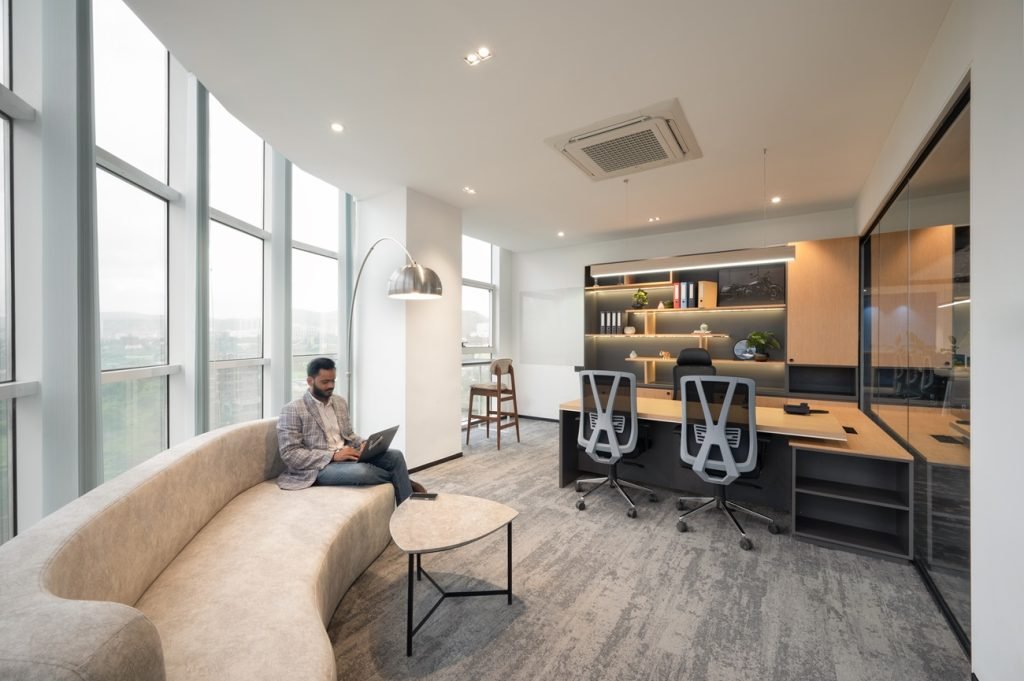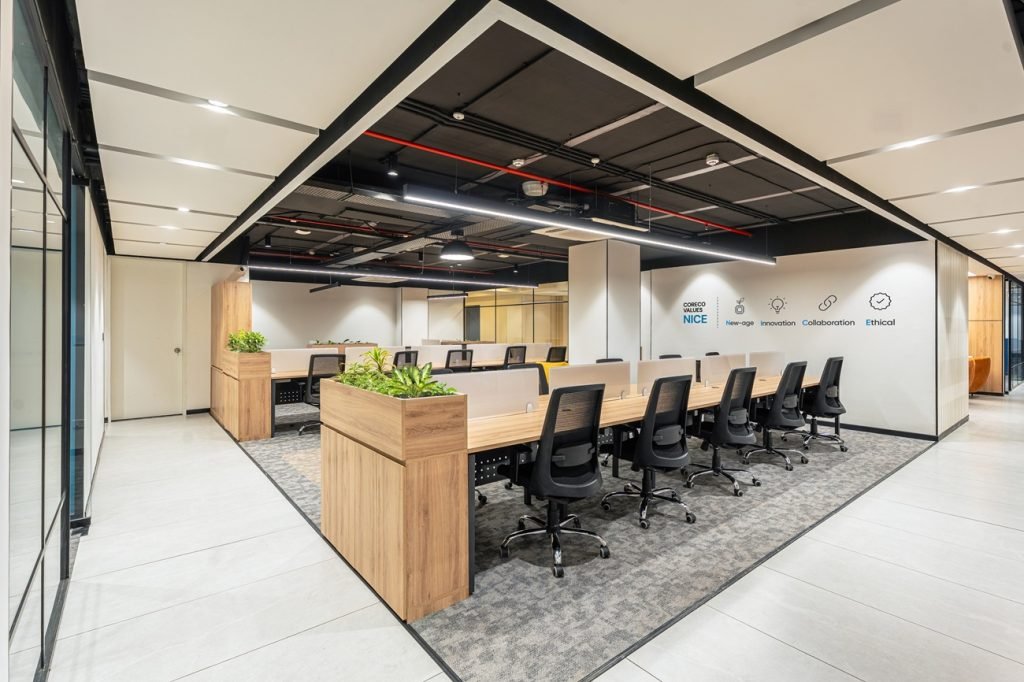


Hybrid work is now a defining condition shaping how organizations attract talent, build culture, and perform at scale. Yet many workplaces remain caught between two extremes: offices designed for full occupancy and homes never meant for work, which results in underutilized space, and teams that struggle to connect with purpose.
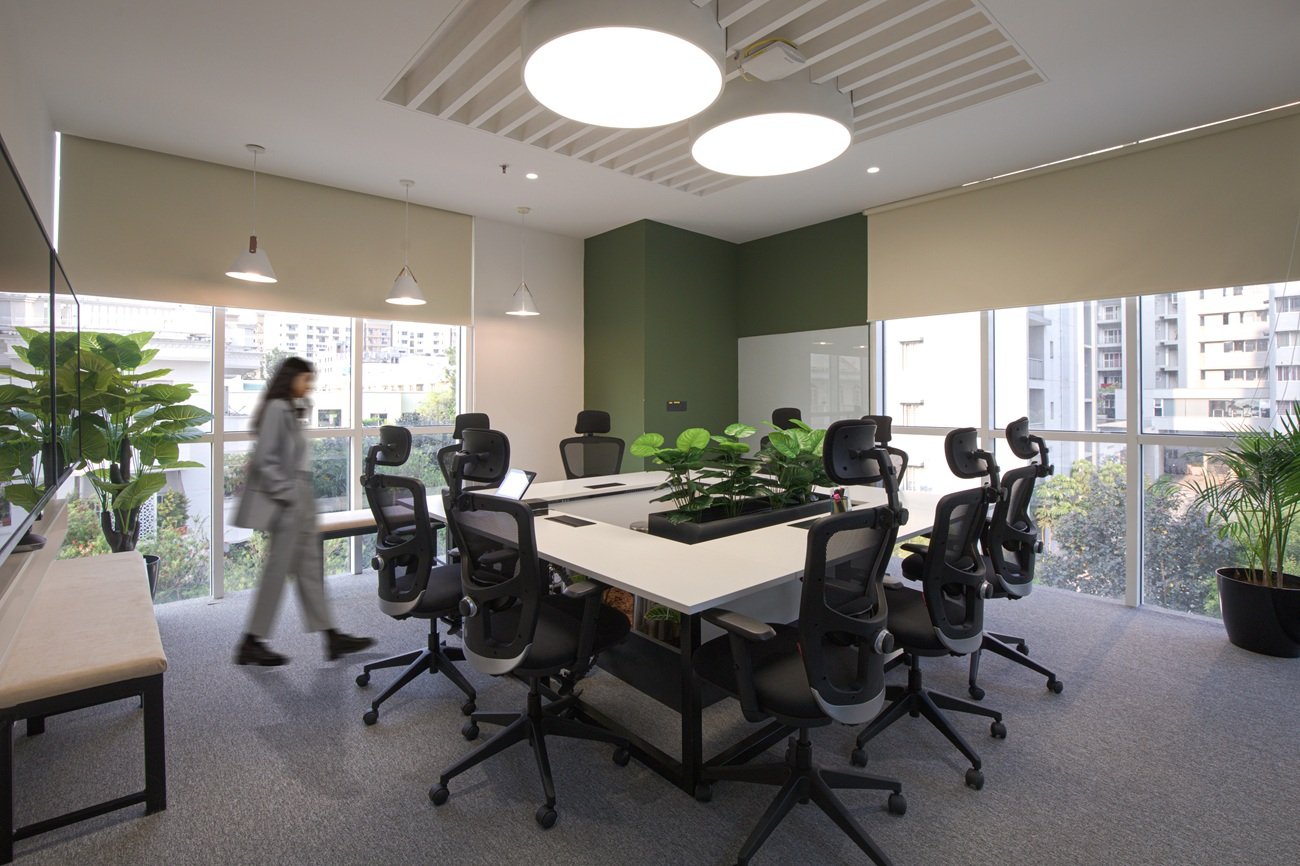
Designing for hybrid work requires a shift in thinking where we prioritize creating environments that support choice, flexibility, and meaningful interaction while remaining resilient to future change.
From Attendance to Experience
In a hybrid model, the office is a destination for employees to come in for reasons like collaboration, learning, alignment, and culture. This means workplaces must offer experiences that cannot be replicated remotely.
Design strategies today prioritize a range of settings: focus zones for deep work, collaborative spaces for team interaction, informal areas that encourage spontaneous conversations, and technology-enabled rooms that support seamless virtual participation. Each space plays a role in supporting different modes of work across the day. Read about the different office design strategies here.
Flexibility Is the New Foundation
Hybrid work demands spaces that can adapt. Fixed layouts and rigid planning no longer serve evolving team structures or fluctuating occupancy levels. Instead, flexibility is embedded through modular furniture systems, reconfigurable meeting spaces, and multi-purpose zones that can shift function with minimal effort.
Workplaces that adapt easily reduce future renovation costs, extend the lifecycle of interiors, and allow organizations to respond quickly to growth or change.
Designing for Connection
One of the most common mistakes in hybrid offices is equating collaboration with density. More people in less space does not lead to better interaction. In fact, it often reduces focus and comfort. Read more about the importance of collaboration in office design here.
Effective hybrid workplaces balance openness with acoustic control, visual privacy, and spatial clarity. Clear circulation paths, thoughtfully scaled collaboration areas, and well-defined zones help employees navigate the office intuitively without feeling overwhelmed.
Equally important is inclusion. Hybrid design must ensure that remote participants feel equally present in meetings, through integrated technology, appropriate room sizing, and intentional layouts.
Design shapes Culture
Culture does not happen by chance in a hybrid environment. With fewer in-office days, every physical interaction carries more weight. Hence, aligning office design with values becomes a powerful tool to reinforce philosophy, identity, and leadership.
Design elements such as arrival experiences, social hubs, and leadership spaces play a crucial role in communicating transparency, trust, and belonging. Materiality, color, and spatial hierarchy subtly influence how people feel and behave within the space.
Planning for What Comes Next
Hybrid work will continue to evolve. Organizations that plan only for current headcounts or policies risk falling behind. Future-ready workplaces are designed with scalability, technology integration, and employee well-being at their core.
By aligning design decisions with long-term business goals, organizations can create environments that support both performance and people, today and tomorrow.
Explore our workplace design services.