

Open-plan workplaces have transformed the modern office. They encourage visibility, collaboration, and flexibility while making better use of available space. Yet one challenge continues to undermine their potential: noise.
It is the constant background of conversations, keyboards, ringing phones, impromptu meetings, and video calls that gradually chips away at concentration. Employees may not always identify acoustics as the problem, but they often experience its consequences through mental fatigue, reduced productivity, and the growing need to wear headphones simply to focus.
Acoustic design has become an essential component of workplace strategy. A well-designed office shapes how sound moves through the environment, ensuring that collaboration and concentration can comfortably coexist.
Why Noise Is a Workplace Distraction
Every workplace generates sound. The question is whether that sound supports work or interrupts it.
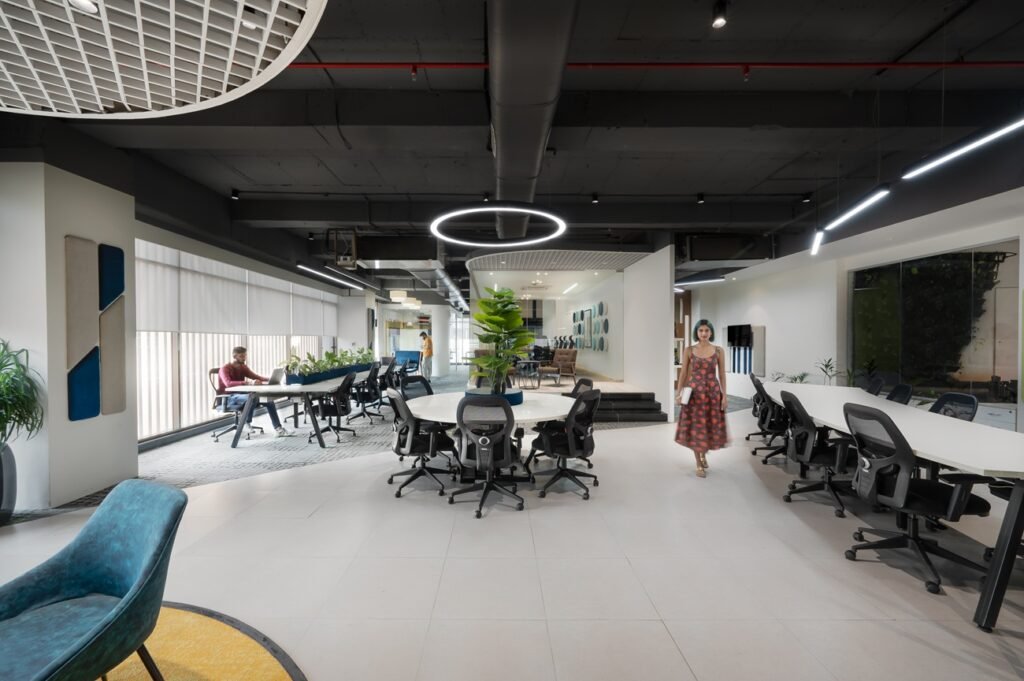
In many offices, collaborative spaces sit directly beside focused workstations. Meeting rooms open onto shared desks, while café areas double as informal discussion zones. Without thoughtful spatial planning, conversations spread far beyond their intended boundaries which results in a workplace where employees continuously divide their attention between their tasks and their surroundings. Even brief interruptions can require several minutes for the brain to regain deep focus. Repeated throughout the day, these interruptions reduce efficiency while increasing cognitive strain.
Noise also influences communication. Employees become reluctant to discuss confidential matters, join virtual meetings, or collaborate openly when they feel constantly overheard. What appears to be an energetic workplace may, in reality, discourage meaningful interaction.
Good acoustic design protects both focus and communication by ensuring that every activity has an environment suited to its purpose.
Designing for Different Ways of Working
Modern offices support a wide spectrum of work rather than a single mode of operation. Teams collaborate, individuals analyse data, leaders conduct confidential discussions, and employees participate in virtual meetings, all within the same workplace.
Expecting one acoustic environment to accommodate every activity is unrealistic. Instead, successful workplaces organise spaces according to their functional needs.
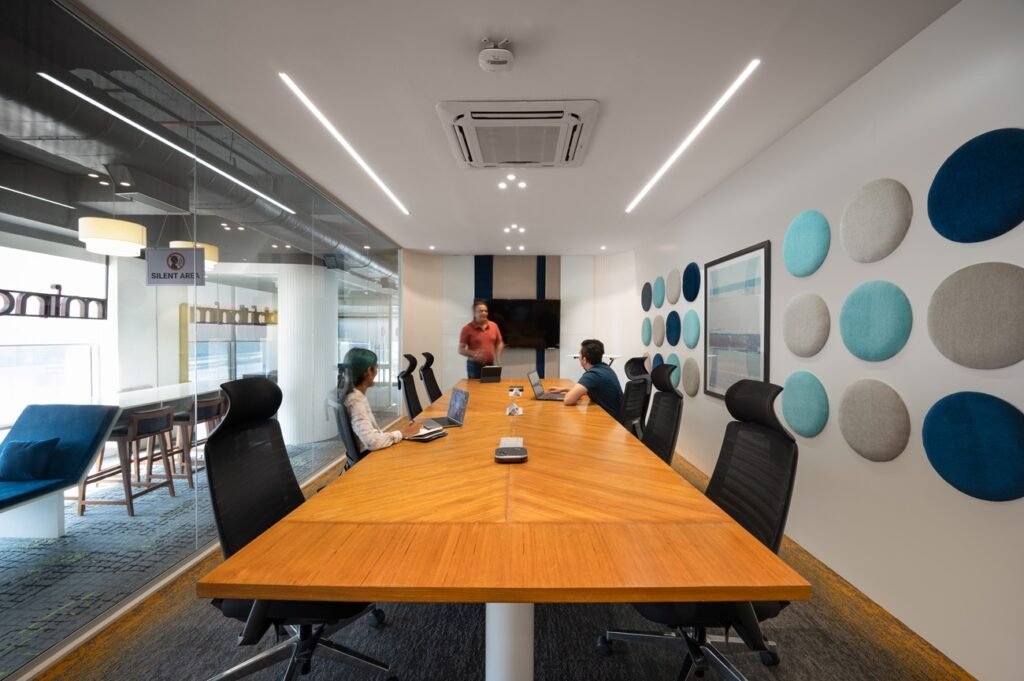
Quiet work areas benefit from sound absorbing finishes that minimise distractions and reduce reverberation. Collaboration zones can tolerate higher levels of conversation while preventing sound from spilling into neighbouring workspaces. Meeting rooms require speech privacy, ensuring discussions remain confidential without becoming isolated from the broader office.
Phone booths and enclosed focus rooms have also become increasingly valuable. As hybrid work continues to rely on virtual communication, providing dedicated spaces for video calls allows employees to participate comfortably without disturbing colleagues.
Materials That Shape Better Workplaces
Every surface within an office contributes to how sound behaves. Hard finishes such as exposed concrete, glass, and polished stone reflect sound, allowing conversations to travel across large spaces. Softer materials absorb sound energy, reducing echoes and improving overall comfort.
Ceilings often provide the greatest opportunity for acoustic improvement. High-performance ceiling systems can significantly reduce reverberation while maintaining a clean architectural expression.
Floor finishes also influence sound transmission. Carpet tiles help absorb footfall and movement, particularly in open work environments, while resilient flooring may be better suited to collaborative or hospitality-inspired spaces where durability is prioritised.
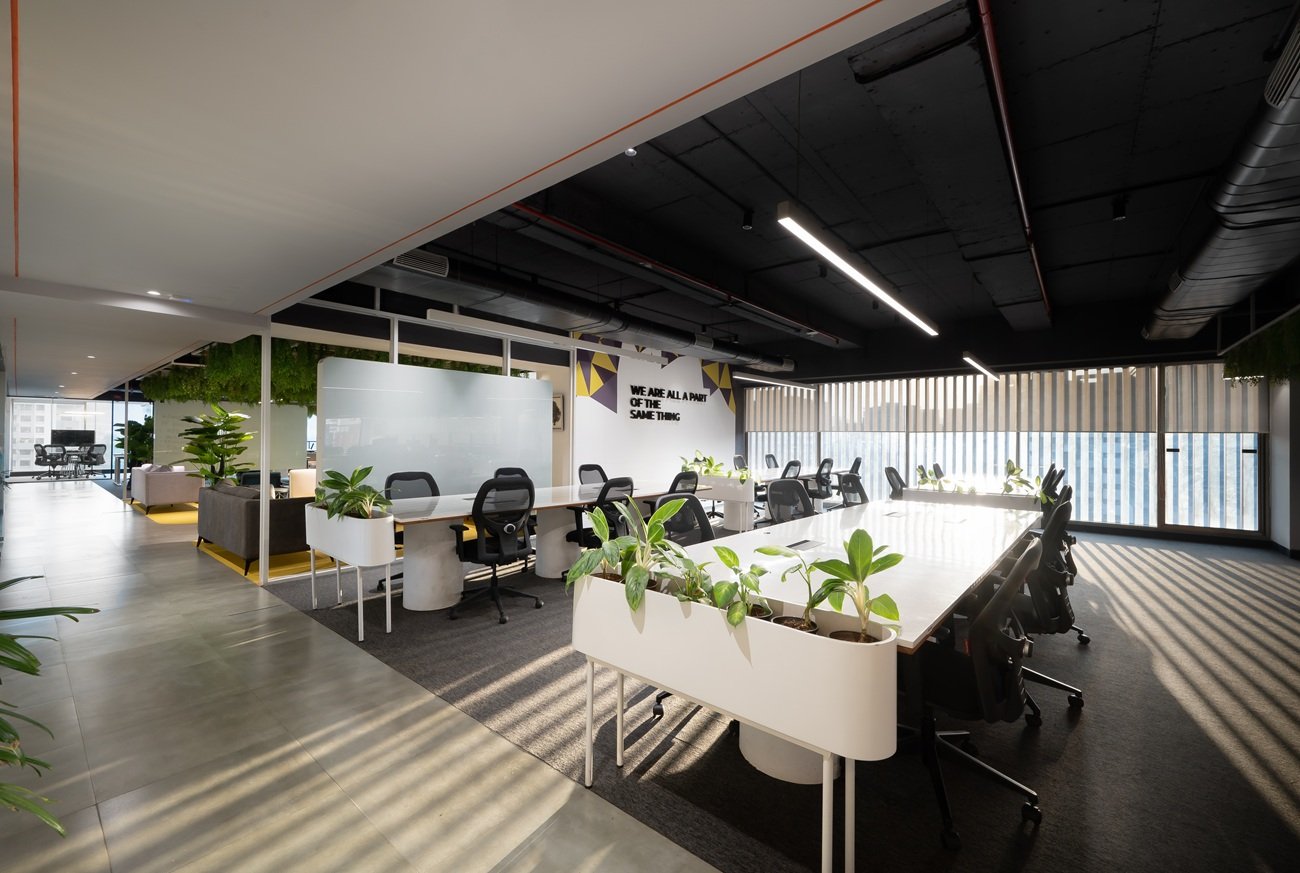
Furniture contributes just as meaningfully. Upholstered seating, acoustic screens, fabric partitions, and bookshelves subtly interrupt sound paths without compromising openness. Even indoor planting can soften the perception of noise by introducing physical and visual buffers between work areas.
The most effective acoustic strategies combine architecture, interior materials, furniture, and spatial planning into a coordinated system.
The Human Experience of Sound
Acoustics shape how people experience the workplace emotionally.
An office that feels consistently noisy often creates low level stress, even when employees cannot consciously identify its source. People instinctively raise their voices to compete with background noise, creating a cycle where the environment becomes progressively louder throughout the day.
Conversely, workplaces with balanced acoustics feel calmer without appearing silent. Conversations remain comfortable, meetings become easier to follow, and focused work requires less mental effort.
This sense of comfort has become increasingly important as organisations encourage employees back into physical workplaces. If the office is to offer advantages over working from home, it must provide environments that genuinely support concentration, creativity, and collaboration.
Acoustics as a Design Strategy
Acoustic planning, when considered alongside lighting, ergonomics, circulation, and workplace culture, acoustics become part of a holistic design strategy that supports organisational performance. They influence how teams communicate, how quickly employees recover their focus, and how confidently people engage with one another.
Every organisation has different operational needs, which means acoustic solutions should always respond to workplace behaviours rather than generic standards. A design studio, legal practice, technology company, or client-facing office each requires a different balance between openness and privacy.
Designing Offices That Sound as Good as They Look
Beautiful workplaces are often judged by their visual appeal, but the spaces people remember are those that feel comfortable to work in every day. Meetings become clearer, focused tasks become easier, and collaborative conversations happen naturally without overwhelming the wider workplace.
In the end, exceptional workplace design appeals to all the senses because an office where everyone is still asking, “Can you hear me now?” may not have a technology problem at all. It may simply be an acoustic one.
Connect with our team for a workplace design consultation.