

Walk into any traditional office, and you can read the hierarchy before you read the people at work.
Space speaks. And in workplaces, it speaks loudly about power.
But in a world where organizations are flattening hierarchies, embracing hybrid work, and investing in culture as a competitive advantage, the question is no longer who gets the corner cabin? The real question is: What is your office telling your people about power, access, and belonging?
 At Studio AsA, we see layout as a behavioral blueprint. And the politics embedded within it can either enable collaboration or quietly erode trust.
Let’s unpack what your office might be saying and how to design it differently.
The Corner Cabin as a Symbol
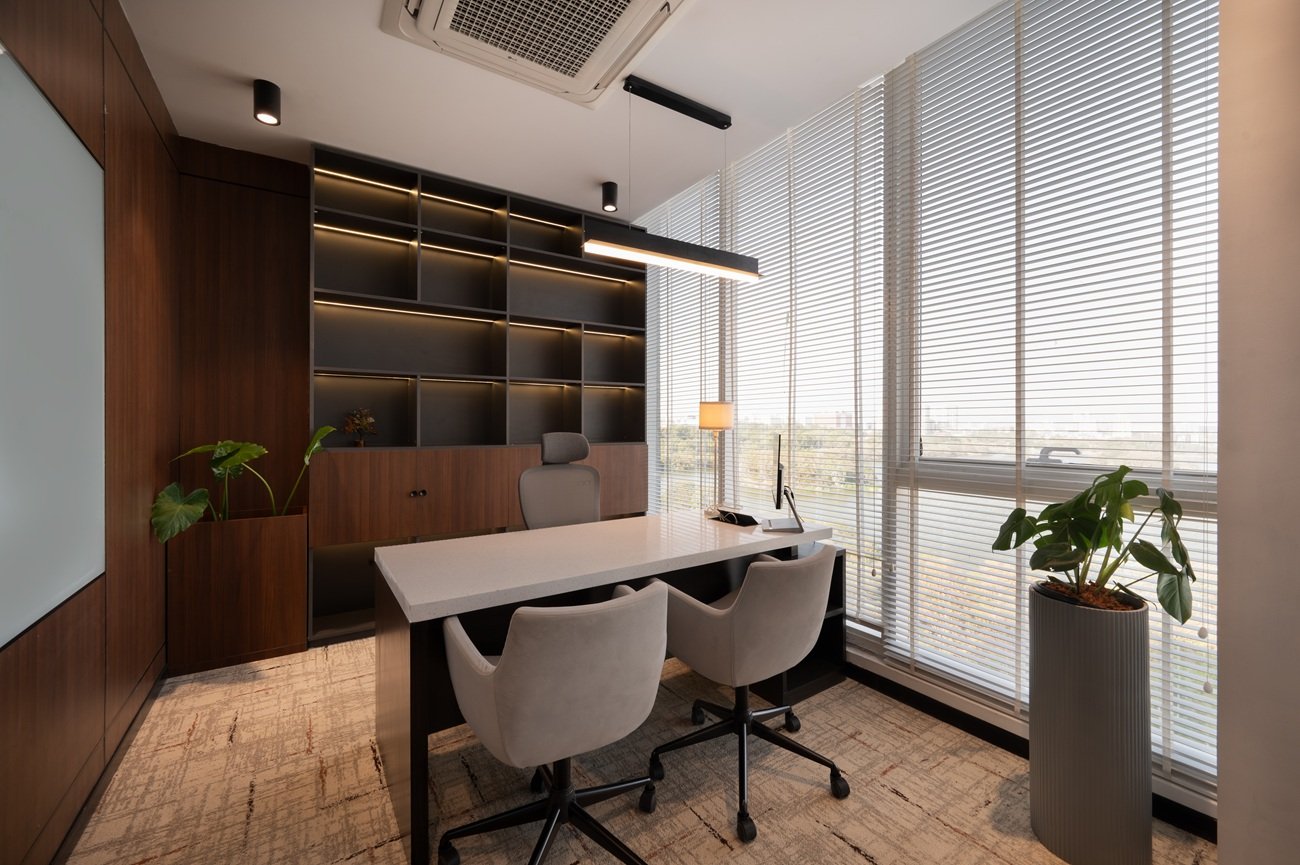
Historically, corner offices symbolized achievement. More windows meant more status. Distance from the floor meant authority. Walls meant control.
This model emerged from industrial age management structures where leadership was centralized, and decision-making flowed top down. The spatial hierarchy mirrored the organizational hierarchy. But today, leadership is less about control and more about influence. Innovation is collaborative. Culture is distributed.
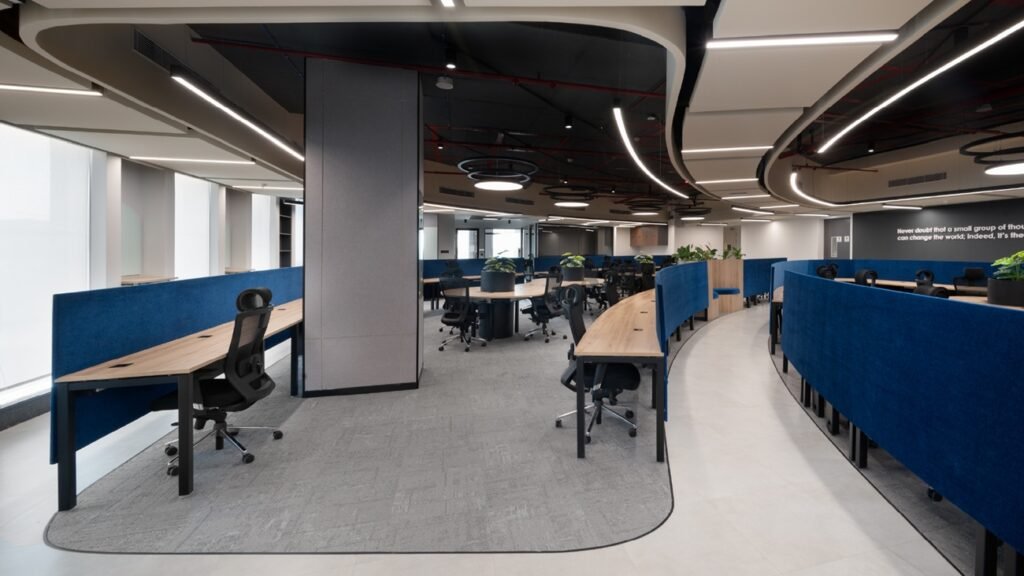
Yet many offices still allocate their most valuable real estate to a few individuals while the majority work in denser, less desirable zones.
What does that communicate?
- That visibility is earned by rank, not contribution.
- That access to leaders is restricted.
- That power sits behind closed doors.
If your organization claims transparency, agility, and inclusivity, your layout should reinforce that narrative.
Power Is Spatial
Office design shapes behavior in subtle but measurable ways.
When leaders are physically isolated:
- Informal interactions decrease.
- Feedback loops slow down.
- Psychological distance increases.
When leadership sits among teams:
- Decision-making accelerates.
- Trust builds through visibility.
- Collaboration becomes organic rather than scheduled.
Power is not just positional. It is spatial. Explore our workplace strategy approach to spatial planning and behavioral mapping.
The Psychological Impact of Layout
Your employees interpret space emotionally.
Closed cabins can create perceived barriers even if doors are rarely shut. Long corridors lined with executive rooms can signal exclusivity. Large private offices in a space-starved environment can generate quiet resentment.
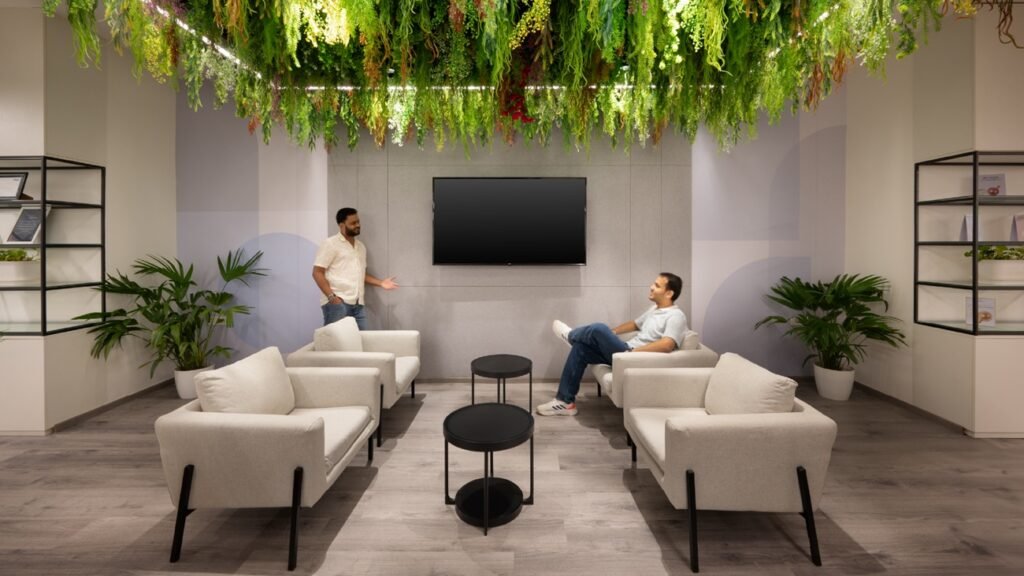
Conversely, open, equitable layouts can communicate shared ownership, accessibility, and collective identity.
This is not about eliminating privacy. It is about rethinking what privacy represents.
When privacy becomes a shared resource rather than a rank-based privilege, the culture shifts from status-driven to performance-driven.
Learn how we balance privacy and collaboration in high-performance office environments.
The Hybrid Era Has Changed the Equation
Hybrid work has disrupted traditional spatial hierarchies.
If leaders are working remotely three days a week, does a permanently assigned corner cabin make sense? If teams collaborate across geographies, is territorial space still relevant?
In today’s context, value lies in adaptability, not permanence.
Forward-thinking organizations are reimagining:
- Shared leadership zones instead of assigned executive cabins
- Flexible enclosed rooms that any team member can book
- Transparent glass partitions that maintain openness while offering acoustic control
- Distributed meeting spaces instead of centralized boardrooms
Read our insights on designing hybrid office interiors.
From Ownership to Stewardship
Leaders model behavior by giving up excess space. They sit in flexible work areas. They use the same collaboration rooms as their teams. They become visible participants in the workplace ecosystem.
This act is symbolic and powerful. When leaders voluntarily decentralize space, they decentralize ego. And that transforms culture faster than any policy document.
Designing for Access
So what does a future-ready layout look like?
It doesn’t mean eliminating private offices entirely. It means designing them intentionally.
Here are principles we apply at Studio AsA when helping organizations rethink spatial power dynamics:
1. Equal Access to Quality
Natural light, ergonomic comfort, and acoustic privacy should not be limited to senior leadership. Distribute high-quality experiences across the floorplate.
2. Transparency as Default
Use glass thoughtfully. Allow visibility while maintaining necessary discretion. Physical transparency often encourages behavioral transparency.
3. Flexible Enclosed Spaces
Instead of fixed executive cabins, create bookable focus rooms, confidential meeting suites, and leadership touchdown spaces.
4. Proximity Over Isolation
Position leadership areas near collaborative hubs rather than in distant corners. Encourage spontaneous dialogue.
5. Shared Ritual Spaces
Design central commons, townhall areas, and café zones that dissolve hierarchy during collective moments.
View our office design projects that prioritize equity and accessibility.
The Business Case for Rethinking Hierarchy in Space
Organizations that rethink spatial power structures often experience:
- Stronger cross-functional collaboration
- Faster decision cycles
- Improved employee engagement
- Higher perceived leadership authenticity
In competitive markets, culture is your differentiator. And culture is spatially expressed. If you are investing in transformation, your floor plan must evolve alongside your strategy.
A Question for You
If a new employee walked into your office tomorrow with no knowledge of titles or roles, would they be able to guess who holds power?
If the answer is yes, ask yourself why.
Is that hierarchy intentional and aligned with your values? Or is it a legacy model carried forward by habit?
Moving Beyond the Corner
The future of leadership is visible, accessible, and embedded within teams. The future of workplaces reflects that shift.
At Studio AsA, we approach workplace strategy as a cultural intervention. Through research-led programming, leadership workshops, and behavioral mapping, we help organizations decode what their offices are currently communicating and redesign them to support who they aspire to become.
Contact us to begin your workplace design journey.