

For decades, office zoning was a relatively simple equation. Perimeter offices for senior leadership. Open floor plates for teams. A conference room or two. A reception desk at the front. Done.
Then hybrid work arrived as a permanent shift in how people relate to the workplace. And with it came a question that every organization is still answering: What is the office actually for now?
From Fixed Desks to a Portfolio of Settings
The traditional office was built around presence. You came in, sat at your assigned desk, and worked until it was time to leave. Space was assigned by hierarchy, not by activity.
Hybrid work broke that logic entirely.
When employees split their time between home and office, they no longer come in to do the same work they could do anywhere; they come in with a purpose: to collaborate, to align with their team, to feel connected to the culture of their organization. The office becomes the destination for the work that demands physical togetherness.
This means the old fixed-desk model is actively working against the reason people show up.
The new office is a portfolio of settings. A mix of zones, each designed for a specific mode of work, that collectively serve a mobile, choice-driven workforce. At Studio AsA, this is the lens through which we approach every workplace brief today.
The Four Zones That Define the Hybrid Office
1. Focus Zones
Deep work still happens in the office, but it needs to be protected. In a hybrid model, employees often come in for collaborative sessions, and when they need to concentrate, they shouldn’t have to fight the energy of the room.
Focus zones are quiet, low-distraction settings like acoustic booths, individual pods, library-style benches where people can think without interruption.
2. Collaboration Zones
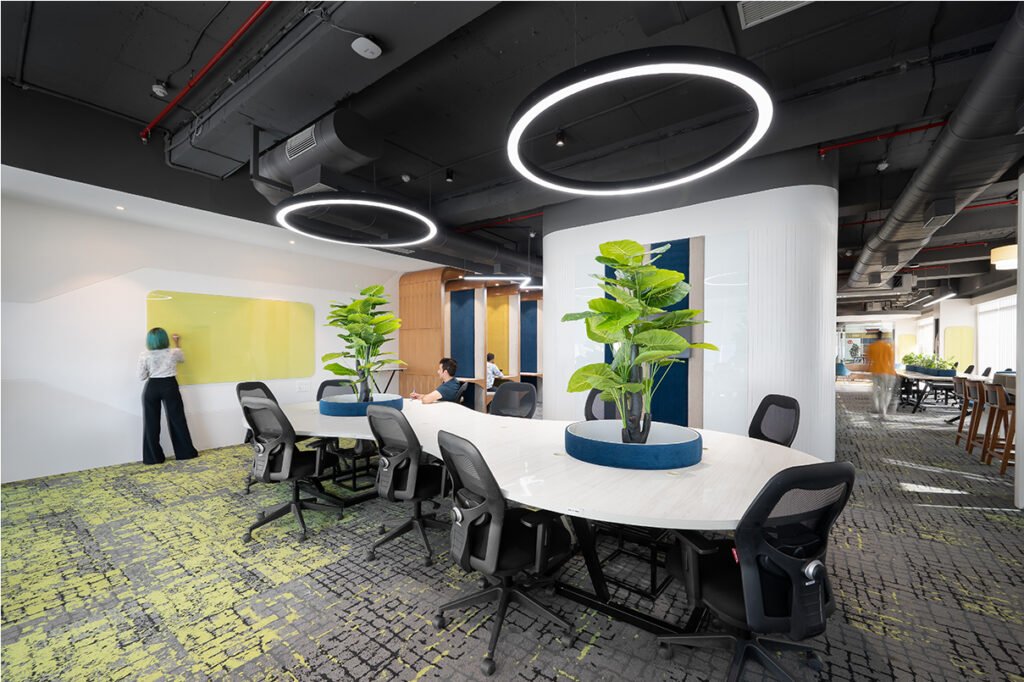
This is where hybrid work most visibly reshapes the floor plan. With remote participants on screens and in-office teams gathered around tables, collaboration zones now need to do far more than a traditional meeting room.
They need great acoustics, seamless technology integration, writable surfaces, flexible furniture, and enough visual presence that a remote colleague feels genuinely included, not like an afterthought on a laptop propped against a coffee cup.
We’ve explored this in depth in our piece on The Role of Breakout Areas and Collaboration Zones to understand how these spaces drive productivity and how we design them to serve varied team sizes and interaction styles.
3. Social and Transition Zones
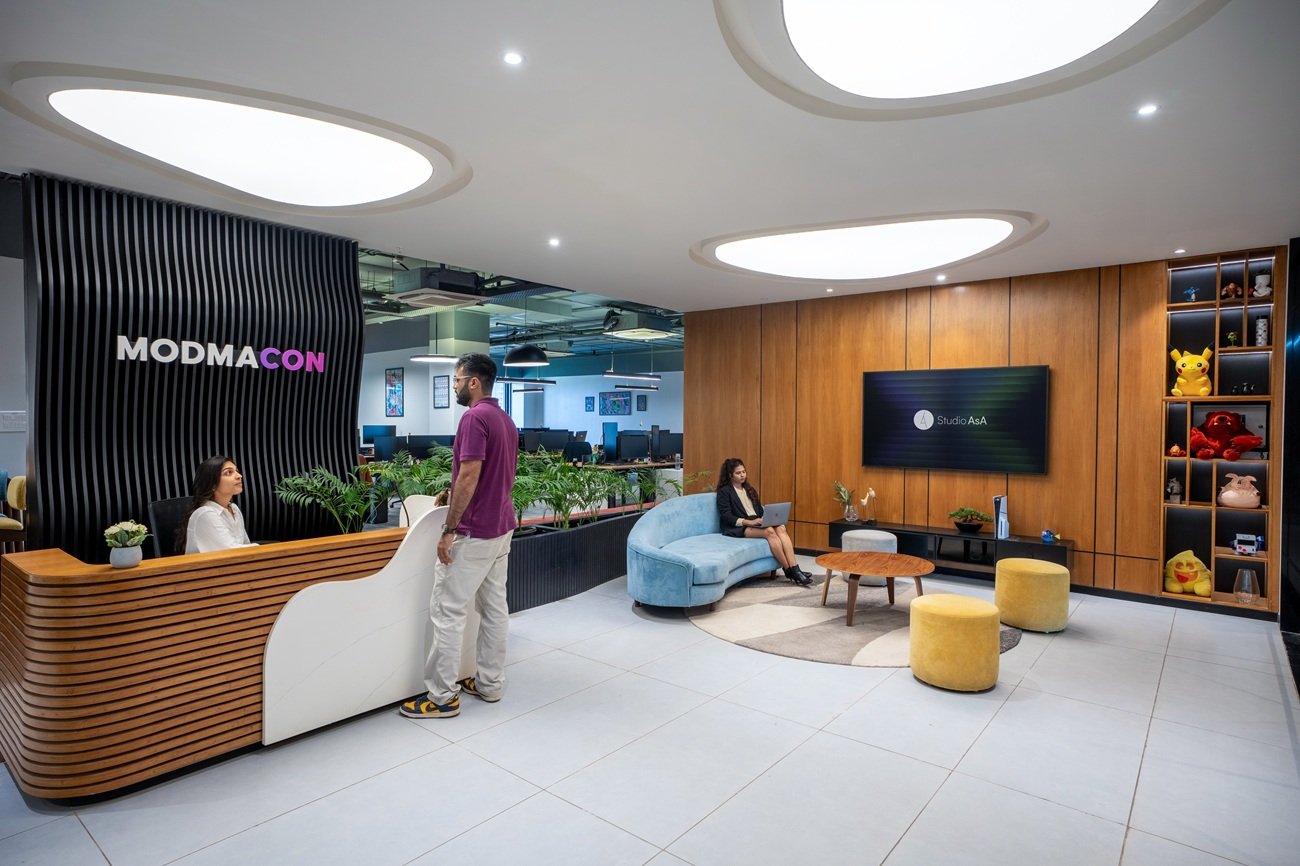
One of the things remote work cannot replicate is the ambient culture of an office, such as the hallway conversation, the serendipitous encounter at the coffee point, and the overheard idea that sparks a new direction.
In a hybrid model, these moments become more intentional. Social zones like cafe settings, lounge clusters, and communal kitchens are now strategically located to encourage movement and interaction. They sit between collaboration zones and focus areas, acting as a buffer and a bridge.
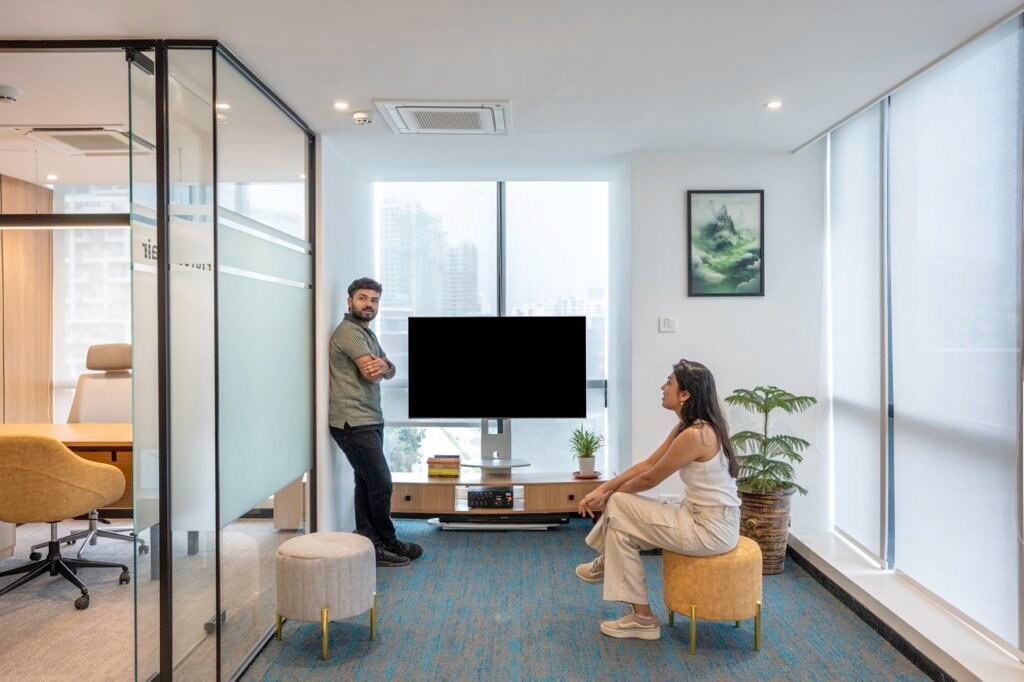
4. Private Zones and Leadership Settings
Executive cabins and private offices have evolved, too. They are no longer symbols of hierarchy alone; they are settings for sensitive conversations, deep strategic thinking, and one-on-one mentoring that a hybrid workforce increasingly values when they do come in. Our blog on Cabin Designs for Decision Makers goes into how we design these spaces to reflect both function and the human at the center of it.
The Privacy & Collaboration Balance
Here is the tension that every hybrid office must resolve: the more open you make a space, the harder it becomes to focus. The more private you make it, the harder it becomes to collaborate.
The answer is to design a zoning strategy that lets people choose.
Activity-based working (ABW) is the framework that underpins most hybrid-ready offices. Employees don’t have assigned seats. They move through the space based on what they need to accomplish. The design responsibility shifts from assigning space to creating the right range of settings and making sure each setting is genuinely excellent at what it does.
This is harder than it sounds. It requires honest programming conversations with the organization, utilization of data from their current space, and an understanding of how different teams actually work day to day. We walk through exactly how we navigate this in How We Balance Privacy and Collaboration in Office Designs.
Technology Is Now Part of the Zoning Equation
Hybrid zoning doesn’t work without the right technology infrastructure embedded into every setting. Collaboration zones need one-touch video conferencing. Focus zones benefit from occupancy sensors and booking systems that prevent territorial behavior. Social zones are enhanced by ambient displays that keep people connected to company culture even between meetings.
The technology layer is no longer optional — it’s what makes the zones actually function as intended. We’ve covered the role of this infrastructure in Smart Office Technology for a Connected and Efficient Workplace, and the principles there apply directly to the hybrid zoning strategy.
The Commute Has to Be Worth It
Here’s the honest challenge at the heart of hybrid work: you cannot mandate your way to a great office culture. You have to earn the commute.
When employees choose to come in, they’re making a trade with time, energy, and cost in exchange for an experience they can’t get at home. If the office offers the same sea of desks they had in 2019, that trade doesn’t make sense. But if it offers curated environments for focus, collaboration, creativity, and connection, environments that are genuinely better than a home setup for those specific purposes, then people will come, and they’ll come more often.
This is the conversation we’re having with organizations across Pune and beyond. As we wrote in Pune’s Offices Need to Earn the Commute, the bar has moved. The office that simply accommodates work is not enough. The office that elevates work is the destination worth choosing.
Zoning Is Strategy
The shift from fixed-desk offices to zoned, activity-based hybrid workplaces is ultimately a strategic decision, not just a design one. It reflects how an organization thinks about trust, autonomy, collaboration, and the role of the physical environment in its culture.
Done well, a hybrid-zoned office does something remarkable: it makes the choice to come in feel obvious because the space itself is so clearly designed around what people actually need.
That is the goal. And it starts with a floor plan that understands what the office is for.
Thinking about how your office can better serve a hybrid workforce? Get in touch with us, we’d love to help you design a workplace that your team wants to be in.