

74% of Pune employees say their office doesn’t support the way they actually work today.
Think about the last time you walked into your office and felt genuinely energized. Not just caffeinated but energized. For too many professionals across Hinjewadi, Kharadi, and the Baner–Balewadi corridor, that feeling is rare. They show up to a space that was designed for a different era of work, and they’re expected to do their best thinking there.
That’s a problem, and it’s fixable. At Studio AsA, we work with organizations across Pune to design offices that function as strategic tools, not just real estate obligations.
This blog shares what we’re seeing on the ground, and what it means for how you should be thinking about your workspace right now.
The Hybrid Paradox Has Hit Pune Hard
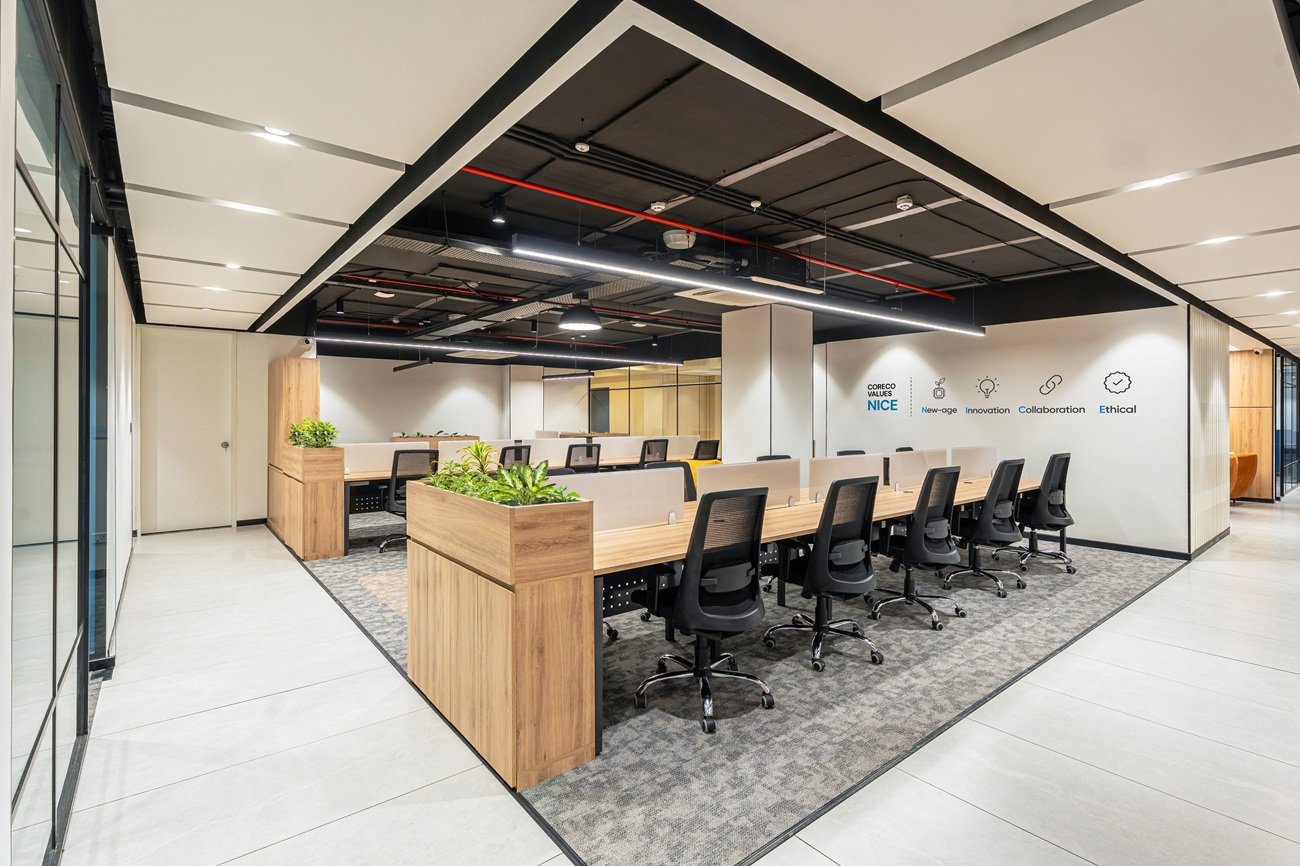
Pune’s IT and professional services sectors moved swiftly to hybrid work, and many organizations assumed the hard part was over. It wasn’t. What most companies discovered is that their offices were built for a world where people came to work at desks, five days a week. Remove two or three of those days, and the space starts to feel hollow. People arrive, sit in the same rows they always did, and wonder why they bothered leaving their home office.
The result is a lower in-office attendance, disengaged teams, and leadership frustrated that their real estate investment isn’t delivering value. It’s a loop and breaking it requires a deliberate design response, not a return-to-office mandate.
Related: Designing Workplaces for Pune
What data tells us
- 68% of hybrid workers in tier 1 Indian cities cite “lack of collaboration spaces” as their top office frustration.
- 2.4x more likely to report high satisfaction when their workspace supports focused work and social connection.
- 40% of office real estate in Pune’s IT parks are currently underperforming against employee experience benchmarks.
These numbers aren’t abstract. They represent real conversations we’re having with HR heads in Magarpatta, real estate directors on Nagar Road, and CXOs who are staring at expensive leases and wondering what to do next. The answer, consistently, is to design your way out of the problem.
What a High-Performing Pune Office Actually Looks Like
Let’s be specific. The best performing offices we’ve designed and the ones we benchmark against globally share a common operating principle: they are built around human behavior, not organizational hierarchy.
This means three things in practice.
01. Zones that reflect how people move through the day
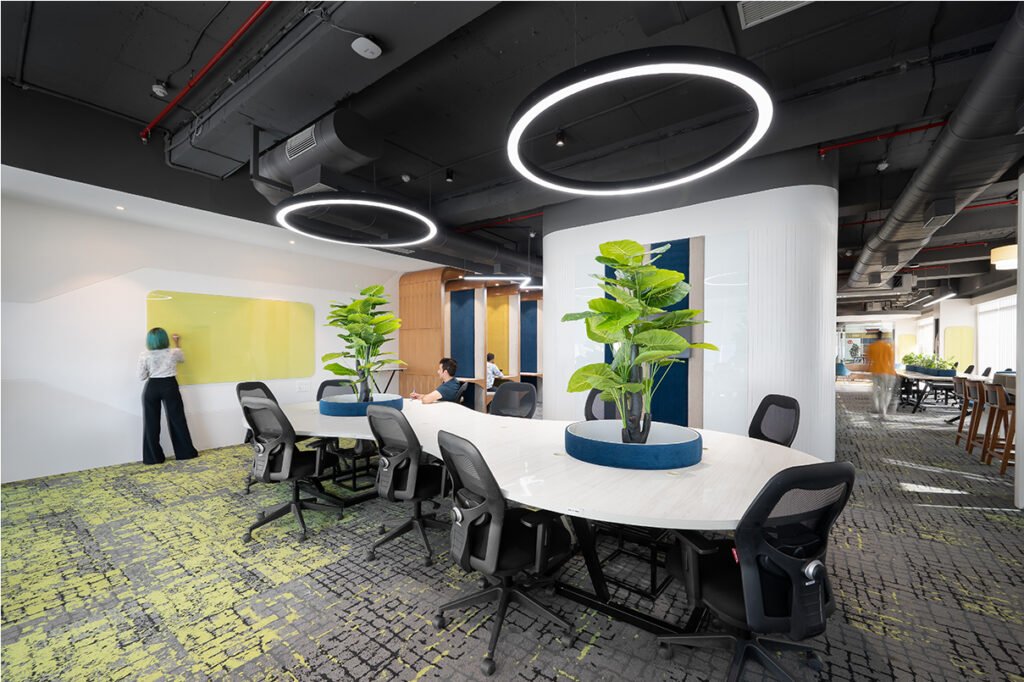
Your employees don’t spend their day doing one thing. They have heads-down focus work, collaborative sessions, quick catch-ups, and moments where they just need to decompress. A well-designed office in Pune maps to that rhythm. It has quiet zones that are actually quiet, collaboration areas that are acoustically distinct, and social anchors such as a good coffee bar, a lounge with natural light, that make the space worth occupying beyond the work itself.
See it in action: Studio AsA’s workplace strategy for hybrid organizations
02. Biophilic design that works in the Indian climate
Pune has a remarkable microclimate, and most office interiors completely ignore it. We design with cross-ventilation in mind, with courtyards and transitional semi-outdoor spaces that blur the boundary between inside and out. When biophilic design is done right here, it reduces cognitive fatigue and raises productivity. It also gives your office a character that no open-plan grid can replicate.
03. Tech-readiness baked into the architecture
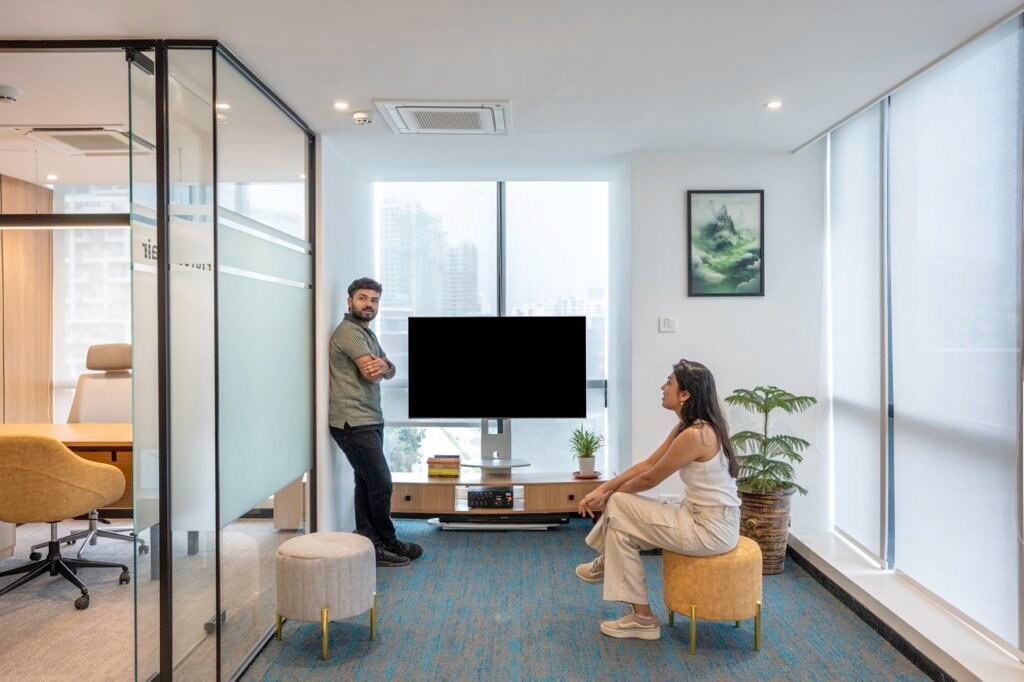
A hybrid office that isn’t built for video-first collaboration will fail, no matter how beautiful it looks. This means acoustically treated rooms sized for two to four people, such as pods, reliable connectivity in every zone, and AV infrastructure that doesn’t require an IT ticket to operate.
The Pune Specific Variables You Can’t Ignore
Designing an office in Pune isn’t the same as designing one in Mumbai or Bengaluru. The talent profile is different as a high concentration of engineers, analysts, and creative professionals who’ve experienced some of the world’s best work environments and have calibrated expectations to match. The commute reality is different too: traffic from Wakad to Viman Nagar during the rush hours is a genuine deterrent, which means your office has to offer something that justifiably justifies the trip.
It also means that flexible arrival windows, thoughtful parking and transit access, and wellness-oriented design like natural light, thermal comfort, and access to outdoor space are functional requirements for retention in a competitive talent market.
Explore more: What today’s talent demands
Where to Start
If you’re reading this and nodding because your office isn’t quite working and you’re not sure where to begin, here’s our honest advice: start with a workplace diagnostic before you touch a single floor plan.
Understand how your people actually use the space today. Map where the dead zones are, where collaboration is being forced into conference rooms it doesn’t fit, where the acoustic failures are. Then design forward from data, not assumptions. The organizations that get this right are the ones that ask the right questions first.
Studio AsA works with companies of every size across Pune’s commercial corridors. We don’t bring a template. We bring a methodology, one that starts with your people and builds outward from there.