

The contract between people and place has changed. Here’s what the data and your employees are telling you.
Let’s be direct: the office is a destination. And like any destination worth visiting, it needs to offer something that nowhere else can. The power shift in talent expectations isn’t a temporary tremor from the pandemic years, rather it’s structural. Your people now have a reference point for what it feels like to work in a space designed entirely around their personal needs.
The New Ask
What do people actually want from their workplaces in 2026? The answer is more nuanced than “hybrid flexibility” or “collaboration zones.” When we listen carefully and at Studio AsA, listening is always the first act of design; we hear four persistent themes: focus, belonging, flexibility, and wellbeing. Not as amenities but as expectations.
Your talent isn’t asking for ping pong tables. They’re asking for places that help them do their best work, feel genuinely connected to their colleagues, adapt to how their day unfolds, and leave at the end of it feeling like a human being rather than a resource.
Related reading: The Post-Pandemic Office: Evolution of Workplaces
The Focus Problem Nobody’s Solving
Here’s something that should keep workplace leaders up at night: one in three employees says their primary workspace doesn’t support the work they’re actually paid to do. Not because they’re unmotivated. Because the environment is working against them.
Open plans, designed to encourage spontaneous collaboration, have become noise machines that drive people to book the only quiet room in the building, in some cases, the bathroom. Deep, concentrated work requires acoustic privacy, visual calm, and the psychological signal that it’s acceptable to be unreachable for 90 minutes. Most offices are still failing this test.
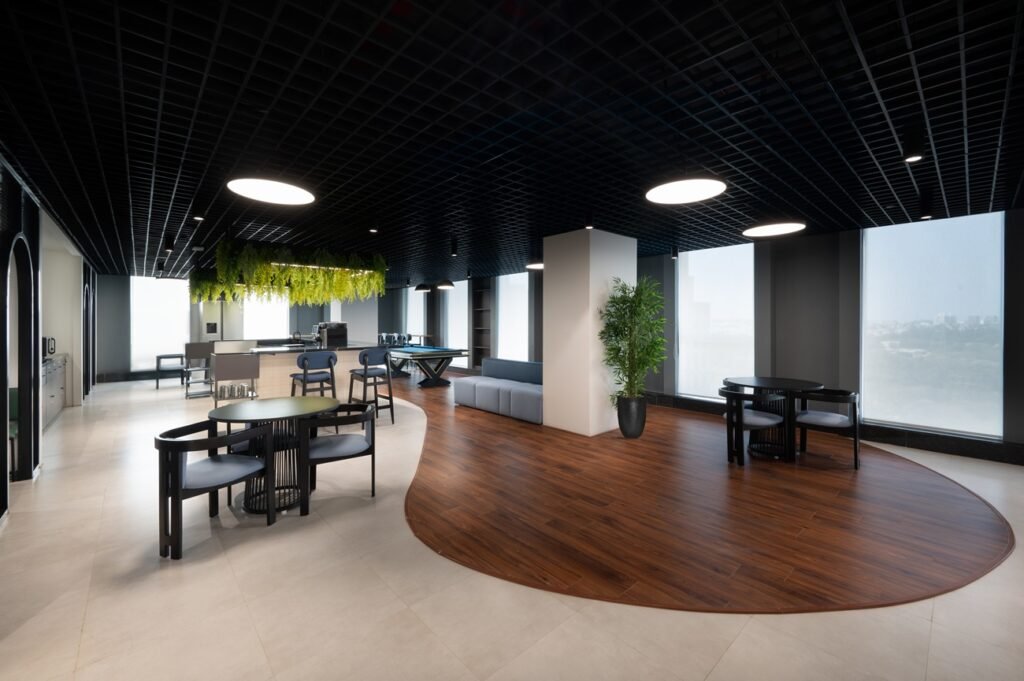
The solution isn’t to abandon open plans. It’s to build a genuine ecosystem of settings from social hubs to focus alcoves, and trust your people to self-select. When you do, productivity goes up. So does the justification for coming in.
Explore our project Digantara, where we have achieved this through design.
Belonging Is the New Brief
If focus is the functional task, belonging is the emotional one, and it may be the more powerful driver of office attendance. Sixty-eight percent of employees in our workplace surveys cite connection with colleagues as their primary motivation for coming in. Not the equipment. Not the coffee. The people and the shared rituals of being together in a place that makes that togetherness feel comforting.
This has profound implications for design. Belonging doesn’t happen in the boardroom; it happens in the in-between spaces. The kitchen counter. The casual seating at the edge of a project room. The courtyard at lunchtime. If those spaces are afterthoughts, the culture that depends on them will be too.
Design for encounter. Design for pause. Design for the moments that don’t appear in any calendar invite but shape how people feel about showing up tomorrow.
Flexibility, Defined by Space
There’s a conversation happening in most organisations right now about flexible working policy. Rightly so. But there’s a parallel conversation that’s not happening loudly enough: flexible working requires flexible space.
A hybrid policy without a spatially-responsive workplace is an unfulfilled promise. If your people are navigating a fixed-desk environment with a two-day-in policy, you’ve given them schedule flexibility while stripping them of spatial agency. These are not the same thing, and talent knows the difference.
Insight: How can flexible workplaces help organizations
Wellbeing as Infrastructure
Well-being used to be a section in the HR handbook. Now it’s a design specification. Natural light, air quality, biophilic elements, acoustic comfort, and thermal control are the baseline expectations of any talent market where people have choices about where they work.
And the stakes are higher than comfort. Research consistently links spatial wellbeing to cognitive performance, emotional resilience, and long-term retention. When your workplace makes people feel physically better, they think better, collaborate better, and stay longer.
Explore more: How office design can support health and human potential
What Leadership Must Do Differently
The most common mistake we see isn’t bad design. It’s the absence of design intent. Spaces that happened rather than spaces that were chosen. Workplaces assembled from procurement decisions rather than built around human needs.
Leadership teams that are winning the talent conversation share one common behaviour: they involve their people in the design of their environment. Not as a box-ticking exercise, but as a genuine act of listening, the kind that produces insights you cannot get from a floor plan or an occupancy sensor alone.
The Studio AsA Approach
We design workplaces that solve for what talent actually expects, not what was expected of talent a decade ago. Our work begins with deep listening, moves through evidence-based strategy, and lands in spaces that are specific, intentional, and built to evolve.
In a tightening market, the most valuable competitive advantage is a workplace that can deliver.
Studio AsA is a workplace design and strategy studio. We work with organisations navigating growth, transition, and the evolving expectations of their people. Get in touch.