

India is loud. Only when one returns from abroad does this begin to feel abnormal or chaotic. As India’s workplaces evolve rapidly, these spaces too are becoming noisier and more complex.
Teams are scaling faster, offices are becoming denser, and workdays now span multiple time zones. In cities like Mumbai, Pune, Bengaluru, and Hyderabad, commercial real estate is compact, vertical, and intensely active. Within this environment, energy is high, but so is noise.
While most organisations prioritise layout efficiency, brand expression, and technology integration, acoustics is often addressed too late in the process which results in a workplace that looks refined yet struggles to perform.
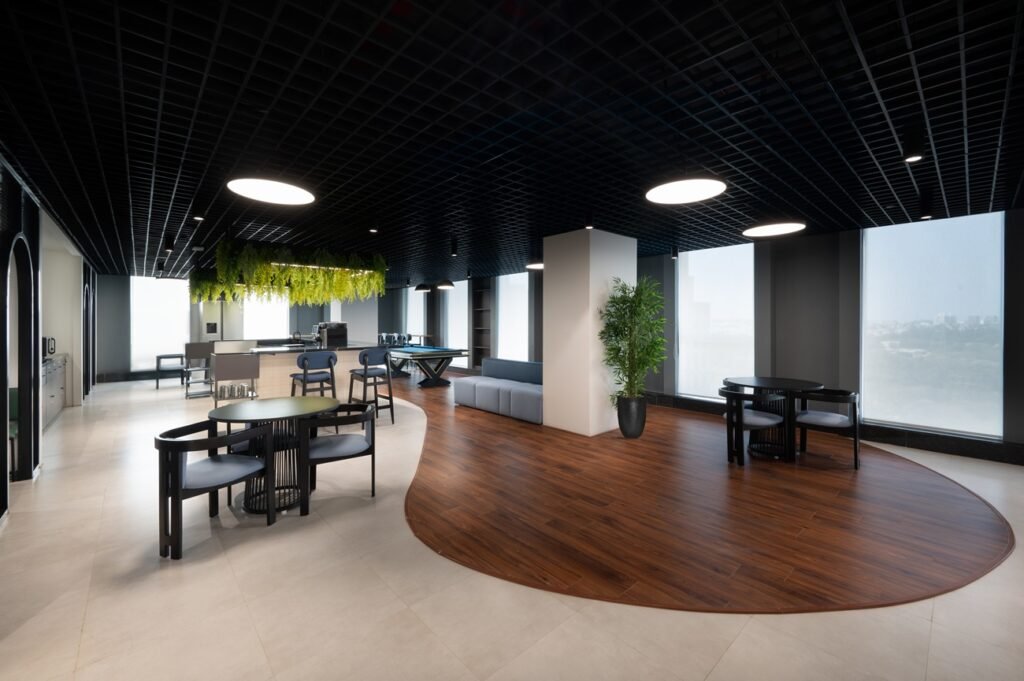
In the Indian context, where higher seat densities and open-plan environments are common, sound does not dissipate easily. It reflects off glass partitions, stone flooring, and exposed ceilings. Conversations travel. Virtual meetings overlap. Circulation paths cut through workstations. Over time, what begins as background activity becomes cognitive overload.
This is where many businesses begin to feel friction. Leaders observe reduced focus, which today is a business metric. Deep work, collaboration, and leadership discussions each require different acoustic conditions. When all of these modes operate within the same undifferentiated soundscape, performance declines.
In our workplace strategy, acoustic planning begins at the earliest stage during spatial programming and zoning. Quiet focus areas are shielded from primary circulation. Collaborative hubs are positioned intentionally to contain energy rather than allow it to spill across the floor plate. Meeting rooms are detailed to prevent sound leakage. Leadership cabins are designed for confidentiality without creating physical or cultural isolation.
This layered approach becomes even more critical when designing for hybrid work. As discussed in our article on Designing for Hybrid Work, the office must provide something better than what employees have at home. If individuals commute to collaborate but cannot concentrate when needed, the workplace loses its strategic advantage. Acoustic zoning enables choice and choice drives productivity.
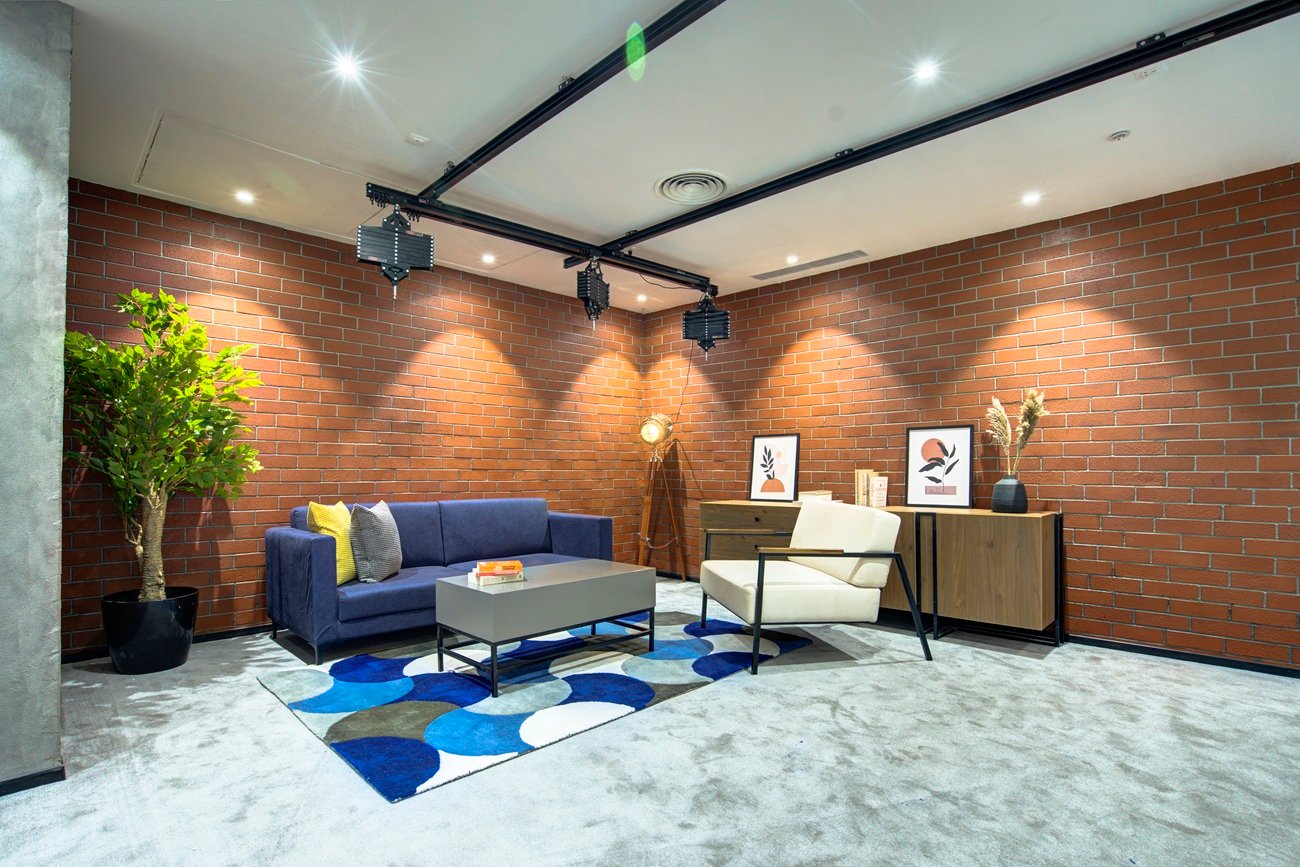
Materiality plays a significant role in this balance. Many Indian offices lean toward sleek, minimal finishes that reflect sound efficiently. Glass, stone, and metal create visual sharpness but can amplify reverberation. Rather than abandoning these materials, we integrate absorptive layers through ceilings, wall panels, upholstered furniture, and acoustic treatments that align with the overall brand narrative. A space can remain sophisticated while performing acoustically.
However, materials alone cannot compensate for flawed planning. A high-energy collaboration zone placed beside a focus area will create conflict regardless of acoustic panels. Similarly, meeting rooms opening directly into workstation clusters introduce periodic disruption. In our office interior projects, we consistently observe that successful acoustic performance is the result of both spatial logic and material calibration.
The cultural dimension of acoustics is equally important in India. Hierarchies and collaborative teams often coexist within close proximity. Sensitive conversations, such as performance reviews, financial discussions, and client negotiations, occur within compact footprints. Without adequate speech privacy, behaviour shifts subtly. Conversations become guarded. Psychological safety diminishes.
Acoustic design supports trust. It enables openness without exposure.
In high-density cities like Mumbai and Pune, where real estate constraints demand efficient planning, early acoustic modelling and behavioural mapping can significantly enhance outcomes. Our experience across workplace design projects in Mumbai and Pune demonstrates that even tight floor plates can support varied work modes when sound is intentionally managed.
The cost of ignoring acoustics is rarely immediate but consistently measurable. Employees experience fatigue. Collaboration areas are underutilised because they disrupt adjacent teams. Individuals choose remote work for tasks requiring concentration. Despite substantial design investment, satisfaction levels plateau.
At Studio AsA, we design workplaces as integrated ecosystems aligning density, brand identity, flexibility, and acoustic performance. The objective is to create a space for the team to collaborate energetically without disrupting focused work. It is the ability for leadership to speak freely without concern.
As India’s business landscape continues to grow vertically and competitively, the more strategic question is whether it supports focus as effectively as it supports collaboration.
Noise may be inevitable in our cities. Distraction does not have to be.
If you are evaluating your workplace environment, explore our workplace design services or review our recent projects to understand how acoustic planning can elevate both experience and performance.