

For many cities, office space is a strategic investment. Rental costs are high, floor plates are compact, and businesses are expected to grow faster than ever.
Yet many organizations face a paradox: offices feel crowded, but large portions of the workplace remain underutilized. Meeting rooms are constantly booked but rarely filled to capacity. Assigned desks sit empty on hybrid workdays. Leadership cabins occupy significant square footage while collaboration areas overflow.
Space utilization is not about compressing people into smaller footprints. It is about aligning space with how work actually happens. When designed strategically, it reduces operational costs, supports hybrid flexibility, improves employee experience, and ensures that every square foot contributes to performance.
The Utilization Paradox
Many workplaces today operate on outdated assumptions. Planning ratios are often based on total headcount rather than actual daily occupancy. As hybrid work reshapes attendance patterns, this creates inefficiencies that are both spatial and financial. Offices designed for five day attendance rarely function at full capacity throughout the week which results in a misalignment between leased area and lived experience.
Understanding this paradox is the first step toward resolving it. Space should respond to patterns of use, not historical norms.
Designing for Behavior
At Studio AsA, effective space utilization begins with behavioral insight. Utilization studies frequently reveal that peak occupancy occurs only a few days per week, that large meeting rooms are used by small groups, and that focus work often spills into collaboration areas due to a lack of enclosed rooms.
When organizations ground their planning decisions in proven workplace strategies, they gain clarity. The conversation shifts from “How much space do we have?” to “How effectively does our space support our teams?”
Experience Efficiency
Traditional planning emphasizes area efficiency by maximizing usable square footage within a lease boundary. While important, this metric alone does not ensure performance.
Experience efficiency considers whether space types are proportionate to actual needs. Are there enough quiet areas for focused work? Are meeting rooms aligned with real meeting sizes? Is circulation clear and purposeful?
An office can appear efficient in numbers yet feel dysfunctional in practice. The goal is to maximize workplace experience through functional balance.
Recalibrating the Workstation Model
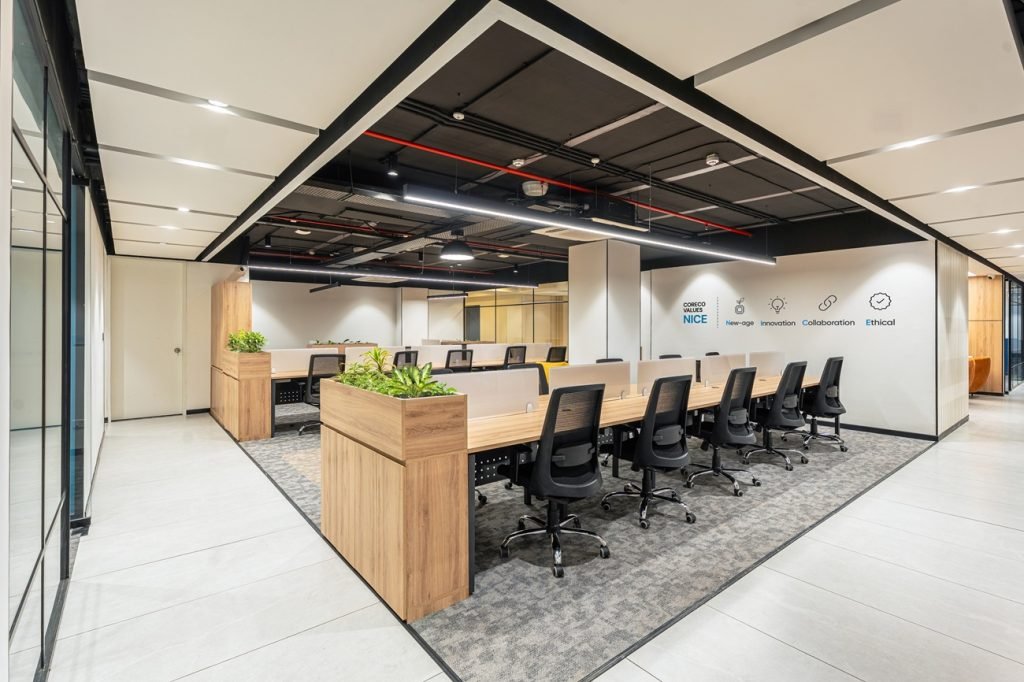
Assigned desks were once the default planning strategy. In hybrid environments, they often result in underutilized rows of workstations. Instead of designing for total headcount, organizations must evaluate peak attendance and team-based usage.
Flexible seating neighborhoods, shared team zones, and touchdown spaces can create adaptability without compromising comfort. When workstation counts are aligned with actual occupancy patterns, organizations can optimize their footprint while preserving productivity.
Balancing Collaboration and Focus
A frequent workplace complaint is that offices feel busy but lack quiet. Open layouts encourage teamwork, yet without adequate acoustic planning and enclosed rooms, they can generate distraction. Conversely, too many enclosed cabins restrict agility and transparency.
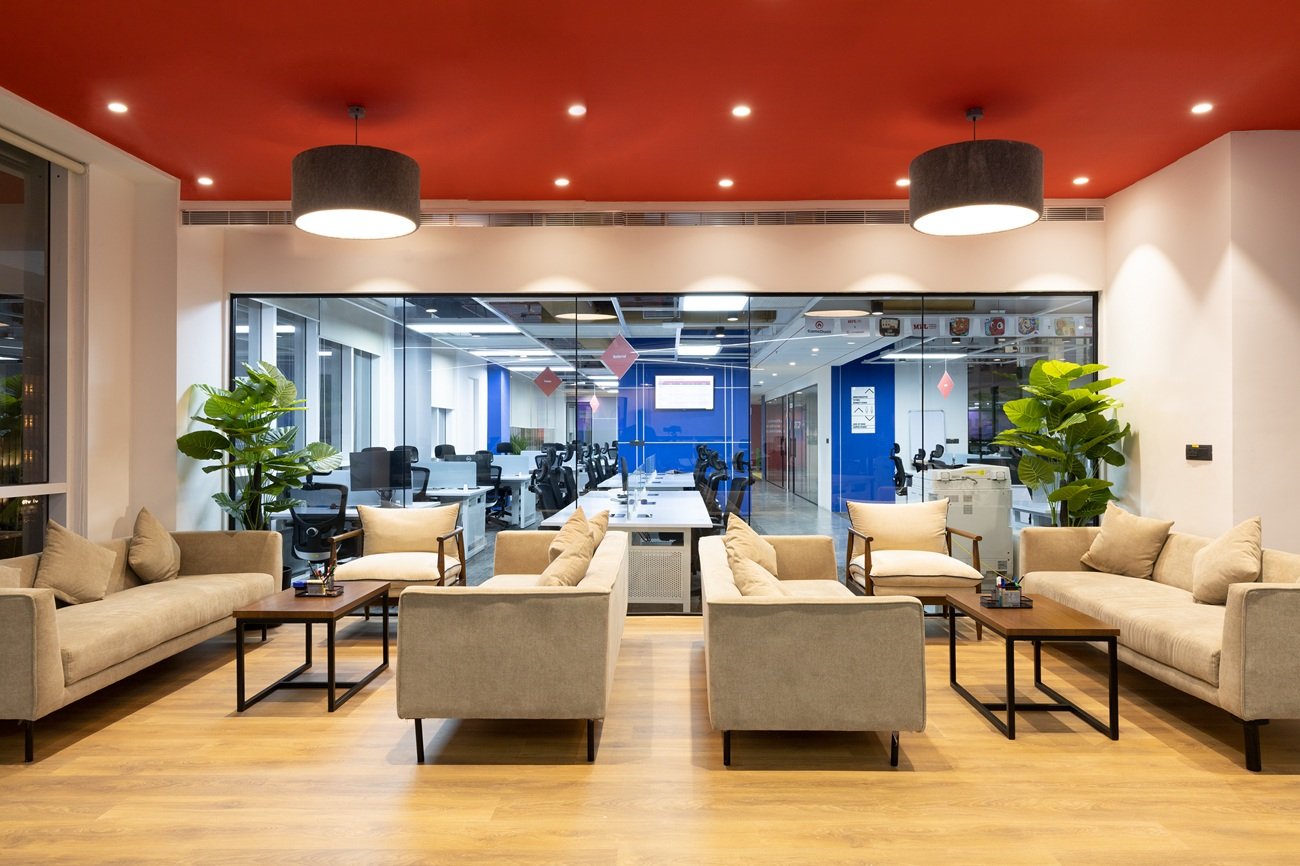
Effective space utilization introduces a layered approach. Open work areas are complemented by small rooms for calls, mid-sized rooms for team meetings, and informal breakout spaces that absorb spontaneous discussions. When these settings are proportioned accurately, friction reduces and workflow improves.
Unlocking Underused Areas
Every office contains latent potential. Oversized reception zones, redundant storage rooms, and inefficient corridors often consume valuable square footage. Through thoughtful redesign, these areas can be transformed into collaboration pods, phone booths, micro-meeting spaces, or flexible resource areas.
Planning for Growth and Change
Rapidly scaling organizations frequently outgrow their spaces because planning was based solely on present requirements. A resilient utilization strategy anticipates growth. Modular furniture systems, flexible partitions, and scalable infrastructure allow the workplace to evolve over time.
When adaptability is built into the design framework, expansion becomes seamless rather than disruptive. We explored this approach in our project Digantara; read more to understand how flexibility was integrated into the spatial strategy.
Leveraging Technology for Clarity
Data-driven insights now play a central role in optimizing space. Booking analytics and occupancy tracking reveal how rooms and desks are actually used. Over time, this information enables informed decisions about resizing meeting rooms, adjusting seating ratios, and repurposing underutilized zones.
In high-cost urban markets, such clarity directly impacts financial efficiency. Technology should enhance design intelligence, ensuring the workplace evolves alongside business needs.
Aligning Space with Culture and Brand
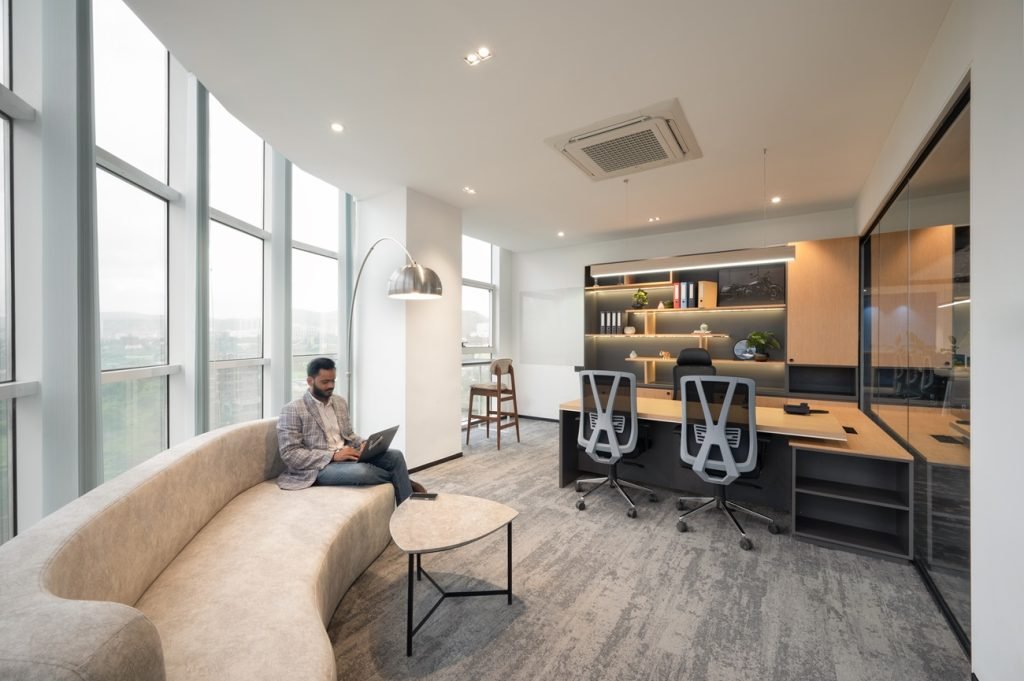
Space communicates values. Oversized executive cabins may signal hierarchy, while an absence of focus rooms may suggest oversight in employee well-being. Balanced, intentional layouts reflect clarity and transparency.
Strategic space utilization strengthens brand perception. A right-sized reception area feels confident rather than excessive. Leadership areas proportionate to operational space signal alignment. These design cues influence both employee morale and client impressions.
Measuring Success Beyond Square Footage
Optimized space utilization should result in tangible outcomes: improved meeting room availability, reduced cost per employee, smoother circulation, and higher employee satisfaction. More importantly, it should reduce daily friction. Teams should spend less time negotiating space and more time performing meaningful work.
In dynamic business ecosystems like Mumbai and Bengaluru, where real estate is both premium and constrained, utilization is essential.
A Strategic Framework
At Studio AsA, we see space utilization as an ongoing dialogue between people, performance, and place. It is a strategic framework that evolves with organizational change.
When workplaces are designed around real behavioral patterns rather than outdated formulas, they become adaptive, efficient, and future-ready.
Talk to our designers for more information.