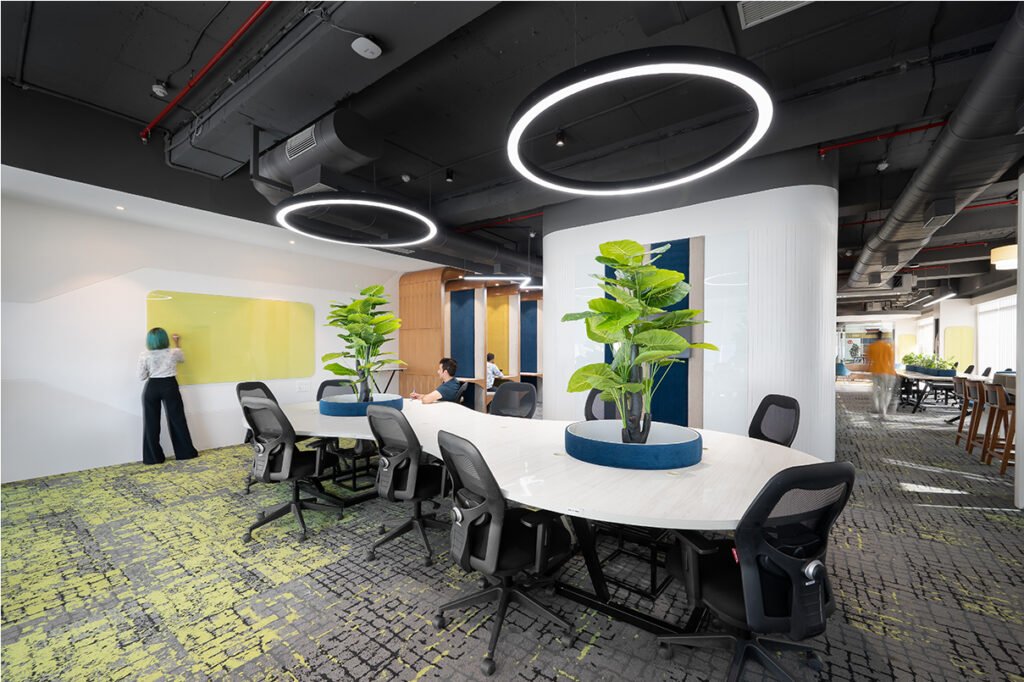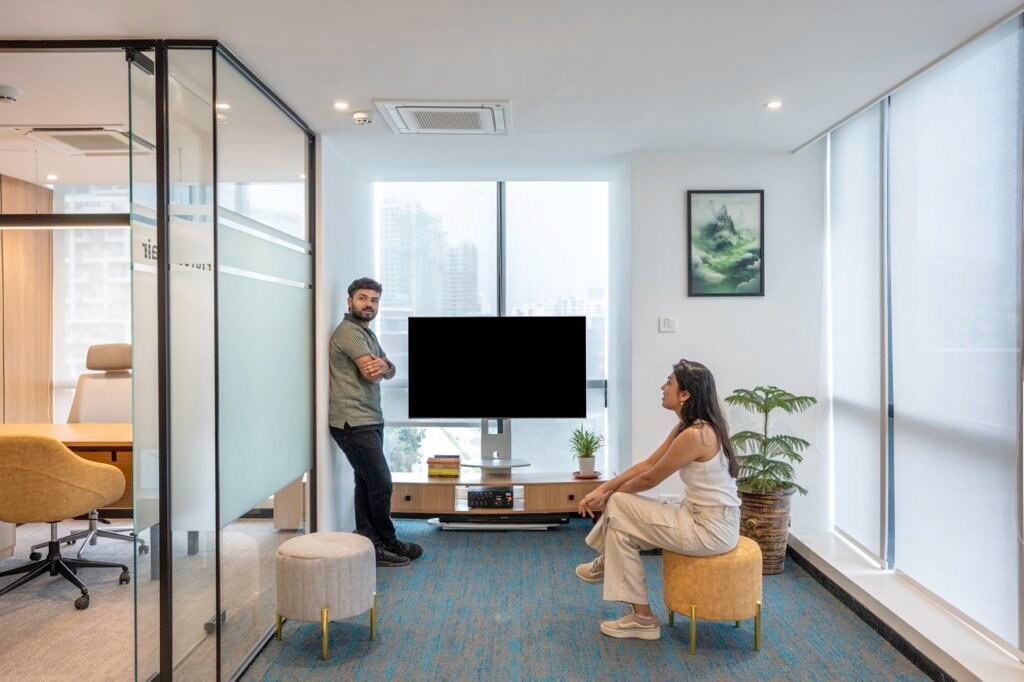


As organisations adapt to shifting workforce demographics, the workplace has become a critical tool for shaping employee experience, enabling collaboration, and supporting organisational performance. Yet many workplaces continue to be designed around a singular definition of how work happens, despite the reality that today’s workforce spans multiple generations, each bringing distinct expectations, behaviours, and modes of working.
Consider a typical workday.
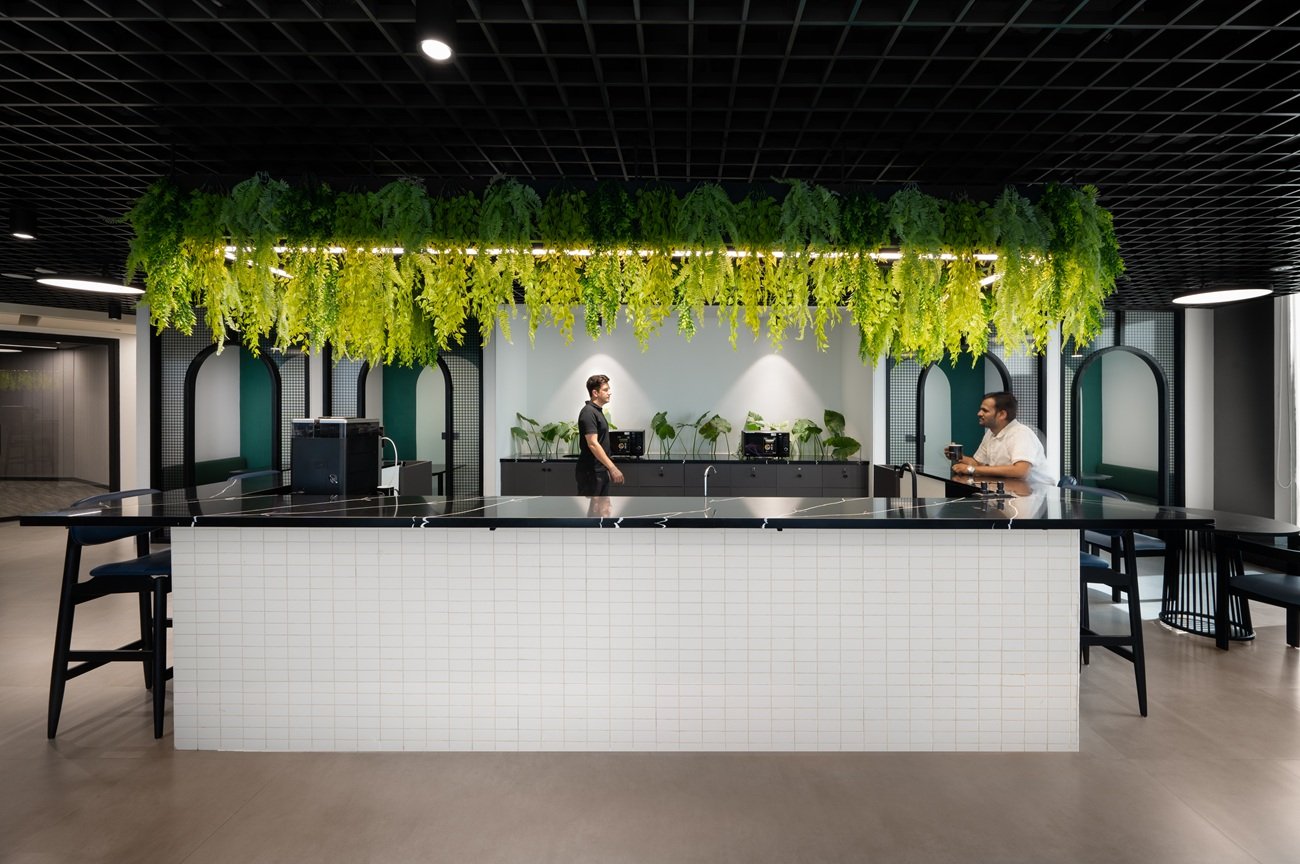
A senior leader begins the morning reviewing project updates and conducting face-to-face meetings in a focused setting. Nearby, a team manager moves fluidly between virtual collaboration platforms and in-person discussions, balancing strategic priorities with team coordination. Elsewhere, a younger employee reserves a workspace through a mobile application, collaborates asynchronously with colleagues across time zones, and transitions throughout the day between individual and collaborative work.
These individuals share the same organisation but often engage with work in fundamentally different ways. Their expectations of autonomy, collaboration, privacy, technology, and workplace experience are shaped by different professional journeys and cultural contexts.
For organisations seeking to attract, retain, and engage talent across generations, the challenge is no longer whether these differences exist. The challenge is whether the workplace is capable of supporting them.
Understanding the Multigenerational Workplace
Today’s workforce is characterised by an unprecedented convergence of generations within a single organisational ecosystem. While individual preferences vary, broad generational patterns continue to influence how employees interact with workplace environments.
Baby Boomers: Experience and Continuity
Many Baby Boomers developed their careers within structured organisational environments where physical presence, assigned workspaces, and clearly defined hierarchies served as important markers of professional identity. Workplace environments that provide stability, consistency, and opportunities for focused work often align with these expectations.
Millennials: Flexibility and Connection
As the first generation to navigate both analogue and digital modes of work, Millennials often seek environments that balance collaboration with autonomy. Many now occupy leadership and managerial positions, requiring workplaces that support mentorship, team interaction, and focused decision-making.
Generation Z: Autonomy and Digital Fluency
Entering the workforce during a period of rapid digital transformation, Gen Z employees demonstrate a high degree of comfort with technology-enabled work, asynchronous communication, and flexible work patterns. They often value choice, adaptability, and environments that support wellbeing alongside productivity.
Beyond Generational Differences
Generational challenges rarely emerge as direct conflict. More often, they appear as subtle forms of workplace friction.
A senior employee may struggle to concentrate within a highly open environment. A manager may find it difficult to access spaces that support confidential conversations. A younger employee may feel constrained by workplace norms that prioritise visibility over outcomes.
These challenges are frequently interpreted as people issues. In reality, they are often workplace issues.
When organisations design environments around a single workstyle, they inadvertently create barriers for employees whose needs fall outside that model, which results in reduced engagement, lower productivity, and missed opportunities for collaboration.
Before introducing spatial interventions, we always recommend undertaking a structured workplace observation exercise. Understanding how employees actually use space, which areas are consistently occupied, which remain underutilised, and how different teams move throughout the workplace, which often reveals behavioural patterns that surveys alone cannot capture.
Designing for Diverse Ways of Working
At Studio AsA, multigenerational workplace design begins with understanding behaviour and designing around human needs.
While expectations vary across generations, common themes consistently emerge: the need for focus, connection, autonomy, privacy, flexibility, and belonging. The role of workplace design is to create environments capable of supporting these needs simultaneously.
The most successful workplaces provide a spectrum of experiences that enable individuals to choose the environment best suited to the task at hand.
Four Design Strategies for Multigenerational Workplaces
Create a Variety of Work Settings
Rather than relying exclusively on open plan layouts, workplaces should provide a mix of focused work areas, collaborative environments, informal meeting spaces, and private rooms. Variety enables employees to select spaces that support their immediate needs and work styles.
Balance Assigned and Flexible Spaces
Activity-based working models offer significant benefits, but they are most effective when balanced with opportunities for territorial ownership where appropriate. Workplace strategies should recognise that employees derive comfort, identity, and efficiency from different spatial arrangements.
Integrate Technology Seamlessly
Technology should enhance the workplace experience without becoming a barrier to participation. Smart office technologies will consist of booking systems, workplace applications, and digital collaboration tools that must remain intuitive, inclusive, and accessible to all users, regardless of technological proficiency.
Support Wellbeing Through Environmental Design
Acoustics, lighting, biophilic elements, and spatial planning play a critical role in reducing distractions and supporting cognitive well-being. Thoughtful environmental design can improve comfort and productivity across all age groups and work styles.
Where Workplace Design Meets Organisational Culture
Workplace design can create the conditions for collaboration, mentorship, and inclusion, but it cannot create those outcomes independently.
The physical environment serves as an enabler. Organisational culture determines how that potential is realised.
Successful multigenerational workplaces recognise that employees do not need identical experiences. They need equitable access to environments that support their individual needs while strengthening collective performance.
The goal is not to eliminate differences. It is to design workplaces that accommodate them.
When thoughtfully designed, the workplace becomes more than a physical setting. It becomes a strategic asset, one that enables experience and innovation, structure and flexibility, individual focus and collective success to coexist within a shared environment.
Let’s talk and discuss your next workplace.