

When did professional come to mean joyless? Somewhere along the way, the idea of enjoying work became a soft, optional extra, something to be permitted after the serious work was done. The data says otherwise.
Across industries, the organisations growing fastest are the ones where people actually look forward to walking through the door. And more often than not, the physical workplace is where that shift begins.
The Productivity Problem Nobody Talks About
Traditional office design was built around a single assumption: that people work best when distractions are minimised. Private cubicles, rigid desk rows, fluorescent overheads, every element was optimised for individual heads-down output.
That assumption has aged poorly. Gensler’s Workplace Survey consistently finds that employees who report a strong sense of connection and belonging at work are significantly more productive, not despite enjoying their environment, but because of it. Meanwhile, disengaged employees cost businesses an estimated 18% of their annual salary in lost output.
The modern challenge isn’t getting people to work harder. It’s creating an environment where they genuinely want to.
The Four Design Strategies
Fun at work is about intentional design choices that reduce friction, build community, and give people the spatial freedom to do their best work. Here’s how the best offices are getting it right.
Strategy 01: Activity-based working
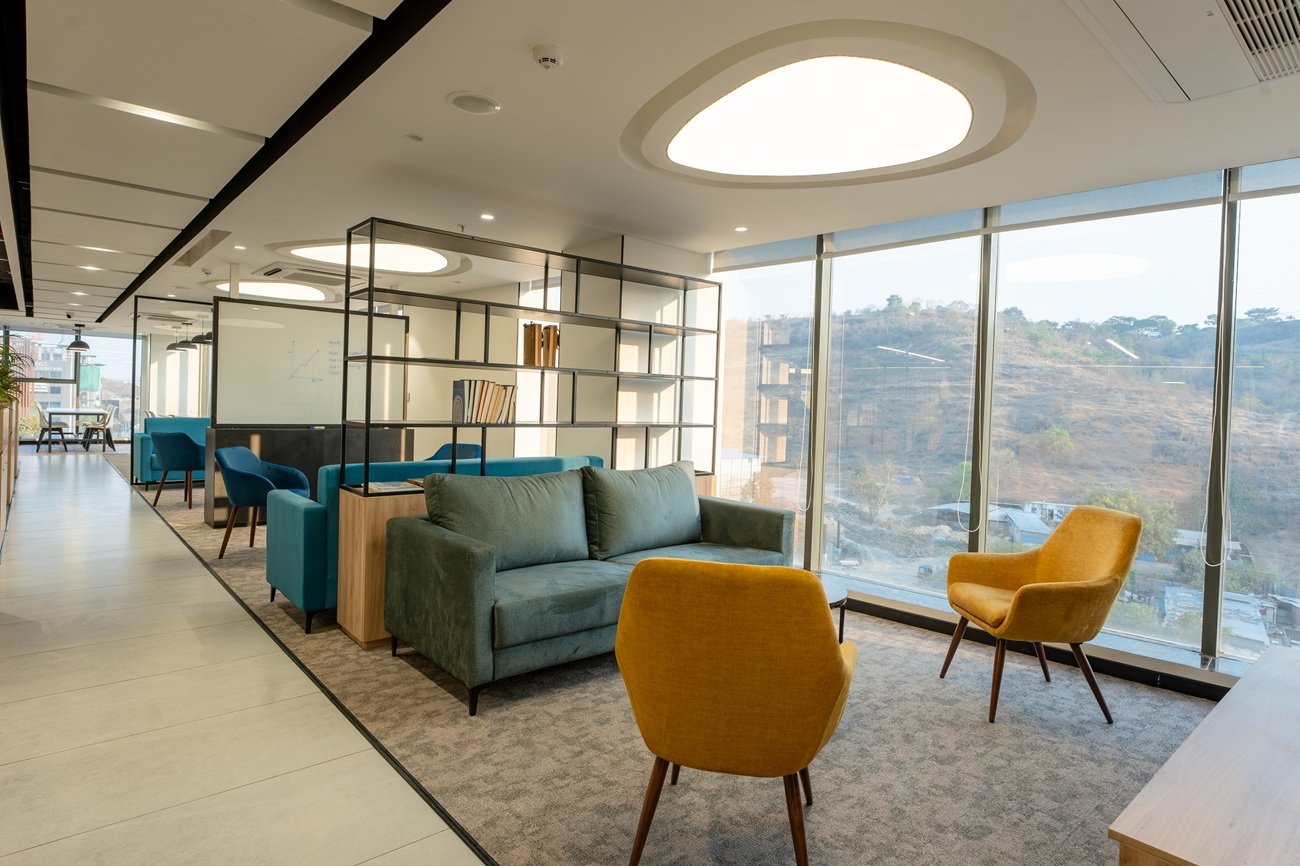
Activity-based working (ABW) replaces the idea of “one desk per person” with a range of settings, focus rooms, collaborative hubs, casual lounge zones, and standing benches, matched to different modes of work.
When people can choose where and how they work depending on the task at hand, stress drops and engagement climbs. ABW isn’t just smart office design; it’s a signal that your organisation trusts its people.
- Allocate at least 30–40% of floor area to non-assigned flexible zones
- Programme a mix of quiet focus pods and lively collaboration corners
- Use furniture to define spatial character and allow future reconfiguration
Strategy 02 · Social infrastructure
Some of the most valuable workplace interactions happen in passing, the hallway question that unlocks a week-long problem, the kitchen conversation that sparks a new idea. These are products of great office space planning.
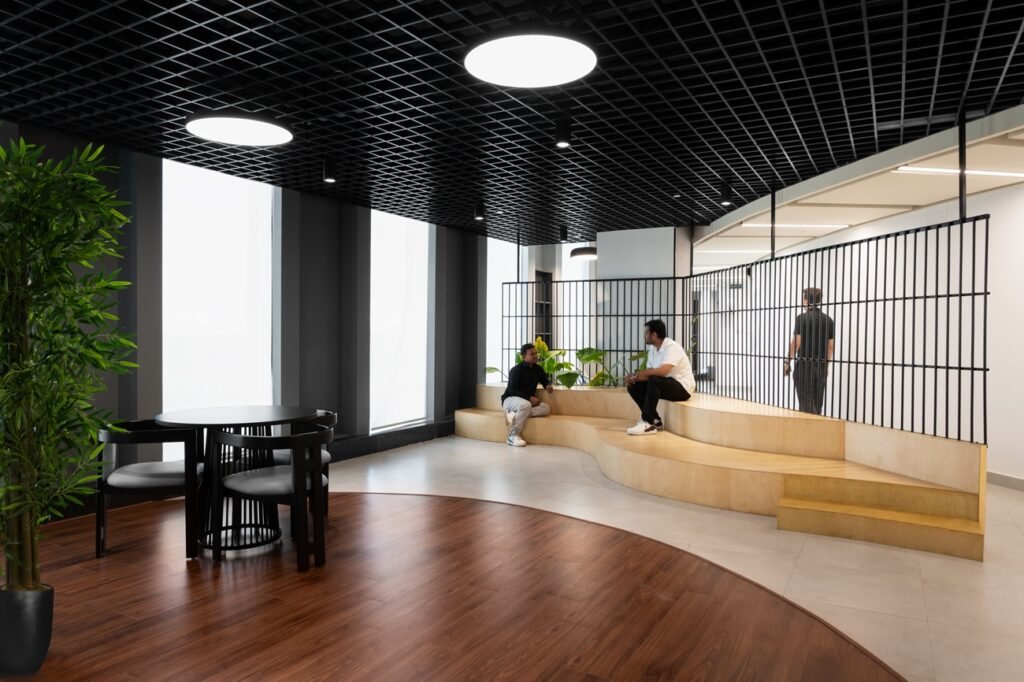
Placing social anchors, a well-designed cafe counter, a comfortable landing zone near the lift lobby, a shared library nook, at the intersection of natural movement paths, dramatically increases the frequency of spontaneous connection.
- Map your floor’s circulation patterns before placing social nodes
- Invest in your kitchen and cafe zone, it’s your highest-return square footage
- Create “third space” lounge areas that feel distinct from both desks and meeting rooms
Strategy 03 · Biophilic design
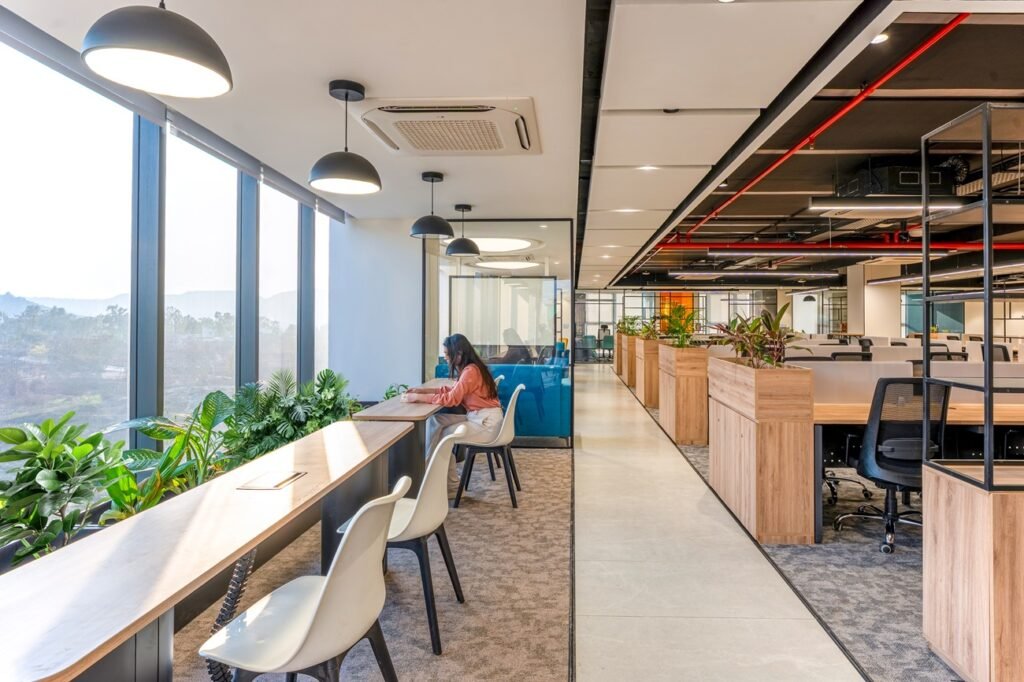
The research on biophilic design is no longer emerging; it’s conclusive. Natural light, indoor greenery, views of the outdoors, and organic textures collectively reduce cortisol levels, improve cognitive function, and increase reported workplace wellbeing by measurable margins.
For mid-size firms undertaking an office fit out, even modest biophilic office interiors deliver outsized returns. A living green wall, a light-well atrium, or a perimeter desk layout that maximises access to windows costs far less than the productivity gains it generates.
- Prioritise natural light for individual focus zones, not just executive offices
- Introduce planting at human scale — eye-level greenery resonates more than overhead installations
- Use natural materials (timber, stone, linen) as acoustic and tactile counterpoints to hard surfaces
Strategy 04 · Brand and culture made spatial
The most energising workplaces share one quality: they feel unmistakably like the organisation that inhabits them. Corporate interiors that could belong to anyone, the generic grey carpet, the motivational poster, the obligatory foosball table, fail to build the sense of identity and pride that drives genuine employee engagement.
Smart office design translates a company’s values, history, and personality into spatial experience. A law firm and a creative agency should feel radically different — not just in palette, but in how space is organised, how light moves through it, and what rituals it supports.
- Run culture workshops before the design brief is written, and space should follow values, not vice versa
- Identify two or three “signature moments” that make your workplace immediately recognisable
- Design for the stories your people will tell about your office, not just the square footage they’ll occupy
The business case
A flexible workplace that people enjoy isn’t a perk. It’s infrastructure. In a hybrid workplace era where the office competes every morning with the comfort of home, the organisations that invest in the environment will consistently win on talent, retention, and output.
The most effective workplace transformations begin with a single, well-chosen intervention, a redesigned social floor, a new activity zone, a biophilic refresh of a tired corridor, and build momentum from there.
Ready to design a workplace your people choose to come to? Let’s talk about what your space could become.